Join us on a literary world trip!
Add this book to bookshelf
Grey
Write a new comment Default profile 50px
Grey
Subscribe to read the full book or read the first pages for free!
All characters reduced
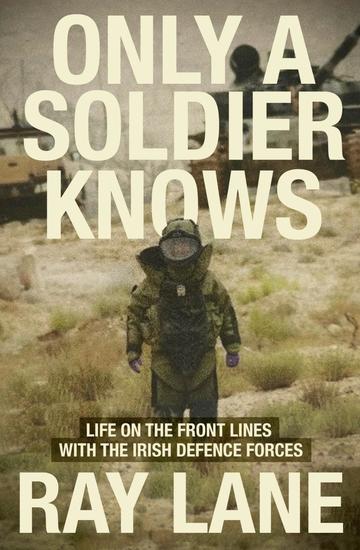
Only a Soldier Knows - cover

Only a Soldier Knows

Ray Lane

Publisher: Gill Books

  • 0
  • 0
  • 0

Summary

On a gloomy Sunday afternoon at the height of the Troubles, rookie bomb disposal officer Ray Lane was called to the Border to defuse a 1,000kg bomb planted by the IRA. This was the beginning of an extraordinary career.
From 10 beer kegs filled to the brim with explosives, to fiendish homemade devices designed to maim and murder, Ray's job was the very definition of hazardous.
Developing unparalleled skills in wartime diplomacy, he went on to spend perilous stints on the front line of conflicts in Bosnia, Lebanon, Afghanistan and Ukraine. He witnessed the horrors of war up close and was left with deep personal scars.
From the darkest depths of humanity to the pinnacle of bravery, this gripping memoir explores the nature of warfare, duty and the courage and mental strength it takes to be the person who overrides every natural human instinct and walks towards a 1,000kg bomb.
'A truly amazing story told with strength and courage' Ray Goggins
'A compelling story of outstanding courage' Ivan Yates
Available since: 09/26/2024.
Print length: 256 pages.

Other books that might interest you

  • Symphony in Yellow - cover

    Symphony in Yellow

    Oscar Wilde

    • 0
    • 0
    • 0
    LibriVox volunteers bring you 21 recordings of Symphony in Yellow by Oscar Wilde. This was the Weekly Poetry project for March 18, 2012.Oscar Wilde, an Irish author who lived for much of his life in London, is most famous for his witty, satirical plays. He also worked for some time as a journalist.Much of his poetry was written early in his career, with a notable exception being The Ballad of Reading Gaol. This poem, Symphony in Yellow, is probably one of his earlier works; in it he describes London in a flattering manner something he was disinclined to do after his trial and imprisonment.(Summary by Lucy Perry)
    Show book
  • Little Big Man: An Autobiography - cover

    Little Big Man: An Autobiography

    Stanley J. Browne

    • 0
    • 0
    • 0
    The one where mum and Elvis lived unhappily ever after in our little Stoke Newington Victorian townhouse.
    
    In this honest and gripping memoir, actor Stanley J. Browne reflects on a childhood and adolescence torn apart by his mother's mental disorder.
    
    Stanley J. Browne is an actor, and he has been an actor all his life. Born to a Jamaican mother in a London suburb, he began rehearsing for the role of survivor from an early age. From birth he knew nothing but a home filled with love and the vibrancy of a Caribbean culture, but this changes when his mother is diagnosed with schizophrenia.
    
    Stanley adopts the mantle of 'man of the house' as he is forced to scavenge for food and miss school, with his two sisters, to care for his baby brother. His life is further fragmented as they yo-yo in and out of the care system and Stanley must face the reality of being separated from his siblings.
    
    An intelligent and sensitive child, Stanley descends into a life of crime and drug abuse. During his time spent in various young offender's institutions and prisons he battles with addiction and slowly begins to turn his life around.
    
    Set against a backdrop of 1970s poverty, racism and hardship, Little Big Man is a powerful story of generational trauma and one man's determination to heal the wounds of the past. Most of all, it is a book about the universal desire for love, belonging and the search to find an authentic voice through the redemptive power of creativity and recovery.
    Show book
  • Voices of Famous Polar Explorers - cover

    Voices of Famous Polar Explorers

    Frederick Albert Cook, Robert E....

    • 0
    • 0
    • 0
    Frederick Albert Cook (June 10, 1865 - August 5, 1940) was an American explorer and physician noted for his claims of achieving the first summit of Mount McKinley, in September 1906, and having reached the North Pole on April 21, 1908, which would have been a year before Robert Peary. Both claims have been largely discredited. Later, Dr. Cook was a founding member of the Arctic Club and Explorers Club. 
    Robert Edwin Peary, Sr. (May 6, 1856 - February 20, 1920) was an American explorer who claimed to have led the first expedition, on April 6, 1909, to reach the geographic North Pole. 
    Peary's claim was widely accepted for most of the 20th century, rather than the competing claim by Frederick Cook who said he got there a year earlier. More recently, historians generally believe Cook did not reach the pole, and there are grave doubts that Peary did, though he may have been as close as five miles. 
    Sir Ernest Henry Shackleton (February 1874 - January 5, 1922) was an Anglo-Irish polar explorer and one of the principal figures of the period known as the Heroic Age of Antarctic Exploration. 
    In January 1909 - as leader of the Nimrod Expedition - he and three companions made a southern march which established a record-farthest south latitude at 88 degrees 23' S - some 97 geographical from the South Pole - the closest convergence in exploration history up to that time. For this achievement, Shackleton was knighted by King Edward VII on his return home. 
    ©2013 Rick Sheridan (P)2013 Rick Sheridan
    Show book
  • The Unselfishness of God - cover

    The Unselfishness of God

    Hannah Whitall Smith

    • 0
    • 0
    • 0
    In this autobiography, centered around her own testimony, Hannah Whitall Smith also reveals her beliefs on the truly loving, entirely unselfish, and genuine caring nature of God. Walking through the doubt she struggled with and the journey that brought her to faith, these elements of the Father’s character become easily apparent. Discussing theology, real world struggles, and finding the nearness of God even in the midst of pain and discouragement, Smith uses her story to tell of the loving faithfulness of God.  This series, published by ONE Audiobooks, seeks to produce Classic Christian titles read by handpicked audiobook narrators. ONE takes great care to cast these titles with readers who will provide an unmatched listening experience for these important works.
    Show book
  • Tom Horn: The Controversial Life and Legacy of One of the Wild West’s Most Famous Gunslingers - cover

    Tom Horn: The Controversial Life...

    Charles River Editors

    • 0
    • 0
    • 0
    In the span of scarcely more than a half century, the West developed from a handful of scattered fur trapping enterprises predominantly inhabited by males to a region full of burgeoning rustic communities, and before the government’s official “closure” of the frontier as a lawless expanse, Western societies were essentially living apart from traditional American rule of law. What judicial structures were at work across the West were erratic, often willing to exercise extremes without evidential justification, and manipulated by major corporate interests of the day, most notably cattle. 
    The latter 19th century brought about both the heyday and decline of that industry, but the modernized and increasingly technology-oriented societies began to bloom while many of the legendary frontier figures were still alive. In some cases, the old and new worlds were able to coexist as the lone wolves and lawmen of the frontier became obsolete as an archetype, but still a part of folklore. Wyatt Earp was the subject of several early motion pictures and lived long enough to consult on their productions and meet actors. Iconic rodeo stars, lawmen, and notorious outlaws who made themselves famous on horseback witnessed the beginnings of the age of flight. 
    However, the transition from a mostly lawless region to an ordered society that more closely mirrored the East Coast could be rough for some, and perhaps nobody struggled to adapt to societal progress more than the infamous Tom Horn. At the close of the 19th century, Horn undertook virtually every form of employment available on the frontier before ending his career as a paid assassin for the cattle industry, anonymously ambushing cattle rustlers. According to an ongoing debate, he was either the perpetrator or scapegoat for the murder of a young boy in Iron Mountain, Wyoming, an ambush execution that occurred in the context of a raging feud between the cattle and sheep industries.
    Show book
  • From Bluegrass to Blue Water - Lessons in Farm Philosophy and Navy Leadership - cover

    From Bluegrass to Blue Water -...

    John Palmer

    • 0
    • 0
    • 0
    The philosophy found in this work is the product of a childhood on a tobacco and cattle farm in central Kentucky, education at various schools, and a three-decade career in the US Navy while simultaneously contributing as a husband, father, and grandfather. The remainder of this book will be separated into phases reflective of the major changes in my life: the farm, schooling, and a navy career continuum from junior officer through flag officer. The lessons learned in earlier phases were often exported and applied later. The ever-increasing levels of responsibility served to teach new lessons.
    Show book