Join us on a literary world trip!
Add this book to bookshelf
Grey
Write a new comment Default profile 50px
Grey
Subscribe to read the full book or read the first pages for free!
All characters reduced
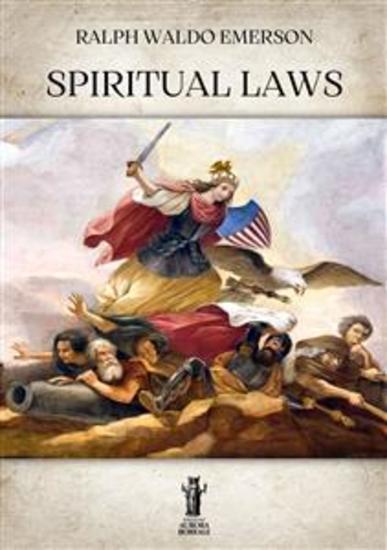
Spiritual Laws - cover

Spiritual Laws

Ralph Waldo Emerson

Publisher: Edizioni Aurora Boreale

  • 0
  • 0
  • 0

Summary

Ralph Waldo Emerson (1803-1882) was an American philosopher essayist, lecturer, and poet, who led the Transcendentalist Movement of the mid-19th century. He was seen as a champion of individualism and critical thinking, as well as a prescient critic of the countervailing pressures of society and conformity. Friedrich Nietzsche considered him «the most gifted of the Americans», and Walt Whitman referred to him as his «master».Emerson wrote on a number of subjects, never espousing fixed philosophical tenets, but developing certain ideas such as individuality, freedom, the ability for mankind to realize almost anything, and the relationship between the soul and the surrounding world.His first two collections of essays, Essays: First Series (1841) and Essays: Second Series (1844), represent the core of his thinking. They include the well-known essays Self-Reliance, Spiritual Laws, The Over-Soul, Circles, The Poet, and Experience. Together with Nature, these essays made the decade from the mid-1830s to the mid-1840s Emerson's most fertile period.
Available since: 09/26/2023.

Other books that might interest you

  • My Family Is Special - cover

    My Family Is Special

    Kim Mitzo Thompson, Karen Mitzo...

    • 0
    • 0
    • 0
    Kids will love this playful story about what makes a family special and unique. Simple sentence structures and repetitive words will encourage young children to fall in love with learning to read.  Kids will enjoy following along word-for-word with the recorded story that features sound effects and professional voices to help children develop vocabulary and improve listening skills.  This reader features adorable art showing diversity to help children form a sense of acceptance and understanding of different races and individual differences.
    Show book
  • Fifteen Out of the Box Ideas which will Change the World - cover

    Fifteen Out of the Box Ideas...

    Martin K. Ettington

    • 0
    • 0
    • 0
    The world is not as we think it is. We are taught standard accepted beliefs from birth and many of them are not correct or a misunderstanding of the truth. 
    Who am I to say so? At this writing I’m nearly seventy years old and I’ve spent my life observing reality as an engineer and explorer of the unknown. 
    I’ve had many weird and paranormal experiences and done lots of research. Many patterns have made themselves known to me and this is why I make these types of statements. 
    This book is an effort to shed light on these misunderstandings and change your perception of the world we live in. 
    Much of what I will relate is based on my subjective experiences and research many would say does not conform to the accepted scientific method yet you will see that my observations make a lot of common sense. 
    Some of these concepts have been around for thousands of years but are not commonly accepted today. My effort is to show you why these ideas are likely true and how these concepts also are built on to provide new understandings. 
    At the end of each chapter logic is provided on how general belief in these new ideas will change humanity. 
    My hope is that by the end of this book you the reader will open your mind more about many things which are strange but possibly true.
    Show book
  • Secret Earth - Places You Weren’t Meant to Find - cover

    Secret Earth - Places You...

    P Agrawal

    • 0
    • 0
    • 0
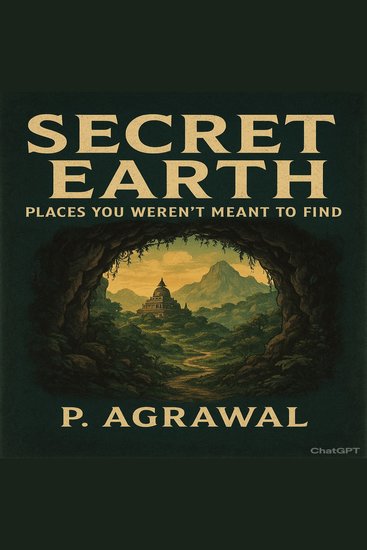
    This audiobook is narrated by an AI Voice.  
    The world as we know it feels mapped, photographed, and documented—a planet where satellites sweep the skies and every mountain, desert, and shoreline is marked with coordinates. Yet, beneath this illusion of total knowledge, lie hidden corners humanity was never meant to see. Secret Earth: Places You Weren’t Meant to Find is a compelling journey into those forbidden zones—territories of secrecy, danger, and mystery that resist the light of exposure. 
    Across twenty richly told chapters, the book reveals a global atlas of the hidden and the unreachable. Some places are locked away by governments, their gates sealed with silence. Consider Area 51, that infamous desert base where secrecy turned into myth, or Pine Gap, Australia’s “eye in the sky,” where satellites and signals weave webs of global surveillance. Others are shielded by cultural guardianship—lands like North Sentinel Island, where an indigenous people reject all contact, or the Vatican Archives, whose shelves hide manuscripts and histories beyond public reach. Still others are guarded by nature itself, such as Snake Island in Brazil, where thousands of lethal vipers forbid human settlement, or the fragile chambers of the Lascaux Caves, sealed because a single breath could erase art that has survived for 17,000 years. 
    The book moves fluidly from ancient ruins to modern fortresses, from legendary sites to contemporary phenomena. We descend into the underground labyrinth of Derinkuyu in Turkey, where entire towns once lived in secret, and stand before India’s haunted Bhangarh Fort, abandoned to legend and cursed memory. We explore Mezhgorye in Russia, a mysterious closed city guarding subterranean secrets, and enter the strange exclusivity of Bohemian Grove, California, where the powerful retreat into ritual behind towering redwoods.
    Show book
  • The Colony - Faith and Blood in a Promised Land - cover

    The Colony - Faith and Blood in...

    Sally Denton

    • 0
    • 0
    • 0
    On the morning of November 4, 2019, a caravan of women and children was ambushed by masked gunmen on a desolate stretch of road in northern Mexico controlled by the Sinaloa drug cartel. Firing semi-automatic weapons, the attackers killed nine people and gravely injured five more. The victims were members of the LeBaron and La Mora communities—fundamentalist Mormons whose forebears broke from the LDS Church and settled in Mexico when their religion outlawed polygamy in the late nineteenth century. The massacre produced international headlines for weeks, and prompted President Donald Trump to threaten to send in the US Army. 


    In The Colony, Sally Denton delves into the complex story of the LeBaron clan. Their homestead—Colonia LeBaron—is a portal into the past, a place that offers a glimpse of life within a polygamous community on an arid and dangerous frontier in the mid-1800s, though with smartphones and machine guns. Rooting her narrative in written sources as well as interviews with anonymous women from LeBaron itself, Denton unfolds an epic, disturbing tale that spans the first polygamist emigrations to Mexico through the LeBarons' internal blood feud in the 1970s and up to the family's recent alliance with the NXIVM sex cult, whose now-imprisoned leader, Keith Raniere, may have based his practices on the society he witnessed in Colonia LeBaron.
    Show book
  • Holding Fire - A Reckoning with the American West - cover

    Holding Fire - A Reckoning with...

    Bryce Andrews

    • 0
    • 0
    • 0
    From the award-winning author of Down from the Mountain, a memoir of inheritance, history, and one gun’s role in the violence that shaped the American West—and an impassioned call to forge a new way forward 
    Bryce Andrews was raised to do no harm. The son of a pacifist and conscientious objector, he moved from Seattle to Montana to tend livestock and the land as a cowboy. For a decade, he was happy. Yet, when Andrews inherited his grandfather’s Smith & Wesson revolver, he felt the weight of the violence braided into his chosen life. Other white men who’d come before him had turned firearms like this one against wildlife, wilderness, and the Indigenous peoples who had lived in these landscapes for millennia. This was how the West was “won.” Now, the losses were all around him and a weapon was in his hand. 
    In precise, elegiac prose, Andrews chronicles his journey to forge a new path for himself, and to reshape one handgun into a tool for good work. As waves of gun violence swept the country and wildfires burned across his beloved valley, he began asking questions—of ranchers, his Native neighbors, his family, and a blacksmith who taught him to shape steel—in search of a new way to live with the land and with one another. In laying down his arms, he transformed an inherited weapon, his ranch, and the arc of his life. 
    Holding Fire is a deeply felt memoir of one Western heart’s wild growth, and a personal testament to how things that seem permanent—inheritance, legacies of violence, forged steel—can change. 
    Supplemental enhancement PDF accompanies the audiobook.
    Show book
  • Crusades The: The History of Christianity’s Wars for the Holy Land - cover

    Crusades The: The History of...

    Charles River Editors

    • 0
    • 0
    • 0
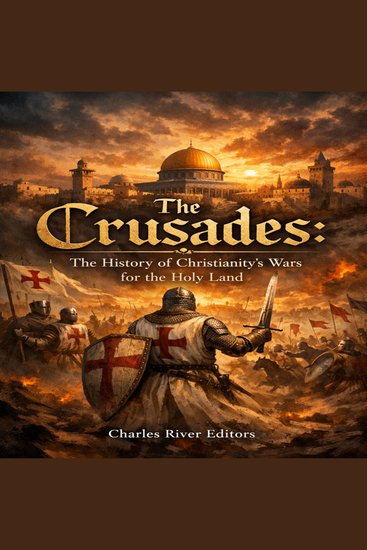
    Of the many campaigns during the Middle Ages, few are as remarkable or seemingly impossible to win at the start as the First Crusade (1095-99), and the true crowning achievement of that crusade, which resulted in two centuries of Western European Christian states in the Middle East and the permanent firing of the European imagination, was the conquest of Jerusalem on July 15, 1099 after three weeks of siege. That victorious siege came four years after the call for a crusade first went out, and had the Crusaders not taken Jerusalem, the First Crusade would not likely have been followed by any more and the campaign might have been no more than an historical footnote of what could have been.  
    The Crusader States were relatively small and weak, and while they tried to be a bulwark of Christianity in the Holy Land, the Crusader States were reconquered centuries before modern European colonialism began. Nonetheless, the Crusades and the Crusader States galvanized the Christians of Western Europe to expand their world. While it remains unclear how much that world expanded in practical terms such as trade, or how it affected later attitudes during the expansion to the New World and other regions, it definitely engaged the European mind in both positive and negative ways. As such, the crusades soon achieved near-mythic status in the European literature and remain among the most important events of the Middle Ages. 
    In the 50 years following the First Crusade, the Latin states in the East were consolidated, but there were also growing tensions and new challenges. Against this backdrop, the fall of the County of Edessa in December 1144 at the hands of Zengi, the atabeg of Aleppo and Mosul, was a catastrophic event. Historically, writers have given little prominence to the Second Crusade because of its failure, and it is understandably overshadowed by the triumphant First Crusade and the more captivating Third Crusade. 
    Show book