¡Acompáñanos a viajar por el mundo de los libros!
Añadir este libro a la estantería
Grey
Escribe un nuevo comentario Default profile 50px
Grey
Suscríbete para leer el libro completo o lee las primeras páginas gratis.
All characters reduced
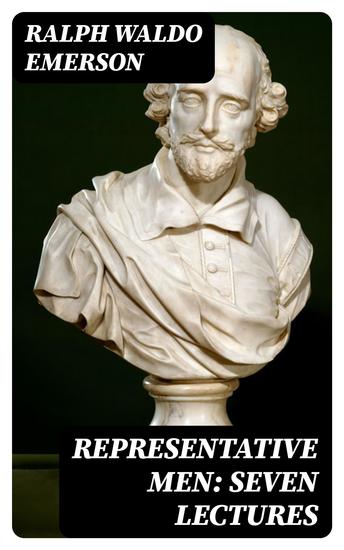
Representative Men: Seven Lectures - cover

Representative Men: Seven Lectures

Ralph Waldo Emerson

Editorial: DigiCat

  • 0
  • 0
  • 0

Sinopsis

In "Representative Men: Seven Lectures," Ralph Waldo Emerson presents a profound exploration of the key figures that embody the intellectual and cultural trajectories of his time. Comprising seven essays, each dedicated to a notable luminary—such as Plato, Swedenborg, and Napoleon—Emerson employs a reflective and philosophical style that melds transcendentalist ideals with biographical analysis. His work reflects the broader literary context of 19th-century America, as Emerson seeks to identify the archetypal characteristics of genius and character that shape societal ideals. The erudite prose challenges readers to contemplate the essence of individuality and the moral responsibilities of leadership, thus engaging with the timeless quest for authenticity in personal and communal life. Emerson, a central figure in the American transcendentalist movement, drew upon his extensive knowledge of literature, philosophy, and natural sciences to crafting this work. His background as a minister and his experiences in the intellectual circles of Europe and the United States profoundly influenced his thoughts on the nature of greatness and the role of exemplary figures in shaping human thought. Through "Representative Men," he articulates the interconnectedness of individual potential and collective identity, providing a framework for understanding influence and legacy. This seminal work is essential for readers interested in philosophy, literary theory, and American intellectual history. Emerson's incisive observations resonate deeply, offering insights that remain relevant in contemporary discourse on leadership and moral character. "Representative Men" is an invitation to engage with the complexities of human nature and the ideals that guide us, making it a vital addition to any scholarly library.
Disponible desde: 28/05/2022.
Longitud de impresión: 145 páginas.

Otros libros que te pueden interesar

  • Ian's Ride - A Long-Distance Journey to Joy - cover

    Ian's Ride - A Long-Distance...

    Karen Polinsky, Ian Mackay,...

    • 0
    • 0
    • 0
    While studying as a biology undergrad at UC Santa Cruz, Ian Mackay crashed his bike into a tree on campus. Paralyzed from the shoulders down, Mackay adapted to his new life with the help of his dedicated family, particularly his mother, Teena Woodward, and a group of quirky friends. After years of despair, and against all odds, he became an inspiring leader, an innovator with Apple, and a world-record-breaking athlete. In this intimate memoir based on more than one hundred hours of interviews, journal entries, and more, writer Karen Polinsky recounts with Ian his accident and determined recovery, in which he discovered the healing power of nature and community. 


    Ian's Ride is both a personal journey and an adventure quest for nature lovers, endurance athletes, and anyone struggling with a life-changing loss or diagnosis. This deeply moving true story examines how we exist in our bodies, adapt to and overcome adversity, and above all what makes our hearts tick.
    Ver libro
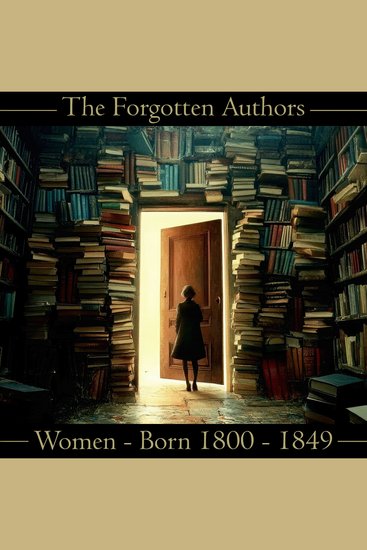
  • Forgotten Authors The - Women - Born 1800 - 1849 - Don't let great literature die - cover

    Forgotten Authors The - Women -...

    Anna Maria Hall, George Sand,...

    • 0
    • 0
    • 0
    Throughout the long centuries of human history is the want, and the need, to share information, to exchange ideas and for that knowledge and experience, for curiosity and learning, to be the basis of a civil society. 
    In literature the ambition is much narrower.  In order to be known, to be popular, you had to be published.  And for that people had to know you existed and your ideas worth reading.  Obviously for most of humanity’s time people couldn’t read and texts couldn’t be published in any great number. 
    In the 15th Century Gutenberg’s printing press began the revolution to address the second and by the 19th century had gathered pace with startling speed and mass distribution.  Education for the many was brought in to help people understand more of their world and, with new skills, how to have a better place within it.  Now, if the powers that owned the presses and means of distribution agreed an audience would now be able to avail themselves of your ideas, your printed words.  
    All too often the talents of women have been scorned, mocked and laughed at.  In reality that was more usually by those who’s own talents were hardly fit to even grace their shadows.   
    But society in general still connived and set women to one side in almost everything that men considered their rightful territory.  And literature was one such territory.  Remarkably resilient as well as talented these women strove to be published, to show themselves as equals.  The results more often than not proved that they were.  
    Sadly, in the thirst for the new, the recent and the past fell from sight, relegated to dark corners and dusty shelves.    
    But the printed word is rarely without someone, somewhere busying themselves through piles of papers and books rediscovering what a good story is, whatever its age. 
    In this volume we offer up a small selection of talents from the literary landscape of 1800 to 1849 and the Women authors whose time has now come again.
    Ver libro
  • Top 10 Poets The - The 18th Century - Five poems each from best poets born in the 18th century - cover

    Top 10 Poets The - The 18th...

    William Wordsworth, William...

    • 0
    • 0
    • 0
    Throughout the long centuries of human history is the want, and the need, to share information, to exchange ideas and for that knowledge and experience, for curiosity and learning, to be the basis of a civil society. 
    In literature the ambition is much narrower.  In order to be known, to be popular, you had to be published.  And for that people had to know you existed and your ideas worth reading.  Obviously for most of humanity’s time people couldn’t read and texts couldn’t be published in any great number. 
    In the 15th Century Gutenberg’s printing press began the revolution to address the second and by the 19th century had gathered pace with startling speed and mass distribution.  Education for the many was brought in to help people understand more of their world and, with new skills, how to have a better place within it.  Now, if the powers that owned the presses and means of distribution agreed an audience would now be able to avail themselves of your ideas, your printed words.  
    Sadly, in the thirst for the new, the recent and the past fell from sight, relegated to dark corners and dusty shelves.    
    But the printed word is rarely without someone, somewhere busying themselves through piles of papers and books rediscovering what a good story is, whatever its age. 
    In this volume we offer up a small selection of talents from the literary landscape of the 18th Century and its authors whose time has now come again.
    Ver libro
  • Cohen of Trinity - From their pens to your ears genius in every story - cover

    Cohen of Trinity - From their...

    Amy Levy

    • 0
    • 0
    • 0
    Amy Levy was born in London, England in 1861, the second of seven in a fairly wealthy Anglo-Jewish family. The children read and participated in secular literary activities and became firmly integrated into Victorian life. 
    Her education was at Brighton High School, Brighton, before studies at Newnham College, Cambridge; she was the first Jewish student when she arrived in 1879, but left after four terms. 
    Amy’s writing career began early; her poem ‘Ida Grey’ appeared when she was only fourteen. Her acclaimed short stories ‘Cohen of Trinity’ and ‘Wise in Their Generation,’ were published by Oscar Wilde in his magazine ‘Women's World’. 
    Her poetic writings reveal feminist concerns; ‘Xantippe and Other Verses’, from 1881 includes a poem in the voice of Socrates's wife. ‘A Minor Poet and Other Verse’ from 1884 comprises of dramatic monologues and lyric poems. 
    In 1886, Amy began a series of essays on Jewish culture and literature for the Jewish Chronicle, including ‘The Ghetto at Florence’, ‘The Jew in Fiction’, ‘Jewish Humour’ and ‘Jewish Children’. 
    That same year while travelling in Florence she met the writer Vernon Lee. It is generally assumed they fell in love and this inspired the poem ‘To Vernon Lee’. 
    Her first novel ‘Romance of a Shop’, written in 1888 is based on four sisters who experience the pleasures and hardships of running a London business during the 1880s. This was followed by Reuben Sachs (also 1888) and concerned with Jewish identity and mores in the England of her time and was somewhat controversial. 
    Her final book of poems, ‘A London Plane-Tree’ from 1889, shows the beginnings of the influence of French symbolism. 
    Despite many friendships and an active life, Amy suffered for many years with serious depressions and this, together with her growing deafness, led her to commit suicide by inhaling carbon monoxide on September 10th, 1889. She was 27.
    Ver libro
  • The Conduct of Life - cover

    The Conduct of Life

    Ralph Waldo Emerson

    • 0
    • 0
    • 0
    Life does not unfold by design. It moves, shifts, adapts—sometimes in harmony, often in chaos. What, then, is the right way to live? With his signature clarity and quiet defiance, Ralph Waldo Emerson steps beyond theory into the pulse of everyday existence. He does not prescribe rigid formulas but instead offers something sharper: a way of seeing.
    Here, work is not mere labor but an act of self-realization. Power is not control but a force that shapes character. Fate is not an iron law but a current to navigate. Love, culture, beauty, behavior—each finds its place, not as abstract ideals but as forces in motion. Emerson does not soften reality; he meets it head-on, stripping away illusions, demanding engagement.
    There are no final answers, only the insistence that life must be lived with both strength and openness. This is not a manual for comfort but for those who seek meaning beyond convention, who recognize that the path is not given—it is made.
    In The Conduct of Life, Emerson's exploration unfolds across these essays, each a facet of life's ever-changing design:
    I. Fate
    II. Power
    III. Wealth
    IV. Culture
    V. Behavior
    VI. Worship
    VII. Considerations by the Way
    VIII. Beauty
    IX. Illusions
    Ver libro
  • I'll Show Myself Out - Essays on Midlife and Motherhood - cover

    I'll Show Myself Out - Essays on...

    Jessi Klein

    • 0
    • 0
    • 0
    An instant New York Times bestseller, I'll Show Myself Out is the eagerly anticipated second essay collection from Jessi Klein, author of the acclaimed debut You’ll Grow Out of It. 
    Longlisted for the PEN Diamonstein-Spielvogel Award for the Art of the Essay  
    “Sometimes I think about how much bad news there is to tell my kid, the endlessly long, looping CVS receipt scroll of truly terrible things that have happened, and I want to get under the bed and never come out. How do we tell them about all this? Can we just play Billy Joel’s We Didn’t Start the Fire and then brace for questions? The first of which should be, how is this a song that played on the radio?” 
    In New York Times bestselling author and Emmy Award-winning writer and producer Jessi Klein’s second collection, she hilariously explodes the cultural myths and impossible expectations around motherhood and explore the humiliations, poignancies, and possibilities of midlife.  
    In interconnected essays like “Listening to Beyoncé in the Parking Lot of Party City,” “Your Husband Will Remarry Five Minutes After You Die,” “Eulogy for My Feet,” and “An Open Love Letter to Nate Berkus and Jeremiah Brent,” Klein explores this stage of life in all its cruel ironies, joyous moments, and bittersweetness. 
    Written with Klein’s signature candor and humanity, I'll Show Myself Out is an incisive, moving, and often uproarious collection.
    Ver libro