Junte-se a nós em uma viagem ao mundo dos livros!
Adicionar este livro à prateleira
Grey
Deixe um novo comentário Default profile 50px
Grey
Assine para ler o livro completo ou leia as primeiras páginas de graça!
All characters reduced
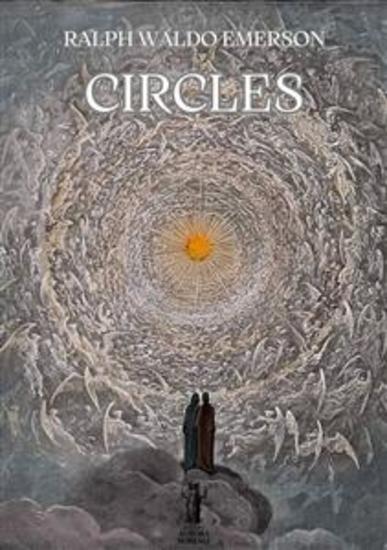
Circles - cover
LER

Circles

Ralph Waldo Emerson

Editora: Edizioni Aurora Boreale

  • 0
  • 0
  • 0

Sinopse

Ralph Waldo Emerson (1803-1882) was an American philosopher essayist, lecturer, and poet, who led the Transcendentalist Movement of the mid-19th century. He was seen as a champion of individualism and critical thinking, as well as a prescient critic of the countervailing pressures of society and conformity. Friedrich Nietzsche considered him «the most gifted of the Americans», and Walt Whitman referred to him as his «master».Emerson wrote on a number of subjects, never espousing fixed philosophical tenets, but developing certain ideas such as individuality, freedom, the ability for mankind to realize almost anything, and the relationship between the soul and the surrounding world.His first two collections of essays, Essays: First Series (1841) and Essays: Second Series (1844), represent the core of his thinking. They include the well-known essays Self-Reliance, Spiritual Laws, Heroism, The Over-Soul, Circles, The Poet, and Experience. Together with Nature, these essays made the decade from the mid-1830s to the mid-1840s Emerson's most fertile period.Circles, Emerson's essay that we propose to our readers today, is one of his most profound and interesting works. «The eye is the first circle; the horizon which it forms is the second; and throughout nature this primary figure is repeated without end. It is the highest emblem in the cipher of the world. St. Augustine described the nature of God as a circle whose centre was everywhere, and its circumference nowhere».
Disponível desde: 26/09/2023.

Outros livros que poderiam interessá-lo

  • Mommy’s Pretty Girl - Mommy makes everything better That’s what Meg learned as she entered an MDLG relationship with Anna who made all her ABDL dreams come true - cover

    Mommy’s Pretty Girl - Mommy...

    Tina Moore

    • 0
    • 2
    • 0
    An MDLG and ABDL themed love story for the age play fetishist. 
    Please note: This book contains content only appropriate for individuals interested in the MDLG subgroup of BDSM. It includes kink related themes, lactation, sex with a strap on, psychological power-play both sexual and non-sexual, sub-training in deep throating and re-conditioning using domination techniques with little space as a reward, and punishment by flogging and forced orgasms utilizing a sex dungeon. Mild degradation and a fast-moving relationship that explores when a limit is pushed too far. 
    The story is a work of fiction, and although based on multiple personal experiences, Tina Moore does not assume to speak for the entire community. She also believes that the kink is as broad and diverse as the consenting adults who engage in it, and thus there is not a ‘correct’ way to be a consenting adult involved in age play and/or regression. 
    Tina Moore would like to thank all her loyal, supportive, and loving fans. She wishes you every happiness and success and hopes that you stay safe, calm, and healthy. 
    Anna had a perfect life. The perfect job and the perfect apartment, but something was missing. As the young, stunning, blonde Meg catches Anna’s eye, she knows exactly who she wants to be her perfect baby girl. As their relationship takes form, will Meg be the girl Anna has always dreamed of? 
    If you are looking for a loving and romantic MDLG story… 
    Then scroll up and click “add to cart”
    Ver livro
  • Emerson the Stoics and Me - Timeless Wisdom for Living an Authentic Life - cover

    Emerson the Stoics and Me -...

    Mark Matousek

    • 0
    • 0
    • 0
    Emerson, the Stoics, and Me has descriptive copy which is not yet available from the Publisher.
    Ver livro
  • King Darius the Great: The Life and Legacy of the Achaemenid Persian Empire's Ruler during the First Invasion of Greece - cover

    King Darius the Great: The Life...

    Charles River Editors

    • 0
    • 0
    • 0
    It was not until the excavations of the 1930s that many of the relics, reliefs, and clay tablets that offer so much information about Persian life could be studied for the first time. Through archaeological remains, ancient texts, and work by a new generation of historians, a picture can today be built of this remarkable civilization and their capital city. Although the city had been destroyed, the legacy of the Persians survived, even as they mostly remain an enigma to the West and are not nearly as well understood as the Greeks, Romans, or Egyptians. In a sense, the Achaemenid Persian Empire holds some of the most enduring mysteries of ancient civilization.  
    	When considering this empire’s rulers, the two most often referenced are Xerxes, the leader of the Persian invasion of Greece which caused the heroic sacrifice of the Spartans and their allies at Thermopylae, or Cyrus the Great, the man who created the Persian Empire. But the Persians had another critical ruler sandwiched between them, and Cyrus’s accomplishments and Xerxes’s defeats would not have been possible without him. That king was Xerxes’s own father, Darius I, best known as Darius the Great. 
    	Darius I took the throne after the death of Cyrus’s son, Cambyses II, and though his reign would not have been possible without the construction of the empire and the administrative groundwork laid by Cyrus the Great before him, Darius proved himself just as worthy of the epithet. Reigning for over 35 years, Darius kept control of the massive Persian Empire despite numerous rebellions and uprisings, and he also managed to implement reforms and improvements that established the empire’s golden age. He followed the example of Cyrus before him in his foreign policy and mode of kingship as well, offering tolerance and patience to various cultures and religions, and even treating his enemies fairly in most cases. 
    Ver livro
  • Should We Fall To Ruin - cover

    Should We Fall To Ruin

    Harrison Christian

    • 0
    • 0
    • 0
    This is the untold story of a remote garrison of Allied soldiers on New Guinea during WWII who stood up to the Japanese invasion despite insurmountable odds. 
    When the Japanese invade in 1942, the Australian men and women stationed at the New Guinea port of Rabaul flee into the jungle. Written off by their government as ‘hostages to fortune’, the little-known garrison on Australia’s tropic frontier has been left with no modern equipment, no lifeline to the outside, and no means of escape. Most are captured and killed in the sinking of the prison ship Montevideo Maru, which remains Australia’s worst sea disaster. But the surviving soldiers and nurses carry on, to fight the Japanese on other fronts, or to witness the collapse of the Japanese Empire from the inside. Having borne the brunt of defeat, their letters and diaries also record the turning point of the war and the march to victory. 
    Rich in detail drawn from first person accounts, Should We Fall To Ruin illuminates this untold period in military history. It is a compelling tale of bravery and resilience in the face of a seemingly unstoppable enemy.
    Ver livro
  • Troubling the Water - The Urgent Work of Radical Belonging - cover

    Troubling the Water - The Urgent...

    Ben McBride

    • 0
    • 0
    • 0
    From one of the most courageous and visionary leaders of our time comes Troubling the Water, an immersive book about the violence and injustice that threaten to drown us all. Ben McBride recounts how he first waded into the water: from the Kill Zone in Oakland, where he moved with his young family, to the uprising in Ferguson, to the moral impoverishment of the white evangelical church. In the truth-telling tradition of Bryan Stevenson and Bishop William Barber, McBride leads us right into the fury and fragmentation of our moment, and then steadies us once we're there. 


    What would it take to truly belong to each other? Radical belonging, McBride argues, means looking at our implicit biases, at our faulty understandings of power, and at how we "other"—or "same"—people. Sometimes it even means troubling the waters—speaking hard truths in situations that appear calm but that cloak injustice. 


    With a blend of provocation and good humor, McBride leads us beyond inaction on the one hand and polemic on the other. What results is an indelible manifesto—a troublemaking reverend's call to the most urgent task of our time. As inequality, racism, and alienation weaken our common life, well-meaning people ask: What do I need to do to create a world where all can belong? But McBride asserts that instead, we need to ask: Who do I need to become?
    Ver livro
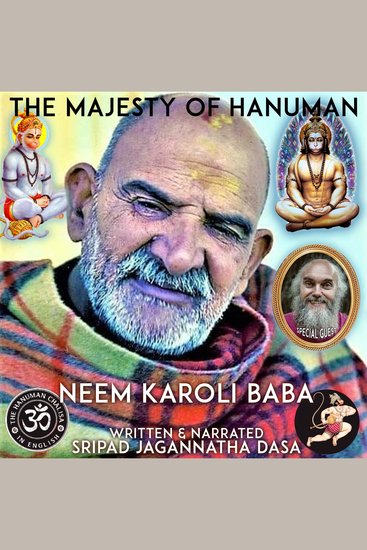
  • The Majesty Of Hanuman Neem Karoli Baba - cover

    The Majesty Of Hanuman Neem...

    Sripad Jagannatha Das

    • 0
    • 0
    • 0
    AN INSIDE LOOK AT INDIA’S GREATEST MYSTIC SAINT! 
     
    THE CHANT 
     
    The Hanuman Chalisa is a hymn in praise of Hanuman authored by Tulsi Das. The word 'chālīsā' means the number forty in Sanskrit, as the Chalisa has forty verses. Hanuman is a great devotee of Ram and one of the central characters in the epic, Ramayan. He is also an incarnation of Shiva. The qualities of Hanuman – his strength, courage, wisdom, celibacy, devotion to Ram, and the many names by which he is known are all in the Hanuman Chalisa. 
     
    Hanuman is the epitome of ultimate devotion manifested with its full glory unchallenged. By the power of his devotion to Sita Ram, he easily achieved supreme status as the perfect devotee and servitor. 
     
    Reciting the Hanuman Chalisa infuses one with unlimited energy and prana. This sacred mantra also increases a person’s resilience and they emerge victorious in every situation. 
     
    THE TEACHER 
     
    Neem Karoli Baba known to his followers as Maharaj-ji - was a mystic saint and devotee of Hanuman. Here is the essence of his remarkable life and teachings. He is known outside India for being the spiritual master of a number of Americans who traveled to India in the 1960s and 70s, including Ram Dass and Bhagavan Das, as well as musicians Krishna Das and Jai Uttal. 
     
    Dr. Richard Alpert, a former Harvard professor and Timothy Leary cohort, was an icon of the hippie, LSD-fueled revolution of the 1960s. Thereafter, on a trip to India - like Clark Kent changing into Superman - he became the much-beloved spiritual teacher Baba Ram Das. His 1970s' iconic book 'Be Here Now' turned on a generation to the deep, non-sectarian spirituality within us all.
    Ver livro