¡Acompáñanos a viajar por el mundo de los libros!
Añadir este libro a la estantería
Grey
Escribe un nuevo comentario Default profile 50px
Grey
Suscríbete para leer el libro completo o lee las primeras páginas gratis.
All characters reduced
The Decadent: Being the Gospel of Inaction - cover

The Decadent: Being the Gospel of Inaction

Ralph Adams Cram

Editorial: DigiCat

  • 0
  • 0
  • 0

Sinopsis

In "The Decadent: Being the Gospel of Inaction," Ralph Adams Cram presents a thought-provoking exploration of aestheticism and the philosophy of inaction, intricately woven into a narrative that critiques the bustling activity of contemporary life. Cram's literary style combines eloquent prose with vivid imagery, drawing from both Romantic and Gothic traditions to create a rich tapestry of contemplative thought. The work speaks to the turn of the 20th century, a time marked by rapid industrialization and cultural transformation, challenging the reader to reflect on the value of stillness and the art of living mindfully amidst chaos. Ralph Adams Cram, a prominent architect and writer, was deeply influenced by the artistic movements of his time and the encroachment of modernity on traditional values. His career straddled the realms of architecture and literature, with a philosophy deeply rooted in the belief that beauty and art were essential to the human experience. Cram's engagement with the aesthetic movement and his personal struggles with the implications of modernity provided the impetus for this contemplative work, illustrating his yearning for a return to a more meaningful existence. This book is highly recommended for readers interested in philosophical literature, aesthetics, and the critique of modernity. Cram's eloquent discourse invites readers to reconsider their relationship with the frenetic pace of life, offering a refreshing perspective that emphasizes the importance of introspection and navigating existence with purpose. "The Decadent" is not only a literary endeavor but also a profound meditation that resonates with a contemporary audience seeking solace in the quietude of thought.
Disponible desde: 15/09/2022.
Longitud de impresión: 28 páginas.


Otros libros que te pueden interesar

  • Project Azorian: The History of the CIA Operation to Recover a Sunken Soviet Submarine - cover

    Project Azorian: The History of...

    Editors Charles River

    • 0
    • 0
    • 0
    Given that there’s such little margin for error in a submersible, many submarine losses remain sources of intrigue and mystery, and few rival the disappearance of the Soviet submarine K-129 in 1968. The Cold War was in high gear, and under the waters of the world’s oceans, Soviet and American submarines were in intense competition, pushing the boundaries of new technologies. Some of these submarines carried nuclear missiles that carried more destructive power than all the bombs dropped by the U.S. Army Air Force throughout World War II, including the nuclear bombs dropped on Hiroshima and Nagasaki. Other submarines, the hunter-killers, were designed to find and destroy these missile-carrying submarines. All of these submarines engaged in their activities while aiming to avoid detection by the other side, establishing a clandestine conflict that was carried out far from the gaze of the public but still strategically vital. If either side could gain a notable advantage, it could abruptly change the fragile balance of power. 
    	Both sides lost submarines in the 1960s, but when the Soviets lost K-129 in 1968, it triggered one of the most interesting episodes of the Cold War, and something that reads like the plot of a techno-thriller. A race developed between the Americans and Soviets to locate the wreck, and when the Americans found it, they realized the submarine sunk in one of the deepest parts of the ocean, far beyond the depths at which conventional divers or submarines could operate. As a result, the CIA, aided by eccentric billionaire Howard Hughes, clandestinely began a lengthy and incredibly expensive project to build equipment that might allow them to recover and examine parts of the sunken submarine.  
    	That operation, Project Azarian, is still controversial over 50 years later. 
    Ver libro
  • Flawed Predictions and Planning Errors - Why We Underestimate Time and Effort (2 in 1) - cover

    Flawed Predictions and Planning...

    William Rands

    • 0
    • 0
    • 0
    This book contains the following two titles: 
    - The Planning Fallacy: The allure of optimism has been a driving force behind humanity’s greatest achievements. It propels innovation, inspires ambition, and fosters resilience in the face of adversity. Yet, this same optimism can lead us astray, particularly when it comes to planning and executing tasks. The belief that everything will unfold as envisioned, without significant setbacks or challenges, is an enticing illusion. This overconfidence, while comforting, often masks the reality of time and resource constraints, resulting in a phenomenon known as the planning fallacy. 
      
    - The Representativeness Heuristic: The representativeness heuristic is one of the most influential concepts in cognitive psychology, profoundly shaping the way individuals make judgments and decisions. First introduced by psychologists Amos Tversky and Daniel Kahneman, this heuristic explains how people often assess probabilities and likelihoods based on how closely an event or object resembles a prototype or existing mental model. While this cognitive shortcut can be useful in navigating a complex world, it also introduces biases that distort reasoning and lead to systematic errors.
    Ver libro
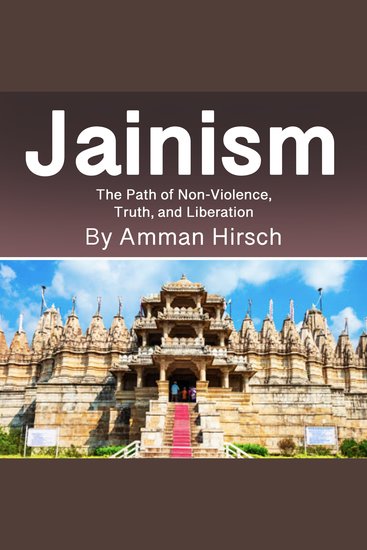
  • Jainism - The Path of Non-Violence Truth and Liberation - cover

    Jainism - The Path of...

    Amman Hirsch

    • 0
    • 0
    • 0
    Jainism, one of the oldest religions in the world, offers a profound philosophical and spiritual framework that emphasizes non-violence, truth, and the quest for liberation. Rooted in ancient Indian traditions, Jainism has significantly influenced the cultural and ethical landscape of India and beyond. With a rich history that dates back over two millennia, Jain teachings focus on the importance of individual responsibility, ethical conduct, and the interconnectedness of all living beings. 
    At the heart of Jainism lies the principle of Ahimsa, or non-violence, which extends not only to humans but to all forms of life, reflecting a deep commitment to compassion and respect for nature. This principle is not merely a passive refrain from harm; it is an active dedication to fostering well-being and harmony in all aspects of life. Alongside Ahimsa, Jains practice Satya (truthfulness), Asteya (non-stealing), Brahmacharya (chastity), and Aparigraha (non-possessiveness), forming a comprehensive ethical code that guides their daily lives and spiritual aspirations. 
    Jainism also emphasizes the significance of self-discipline and self-realization as pathways to liberation (Moksha) from the cycle of birth and death (Samsara). The teachings of the Tirthankaras, spiritual teachers who have attained enlightenment, serve as guides for followers on their spiritual journey. These enlightened beings exemplify the ideal virtues of Jain philosophy and provide practical insights for navigating the complexities of life.
    Ver libro
  • Co-writing a Book - Collaboration and Co-creation for Authors - cover

    Co-writing a Book -...

    Joanna Penn, J. Thorn

    • 0
    • 0
    • 0
    This recording has been digitally produced by DeepZen Limited, using a synthesized version of an audiobook narrator’s voice under license. DeepZen uses Emotive Speech Technology to create digital narrations that offer a similar listening experience to human narration.  
     
    Co-writing can be an amazing experience when two minds come together to create something new in the world. Or it can be a painful process that ends in disaster! In this short book, bestselling authors J. Thorn and Joanna Penn share tips on how to successfully co-write a book and avoid the pitfalls along the way. It includes excerpts from their private co-writing diary, honest notes written every day on a fiction project that will help you on your own journey, and a sample co-writing agreement. 
     
    In this book, you will discover:  
    What is co-writing? 
    Benefits of co-writing 
    The difficulties of co-writing 
    Finding the right person to co-write with 
     
    Before you start:  
    Written legal agreement 
    Practicalities and process of co-writing and co-creation 
    Excerpts from Risen Gods co-writing diary 
    What happens if it goes wrong? 
    Other types of collaboration and co-creation 
    Tips for multi-author boxsets 
    Tips for managing a multi-author collaboration 
     
    Thoughts on a four author collaboration:  
    Authors on a Train from Chicago to New Orleans 
     
    Appendix 1:  
    Example agreement 
     
    If you want to improve your writing skills and your productivity, co-writing might be the right thing for you. Download a sample and try the book now.
    Ver libro
  • Episode 3 - India's Political Events - cover

    Episode 3 - India's Political...

    Anjum Sharma

    • 0
    • 0
    • 0
    What is the political structure like in India? Where were the elections held in the year 2020, which party left which one and whose hand was caught? Why was the Supreme Court angry over the politics of defection? The MPs expressed displeasure over the closure of which fund? Find out all the answers in this episode.
    Ver libro
  • A Rare Recording of Lenin Trotsky and Stalin - cover

    A Rare Recording of Lenin...

    Josef Stalin, Leon Trotsky,...

    • 0
    • 0
    • 0
    Vladimir Lenin (April 22, 1870 - January 21, 1924) was a Russian revolutionary, politician and political theorist who was the founder and first head of government of Soviet Russia from 1917 until his death in 1924, and of the Soviet Union from 1922 until his death. The founder and leader of the Bolsheviks, Lenin led the October Revolution which established the world's first socialist state. His government won the Russian Civil War and consolidated power in a one-party state under the Communist Party. 


    Leon Trotsky (November 7, 1879 - August 21, 1940) was a Russian revolutionary, politician, and political theorist. He was a central figure in the 1905 Revolution, October Revolution, Russian Civil War, and establishment of the Soviet Union. Trotsky and Vladimir Lenin were widely considered the two most prominent Soviet figures, and Trotsky was "de facto" second-in-command during the early years of the Russian Soviet Republic.


    Josef Stalin, December 18, 1878 - March 5, 1953, was a Georgian revolutionary and Soviet politician who ruled the Soviet Union from the mid-1920s until his death in 1953. He served as the general secretary of the Communist Party of the Soviet Union from 1922 to 1952 and premier of the Soviet Union from 1941 to 1953. Despite initially governing the Soviet Union as part of a collective leadership, he eventually consolidated power to become the country's de facto dictator by the 1930s, and his policies became known as Stalinism.
    Ver libro