Junte-se a nós em uma viagem ao mundo dos livros!
Adicionar este livro à prateleira
Grey
Deixe um novo comentário Default profile 50px
Grey
Assine para ler o livro completo ou leia as primeiras páginas de graça!
All characters reduced
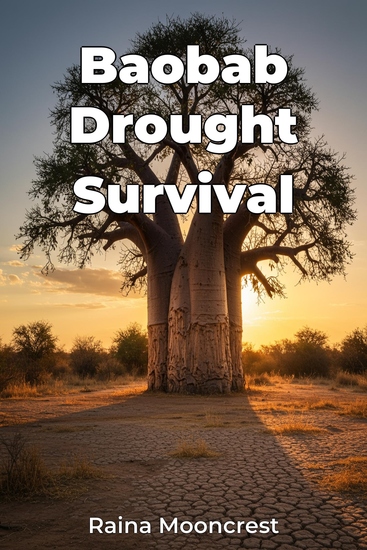
Baobab Drought Survival - cover
LER

Baobab Drought Survival

Raina Mooncrest

Tradutor A AI

Editora: Publifye

  • 0
  • 0
  • 0

Sinopse

Baobab Drought Survival unveils the secrets behind the baobab tree's remarkable ability to thrive in the arid African savanna. This book explores the unique structural and physiological adaptations that allow these trees to endure prolonged drought, highlighting their crucial role in savanna ecosystems. One intriguing fact is the baobab's capacity to store vast quantities of water within its trunk, sometimes exceeding 30,000 gallons, enabling it to survive years of drought. Another key insight is how the baobab supports a diverse range of species during dry spells, acting as a keystone of its environment. The book presents a detailed botanical analysis of the baobab, from its evolutionary history to its ecological significance. It investigates the physiological mechanisms that facilitate water storage, examines interactions with other plants and animals, and assesses the implications of the baobab's survival strategies for broader applications in agriculture and biodiversity conservation. Using anatomical studies, physiological experiments, and climate data, the book demonstrates the baobab's resilience and offers valuable lessons for understanding plant biology and climate change adaptation. The narrative progresses from introducing the baobab to exploring its water retention capabilities and its role in the savanna ecosystem. Ultimately, Baobab Drought Survival emphasizes the importance of understanding and preserving drought-tolerant species, providing a model of resilience for a world facing increasing water scarcity and desertification. This exploration offers new insights into plant resilience and its implications for a changing world.
Disponível desde: 03/03/2025.
Comprimento de impressão: 66 páginas.

Outros livros que poderiam interessá-lo

  • Beekeeping for Beginners - A Step-by-Step Approach to Successful Beekeeping for Novices - cover

    Beekeeping for Beginners - A...

    Melibeth Wilson

    • 0
    • 0
    • 0
    Beekeeping, also known as apiculture, is the practice of managing 
    honeybee colonies for the production of honey and other products. 
    Beekeeping is believed to have started thousands of years ago, and it 
    has played an important role in the history of human civilization. In 
    this article, we will explore the brief history of beekeeping and how 
    it has evolved over time.
    Ver livro
  • Tyrannosaurus Rex and Velociraptors: The History of the Cretaceous Period’s Most Famous Carnivores - cover

    Tyrannosaurus Rex and...

    Editors Charles River

    • 0
    • 0
    • 0
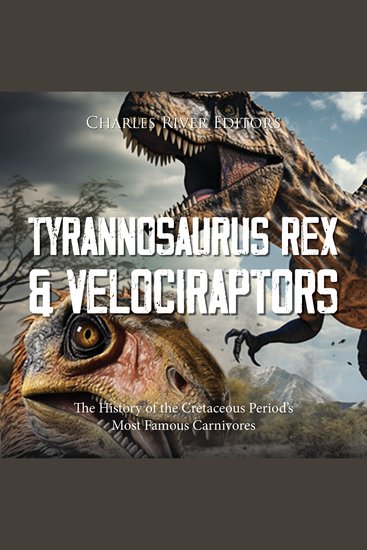
    The massively popular 1990 novel Jurassic Park by Michael Crichton and its subsequent movie adaptations led to a huge resurgence in interest in dinosaurs and the prehistoric world. That interest continues to the present day, even though most of the dinosaurs in Jurassic Park weren’t actually from the Jurassic period. Triceratops, Velociraptor, Tyrannosaurus Rex and the huge sauropods such as Brachiosaurus that feature in the book and movies all actually belong to the Late Cretaceous period, more than 40 million years after the end of the Jurassic. Regardless, certain kinds of dinosaurs remain instantly recognizable, and among them, the “king” is undoubtedly the Tyrannosaurus.  
    The first discovery of a Tyrannosaurus was made in 1902 and the largest carnivorous dinosaur ever found at the time quickly gripped the popular imagination. Even its name was dramatic - Tyrannosaurus Rex means “King of the Tyrant Lizards.” The T-Rex as it quickly became known didn’t appear until the last age of the Late Cretaceous period, the Maastrichtian, but when it did, it was the biggest and most terrifying of all the theropod predators.  
    	Thanks to the movie, there has been some unwitting confusion over the identity of the Velociraptor, and this confusion was due in large part to the fact the name sounds far more scary than the creature to which the name originally belonged. Moreover, the creature to which the label was applied in the novel and movie was actually a distant cousin named Deinonychus, but as the story goes, the author, Michael Crichton, thought “Velociraptor” sounded “more dramatic.” The actual Velociraptor lived not in the badlands of North America, but in the badlands of central-eastern Asia, and it was not nearly as intimidating as Deinonychus. In fact, the main species of genus Velociraptor - Velociraptor mongoliensis - was no bigger than a turkey.
    Ver livro
  • Curious Species - How Animals Made Natural History - cover

    Curious Species - How Animals...

    Whitney Barlow Robles

    • 0
    • 0
    • 0
    Can corals build worlds? Do rattlesnakes enchant? What is a raccoon, and what might it know? Animals and the questions they raised thwarted human efforts to master nature during the so-called Enlightenment—a historical moment when rigid classification pervaded the study of natural history, people traded in people, and imperial avarice wrapped its tentacles around the globe. Whitney Barlow Robles makes animals the unruly protagonists of eighteenth-century science through journeys to four spaces and ecological zones: the ocean, the underground, the curiosity cabinet, and the field. Her forays reveal a forgotten lineage of empirical inquiry, one that forced researchers to embrace uncertainty. This tumultuous era in the history of human-animal encounters still haunts modern biologists and ecologists as they who struggle to fathom animals today. 


    In an eclectic fusion of history and nature writing, Robles alternates between careful historical investigations and probing personal narratives. These excavations of the past and present of distinct nonhuman creatures reveal the animal foundations of human knowledge and show why tackling our current environmental crisis first requires looking back in time.
    Ver livro
  • Living Through The Gale - Being prepared for heavy weather at sea - cover

    Living Through The Gale - Being...

    Tom Cunliffe

    • 0
    • 0
    • 0
    Heavy weather is a lurking spectre that most of us hope and plan to avoid, but not even internet forecasting can make it go away. Anyone intent on crossing oceans must be ready to deal with it if it comes, as well it may. Even well-informed inshore and continental-shelf sailors will inevitably be caught out sooner or later. The object of this slim, quickly absorbed volume is to give everyone, whatever their passage-making aspirations, a sound brief so that whether they find themselves at the wrong end of a force-six blow along the coast, or confronting serious waves far out at sea, they are fully aware of their options for taking it in their stride.Heavy weather is a lurking spectre that most of us hope and plan to avoid, but not even internet forecasting can make it go away. Anyone intent on crossing oceans must be ready to deal with it if it comes, as well it may. Even well-informed inshore and continental-shelf sailors will inevitably be caught out sooner or later. The object of this slim, quickly absorbed volume is to give everyone, whatever their passage-making aspirations, a sound brief so that whether they find themselves at the wrong end of a force-six blow along the coast, or confronting serious waves far out at sea, they are fully aware of their options for taking it in their stride.
    Ver livro
  • Nature's Balancing Act - How Small Quirks of Physics Makes Life Possible - cover

    Nature's Balancing Act - How...

    Ken Hicks

    • 0
    • 0
    • 0
    Are the physical laws of our universe finely tuned, such that life can exist? What does this imply about how our universe formed? Questions like these are examined in Nature's Balancing Act, presented for a wide audience. From the Big Bang to present-day research, ranging from gravitational waves to experiments on antimatter, our physical laws are shown to be slightly off balance, allowing life to exist.In its opening chapters, the following is asked: What would happen if the strong nuclear force, which binds protons and neutrons together, were slightly stronger or weaker? We know today that pushing the nuclear force off balance by just a few percent would create a different universe, unlike our own. Also, for life to exist, there must be a slight imbalance in the way matter and antimatter were created in the Big Bang. These are just two examples of the fine tuning of physical laws that must happen for the cosmological conditions to be right for life to exist. If the universe wasn't “just so,” you wouldn't be here to hear about it!Even with a favorable universe, how did life on Earth begin? Can human life continue to exist for millions of years, or will we cause our own extinction? These topics are considered in the book and provide a fascinating look at our existence on Earth and the possibility of life elsewhere.
    Ver livro
  • Chorus of Women - cover

    Chorus of Women

    Aristophanes

    • 0
    • 0
    • 0
    LibriVox volunteers bring you 16 recordings of Chorus of Women by Aristophanes. This was the Weekly Poetry project for October 21, 2012.Aristophanes was a comic playwright of ancient Athens. This poem is from the Thesmophoriazusae; meaning Women Celebrating the Festival of the Thesmophoria, sometimes also called The Poet and the Women) (Summary from Wikipedia )
    Ver livro