Junte-se a nós em uma viagem ao mundo dos livros!
Adicionar este livro à prateleira
Grey
Deixe um novo comentário Default profile 50px
Grey
Assine para ler o livro completo ou leia as primeiras páginas de graça!
All characters reduced
The Collected Works of Rafael Sabatini - Enriched edition 100+ Novels Short Stories and Historical Writings - cover
LER

The Collected Works of Rafael Sabatini - Enriched edition 100+ Novels Short Stories and Historical Writings

Rafael Sabatini

Editora: DigiCat

  • 0
  • 0
  • 0

Sinopse

In 'The Collected Works of Rafael Sabatini,' readers are presented with an extensive anthology that encapsulates the rich tapestry of Sabatini's storytelling prowess. This comprehensive collection showcases his signature blend of adventure, romance, and historical fidelity, reflecting the literary style that characterized early 20th-century fiction. Sabatini's narratives, filled with swashbuckling heroes and cunning villains, not only entertain but also illuminate the socio-political landscapes of the eras he depicts, particularly the turbulent times of the 17th and 18th centuries. Through masterful prose, he crafts complex characters and intricate plots that resonate with themes of honor, betrayal, and redemption, making this collection a vital portal into a world of high adventure and moral ambiguity. Rafael Sabatini, a prolific writer of Italian descent, was influenced by his diverse heritage and early exposure to literature. Born in 1875, his life experiences—including travels across Europe and his extensive reading—cultivated a vivid imagination and a keen understanding of the human condition. His fascination with historical narratives and a talent for creating captivating characters emerged as hallmarks of his work, inspiring readers and writers alike in a legacy that endures. This anthology is highly recommended for lovers of historical fiction and adventure tales. It invites readers to immerse themselves in captivating escapades and richly drawn characters, making it an indispensable addition to any literary collection. Whether a seasoned Sabatini admirer or a newcomer to his world, this collected works offers a remarkable journey through the extraordinary imagination of one of the early 20th century's most celebrated authors.

In this enriched edition, we have carefully created added value for your reading experience:
- A comprehensive Introduction outlines these selected works' unifying features, themes, or stylistic evolutions.
- A Historical Context section situates the works in their broader era—social currents, cultural trends, and key events that underpin their creation.
- A concise Synopsis (Selection) offers an accessible overview of the included texts, helping readers navigate plotlines and main ideas without revealing critical twists.
- A unified Analysis examines recurring motifs and stylistic hallmarks across the collection, tying the stories together while spotlighting the different work's strengths.
- Reflection questions inspire deeper contemplation of the author's overarching message, inviting readers to draw connections among different texts and relate them to modern contexts.
- Lastly, our hand‐picked Memorable Quotes distill pivotal lines and turning points, serving as touchstones for the collection's central themes.
Disponível desde: 16/11/2023.
Comprimento de impressão: 6640 páginas.
Outros livros que poderiam interessá-lo

  • A Slav Soul - From their pens to your ears genius in every story - cover

    A Slav Soul - From their pens to...

    Alexander Kuprin

    • 0
    • 0
    • 0
    Alexander Kuprin was born in Narovchat, Penza in Russia on 7th September 1870. 
    At 3 his Father died and he and mother moved to Moscow. By 10 he was enrolled at the Second Moscow Military High School and there his interest in literature began. The Alexander Military Academy followed and two years later he was a sub-lieutenant and posted to an Infantry Regiment for a further four years. 
    Despite his duties he was a now a keen writer and published his first short story at this time. His military duties also garnered him experiences for his breakthrough work ‘The Duel’.  Leaving the military he left for Kiev to work for local newspapers.  He continued to publish both stories and novels and by 1901 he was in St Petersburg becoming part of a group that included Chekhov, Ivan Bunin, Maxim Gorky and Leonid Andreyev.  
    In the years that followed further controversial works and acclaim followed.  His comments on the regime meant he was also put under secret police surveillance.   
    As World War I erupted, Kuprin opened a military hospital but was then given command of an infantry company in Finland. He was soon discharged on grounds of ill health.  
    The October Revolution saw him praise Lenin, but he warned that the Bolsheviks threatened Russian culture and might cause further widespread suffering to the peasants.  As Civil War raged he took his family to Helsinki and then on to Paris. 
    Exile saw his talents decline further and his succumbing to alcoholism. He became lonely and withdrawn. The family's poverty increased his malaise.   
    In May 1937, the Kuprin’s returned to Moscow.  He now saw his work published but wrote almost nothing new.  In 1938 his health rapidly deteriorated.  Already suffering from a kidney problems and sclerosis, he had now developed cancer of the oesophagus.  
    Alexander Kuprin died on 25th August 1938.
    Ver livro
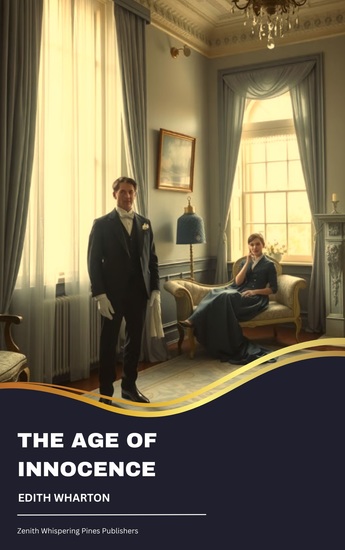
  • The Age of Innocence - cover

    The Age of Innocence

    Edith Wharton

    • 0
    • 0
    • 0
    A world of glittering rules. A love that breaks them. A choice that could destroy everything.
    Set amid the rigid elegance of 1870s New York high society, The Age of Innocence follows Newland Archer—a man poised to marry the perfect social match—until the arrival of Countess Ellen Olenska, whose independence and passion awaken a longing he can no longer suppress. Torn between duty and desire, Newland must confront the silent forces that shape his world and threaten his happiness.
    
    Praised as "one of America's greatest novels," Wharton's masterpiece blends emotional depth, razor-sharp social observation, and exquisite prose. Readers treasure its themes of love, sacrifice, and the invisible cages of society.
    
    If you crave richly layered storytelling, unforgettable characters, and a romance shaped by impossible choices, this classic will captivate you.
    
    Step into Old New York—and experience a love story as fragile and beautiful as the world that binds it.
    Ver livro
  • A Farewell to Arms - cover

    A Farewell to Arms

    Ernest Hemingway

    • 0
    • 0
    • 0
    Set against the harsh landscape of World War I-era Europe, this hauntingly beautiful tale of love and loss follows American ambulance driver Frederic Henry as he embarks on a romance with British nurse Catherine Barkley. Narrated with Hemingway's signature economy and power, the book navigates the brutal realities of war and the sacrifices one makes for those they love.
     
    Blending gritty realism with poignant romance, and daring escapes with focused emotion, A Farewell to Arms endures as one of Hemingway's most iconic novels.
    Ver livro
  • No Longer Human Confessions Of A Faulty Man - cover

    No Longer Human Confessions Of A...

    Osamu Dazai

    • 0
    • 0
    • 0
    No Longer Human (1948, Ningen Shikkaku / A Shameful Life / Confessions of a Faulty Man) was an attack on the traditions of Japan, capturing the postwar crisis of Japanese cultural identity. Framed by an epilogue and prologue, the story is told in the form three notebooks left by Ōba Yōzō, whose calm exterior hides his tormented soul.
    Osamu Dazai was a Japanese author who is considered one of the foremost fiction writers of 20th century Japan. A number of his most popular works, such as Shayō (The Setting Sun) and Ningen Shikkaku (No Longer Human), are considered modern-day classics in Japan.
    Japanese novelist and a master storyteller, who became at the end of World War II the literary voice and literary hero of his generation. Dazai's life ended in double-suicide with his married mistress. In many books Dazai used biographical material from his own family background, and made his self-destructive life the subject of his books. 
    Famous works of the author Osamu Dazai: The Setting Sun, Run, Melos!, Winter's firework, I heard it in this way, No Longer Human, Good-Bye.
    Ver livro
  • Bartleby The Scrivener - A Story of Wall Street - cover

    Bartleby The Scrivener - A Story...

    Herman Melville

    • 0
    • 0
    • 0
    Bartleby, the Scrivener: A Story of Wall Street is a novella by the American novelist Herman Melville (1819–1891). It first appeared anonymously in two parts in the November and December 1853 editions of Putnam's Magazine, and was reprinted with minor textual alterations in his The Piazza Tales in 1856. 
     
    Among Melville's best-known works are Moby-Dick; Typee , a romanticized account of his experiences in Polynesia; and Billy Budd, Sailor, a posthumously published novella. Although his reputation was not high at the time of his death, the 1919 centennial of his birth was the starting point of a Melville revival, and Moby-Dick grew to be considered one of the great American novels. 
     
    During his last years, he privately published two volumes of poetry, and left one volume unpublished. The novella Billy Budd was left unfinished at his death, but was published posthumously in 1924. Melville died from cardiovascular disease in 1891.
    Ver livro
  • Buddenbrooks - The Decline of a Family - cover

    Buddenbrooks - The Decline of a...

    Thomas Mann

    • 0
    • 0
    • 0
    Buddenbrooks is a 1901 novel by Thomas Mann, chronicling the decline of a wealthy north German merchant family over the course of four generations, incidentally portraying the manner of life and mores of the Hanseatic bourgeoisie in the years from 1835 to 1877. Mann drew deeply from the history of his own family, the Mann family of Lübeck, and their milieu.
    It was Mann's first novel, published when he was twenty-six years old. With the publication of the second edition in 1903, Buddenbrooks became a major literary success. Its English translation by Helen Tracy Lowe-Porter was published in 1924. The work led to a Nobel Prize in Literature for Mann in 1929; although the Nobel award generally recognises an author's body of work, the Swedish Academy's citation for Mann identified "his great novel Buddenbrooks" as the principal reason for his prize.
    Mann began writing the book in October 1897, when he was twenty-two years old. The novel was completed three years later, in July 1900, and published in 1901. His objective was to write a novel on the conflicts between businessman and artist's worlds, presented as a family saga, continuing in the realist tradition of such 19th-century works as Stendhal's Le Rouge et le Noir (1830; The Red and the Black). Buddenbrooks is his most enduringly popular novel, especially in Germany, where it has been cherished for its intimate portrait of 19th-century German bourgeois life.
    Before Buddenbrooks Mann had written only short stories, which had been collected under the title Der kleine Herr Friedemann (1898, Little Herr Friedemann). They portrayed spiritually challenged figures who struggle to find happiness in (or at the margins of) bourgeois society. Similar themes appear in the Buddenbrooks, but in a fully developed style that already reflects the mastery of narrative, subtle irony of tone, and rich character descriptions of Mann's mature fiction.
    The exploration of decadence in the novel reflects the influence of Schopenhauer's The World as Will and Representation (1818, 1844) on the young Mann. The Buddenbrooks of successive generations experience a gradual decline of their finances and family ideals, finding happiness increasingly elusive as values change and old hierarchies are challenged by Germany's rapid industrialisation. The characters who subordinate their personal happiness to the welfare of the family firm encounter reverses, as do those who do not.
    The city where the Buddenbrooks live shares so many street names and other details with Mann's native town of Lübeck that the identification is unmistakable, although the novel makes no mention of the name. The young author was condemned for writing a scandalous, defamatory roman à clef about (supposedly) recognisable personages. Mann defended the right of a writer to use material from his own experience.
    The years covered in the novel were marked by major political and military developments that reshaped Germany, such as the Revolutions of 1848, the Austro-Prussian War, and the establishment of the German Empire. Historic events nevertheless generally remain in the background, having no direct bearing on the lives of the characters.
    Ver livro