¡Acompáñanos a viajar por el mundo de los libros!
Añadir este libro a la estantería
Grey
Escribe un nuevo comentario Default profile 50px
Grey
Suscríbete para leer el libro completo o lee las primeras páginas gratis.
All characters reduced
Costume Symbolism Use - cover

Costume Symbolism Use

Rafael Montero

Traductor A AI

Editorial: Publifye

  • 0
  • 0
  • 0

Sinopsis

"Costume Symbolism Use" explores how costumes on stage function as a visual language, communicating setting, character, and culture to audiences. The book argues that costumes are not mere decorations but powerful tools for storytelling in theatrical productions.

 
It reveals that costumes can establish setting by evoking specific places and time periods through fabric, color, and silhouette. They also contribute to character development, reflecting a character's personality and journey.

 
The book progresses systematically, starting with the fundamentals of costume design and its historical development. It then examines how costumes signify setting, character, and culture, using case studies from various theatrical productions.

 
The analysis culminates in discussing the ethical considerations of costume design, such as cultural appropriation and representation.

 
By analyzing costumes as a text, the book provides a framework for understanding costume design as a critical element of theatrical communication and offers insights for directors, designers, actors, and audiences.
Disponible desde: 05/05/2025.
Longitud de impresión: 73 páginas.
Otros libros que te pueden interesar

  • Heels Across a Wooden Floor - cover

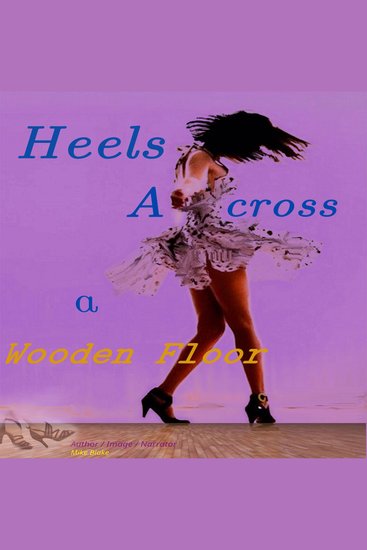
    Heels Across a Wooden Floor

    Mike Blake

    • 0
    • 0
    • 0
    Heels Across a Wooden Floor: A Poem / Song lyrics  
    https://www.amazon.com/dp/B086KTZMKP 
    About the eternal pull of love, from a dancing perspective.  
    Imagine walking into a nightclub, and seeing the woman of your dreams skipping across 
    the dance floor; elegantly, with heels that she uses to swivel and cavort in an organic  
    fashion. Enticing you to join, even if you can't dance, at least with your eyes. 
    And to the women, giving over to an abduction of your senses into the realms of the  
    dance, urging you to join in that sensual celebration.
    Ver libro
  • The House of Fragile Things - Jewish Art Collectors and the Fall of France - cover

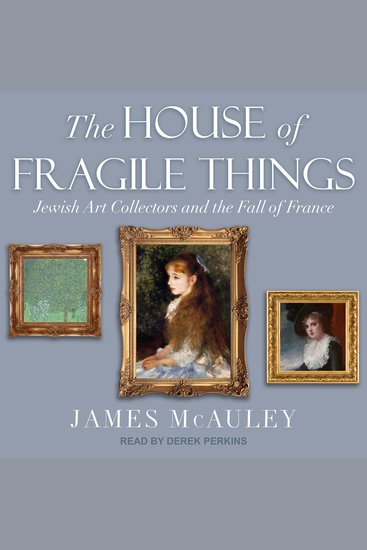
    The House of Fragile Things -...

    James McAuley

    • 0
    • 0
    • 0
    A powerful history of Jewish art collectors in France, and how an embrace of art and beauty was met with hatred and destruction 


    In the dramatic years between 1870 and the end of World War II, a number of prominent French Jews—pillars of an embattled community—invested their fortunes in France's cultural artifacts, sacrificed their sons to the country's army, and were ultimately rewarded by seeing their collections plundered and their families deported to Nazi concentration camps. 


    In this rich, evocative account, James McAuley explores the central role that art and material culture played in the assimilation and identity of French Jews in the fin-de-siècle. Weaving together narratives of various figures, some familiar from the works of Marcel Proust and the diaries of Jules and Edmond Goncourt—the Camondos, the Rothschilds, the Ephrussis, the Cahens d'Anvers—McAuley shows how Jewish art collectors contended with a powerful strain of anti-Semitism: they were often accused of "invading" France's cultural patrimony. The collections these families left behind—many ultimately donated to the French state—were their response, tragic attempts to celebrate a nation that later betrayed them.
    Ver libro
  • Wolf Of Wall Street The - The Ultimate Trivia Collection - From The Movie Directed By Martin Scorsese - cover

    Wolf Of Wall Street The - The...

    Film Trivia Metaverse

    • 0
    • 0
    • 0
    THE WOLF OF WALL STREET 
    THE ULTIMATE TRIVIA COLLECTION 
      
    FROM THE MOVIE DIRECTED BY MARTIN SCORSESE 
      
    CREATED BY FILM TRIVIA METAVERSE 
      
    ABOUT THE FILM 
    The Wolf of Wall Street is a biographical black comedy directed by Martin Scorsese, based on the memoir of stockbroker Jordan Belfort. The film follows Belfort’s rise in the world of finance, from working at a modest brokerage firm to founding his own company, Stratton Oakmont. The movie delves into his life of excess, corruption, and debauchery, highlighting themes of greed, moral decay, and the corrupting influence of wealth. With fast-paced storytelling, dark humor, and sharp social commentary, the film critiques the culture of greed and the lengths people will go to achieve success at any cost. 
      
    TRIVIA SAMPLES: 
      
    “The actors used crushed B vitamins as a stand-in for cocaine in scenes where the characters snort drugs. Jonah Hill later had to be hospitalized due to bronchitis after excessive inhalation during the filming.” 
      
    “Martin Scorsese’s films often feature improvisation, and The Wolf of Wall Street was no different. A large portion of the movie was improvised by the actors, as Scorsese encourages it during production.” 
      
    “Jonah Hill took a significant pay cut to be part of the film, earning only the minimum salary from the Screen Actors Guild, which was $60,000. This decision was driven by his desire to work with Martin Scorsese.”
    Ver libro
  • Kofun Period - The Mysterious Tomb Builders and the Roots of Imperial Japan - cover

    Kofun Period - The Mysterious...

    Rolf Hedger

    • 0
    • 0
    • 0
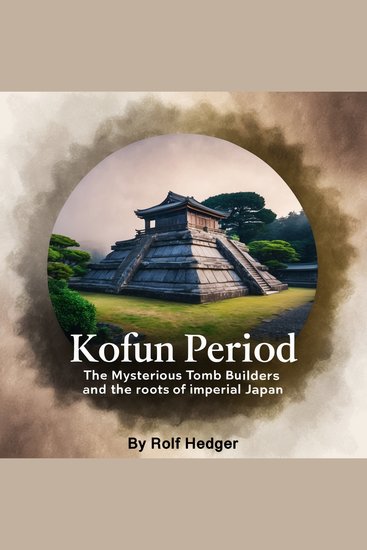
    The Kofun Period, which lasted from approximately 250 to 600 AD, marks a significant era in early Japanese history. This period is named after the distinct burial mounds, or "kofun," that were constructed during this time. These mounds vary in size and shape but are most commonly recognized for their keyhole-like design. The Kofun Period is pivotal as it represents a time of political consolidation, the development of social structures, and the emergence of a powerful ruling elite that would lay the foundation for the imperial system in Japan. 
    The beginning of the Kofun Period is closely tied to the formation of more complex societies in the Japanese archipelago. By this time, a system of chiefdoms had developed, and the early Yamato state began to emerge as a dominant political force. The period sees the consolidation of power under a centralized leadership, which eventually paved the way for the establishment of the imperial family that still exists today. During the Kofun Period, society transitioned from small, localized groups to more organized and hierarchical structures, a shift that was reflected in the elaborate tombs built for the elites. 
    The most notable characteristic of the Kofun Period is the construction of large burial mounds for the ruling class. These tombs were not only elaborate final resting places for powerful individuals but also symbolized the political power and religious authority of the deceased. The kofun mounds varied in size, with some measuring several hundred meters in length. These tombs were often surrounded by moats and would contain a wealth of grave goods, such as weapons, jewelry, and pottery, which reflected both the material culture of the time and the importance of the individual being buried.
    Ver libro
  • Hateful Eight The - The Ultimate Trivia Collection - From The Movie Directed By Quentin Tarantino - cover

    Hateful Eight The - The Ultimate...

    Film Trivia Metaverse

    • 0
    • 0
    • 0
    THE HATEFUL EIGHT 
    THE ULTIMATE TRIVIA COLLECTION 
      
    FROM THE MOVIE DIRECTED BY QUENTIN TARANTINO 
      
    CREATED BY FILM TRIVIA METAVERSE 
      
    ABOUT THE FILM 
    The Hateful Eight is a 2015 American Western thriller directed by Quentin Tarantino. Set in a remote Wyoming haberdashery during a snowstorm, eight strangers seek refuge, including bounty hunters, outlaws, and a sheriff. As tensions rise, secrets are revealed, and alliances are formed amidst growing suspicion. The film explores themes of betrayal, revenge, and justice, with sharp, witty dialogue and intense confrontations. The confined setting and escalating violence reflect the harsh realities of post-Civil War America. With a focus on character-driven suspense, Tarantino blends dark humor and brutal action to examine moral ambiguity and survival in a hostile environment. 
      
    TRIVIA SAMPLES: 
      
    “After the script was leaked online, Quentin Tarantino initially didn’t want to make the film. However, after a brief reading in Los Angeles, the cast became excited about the project. With Samuel L. Jackson's encouragement, Tarantino decided to go ahead with it.” 
      
    “Some of Ennio Morricone's compositions for the film were previously unused scores from The Thing (1982), a movie starring Kurt Russell.” 
      
    “At one point, Joe Gage (Michael Madsen) says, "A bastard’s work is never done," which was a tagline for the poster of Inglourious Basterds (2009).” 
      
    “Daisy's song was performed live by Jennifer Jason Leigh on set. The song, along with sounds of wood being hammered and dialogue by Kurt Russell, is featured in the film’s soundtrack.”
    Ver libro
  • Mansa Musa and the Empire of Mali - A True Story of Gold and Greatness from Africa - cover

    Mansa Musa and the Empire of...

    P. James Oliver

    • 0
    • 0
    • 0
    Oliver's well-researched biography of Mansa Musa reads like an exotic tale of gold, glory, and adventure. During his long reign as Mali's emperor, Mansa Musa led his empire into its Golden Age; presided over a spectacular, 60,000 person, 9,000 mile pilgrimage; founded a university in Timbuktu; and helped revolutionize architecture across the Sudan. Oliver does not allow Musa's story to get bogged down in detail by seamlessly weaving a lot of history into his narrative and by supplying curious readers with an extensive description. 
    Many of the African ancestors of today's African-Americans came from West Africa. From 700 -- 1600 A. D., one after the other, three great, black, commercial empires dominated West Africa. They were powerful, prosperous, complex, stable -- and large. At its height, the Empire of Mali was the size of all of Western Europe.
    Ver libro