Junte-se a nós em uma viagem ao mundo dos livros!
Adicionar este livro à prateleira
Grey
Deixe um novo comentário Default profile 50px
Grey
Assine para ler o livro completo ou leia as primeiras páginas de graça!
All characters reduced
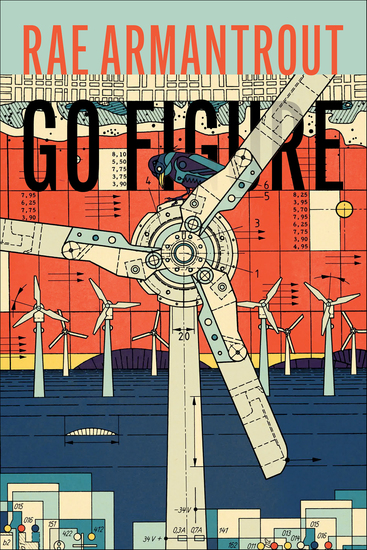
Go Figure - cover
LER

Go Figure

Rae Armantrout

Editora: Wesleyan University Press

  • 0
  • 0
  • 0

Sinopse

The poems in Pulitzer Prize-winner Rae Armantrout's new book are concerned with "this ongoing attempt/ to catalog the world" in a time of escalating disasters. From the bird who "check-marks morning/once more//like someone who gets up/to make sure// the door is locked" to bat-faced orchids, raising petals like light sails as if about to take flight, these poems make keen visual and psychological observations. The title Go Figure speaks to the book's focus on the unexpected, the strange, and the seemingly incredible so that: "We name things/ to know where we are." Moving with the deliberate precision that is a hallmark of Armantrout's work, they limn and refract, questioning how we make sense of the world, and ultimately showing how our experience of reality is exquisitely enfolded in words. "It's true things fall apart." Armantrout writes. 'Still, by thinking/we heat ourselves up."Sample TextHYPER-VIGILANCEHilarious,the way a crab's slendereye-stalksstand straight upfrom its scuttlingcarapace—the way vigilancetakes many forms? *That bird check-marks morningonce morelike someone who gets upto make surethe door is locked. *I soundlike I knowwhat I'm talking about.I sound like a comedian.
Disponível desde: 06/08/2024.
Comprimento de impressão: 129 páginas.
Outros livros que poderiam interessá-lo

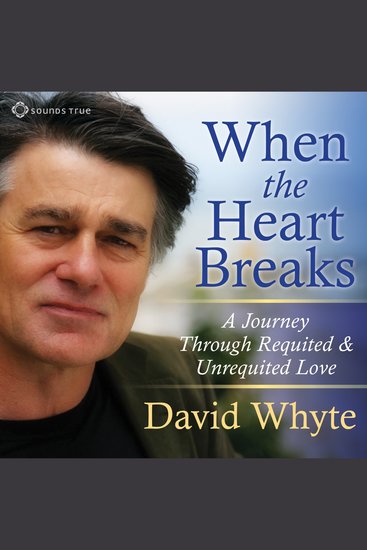
  • When the Heart Breaks - A Journey Through Requited and Unrequited Love - cover

    When the Heart Breaks - A...

    David Whyte

    • 0
    • 0
    • 0
    The Courage to Embrace the Gifts and Losses in LifeIf you never knew disappointment, would you ever grow? If you had never felt loss, could you have compassion for another? Without real heartache, would you ever know the greatness of love? On When the Heart Breaks, David Whyte invites you to join him in an investigation of a question that rests at the center of human experience. With a poet’s insight into the landscape of the soul, he offers a deeply moving exploration of how we experience beauty and loss—and how with resilience and time we can rise again each time we are broken. “There is no path we can walk that will not take us through some form of heartbreak,” David Whyte tells us. “And to accept that truth is to give a merciful gift to ourselves.” So often our hearts break because the love we offer—whether to a partner, a friend, a child, our work, or a place—is not returned to us in the same way. Yet if we retreat from the experience of unrequited love, we miss the opportunity to discover the countless invisible ways that the world offers us its love in return, often unlooked for and unrecognized. Being fully open to both joy and sadness, says David Whyte, helps us to develop a more beautiful mind—a mind that embraces the hidden riches of life. We learn to apprentice ourselves to the great and small difficulties that test the edges of our identity and lead us into greater and greater understanding. With words to inspire laughter, courage, and deep reflection, David Whyte invites you to join him in the great conversation that takes us into the exquisite vulnerability of the unknown—the way a heartbreak can make us more humble, more aware, and expand our ability to love.
    Ver livro
  • A Pinch of Salt - cover

    A Pinch of Salt

    Robert Graves

    • 0
    • 0
    • 0
    LibriVox volunteers bring you 19 different recordings of A Pinch of Salt by Robert Graves.    Perhaps now best known as the author whose book of the same name inspired the Masterpiece Theater series I, Claudius, Robert Graves wrote prolifically throughout his 90 years, concentrating on myth in a scholarly vein. Many of his works were academically controversial. And yet, first and foremost, he considered himself a poet. This poem, which first appeared in 1920, shows Graves to be not only a careful and cautious man, but also exceedingly passionate (Summary by Alan Davis-Drake).    This was the weekly poetry project for the week of June 3rd, 2007.
    Ver livro
  • The Wild Swans at Coole - cover

    The Wild Swans at Coole

    William Butler Yeats

    • 0
    • 0
    • 0
    The Wild Swans at Coole is a collection of poems by William Butler Yeats, first published in 1917. It is also the name of a poem in that collection. The Wild Swans at Coole is in the "middle stage" of Yeats' writing and is concerned with, amongst other themes, Irish nationalism and the creation of an Irish aesthetic. (Summary by Wikipedia)
    Ver livro
  • Sonnet 023 - cover

    Sonnet 023

    William Shakespeare

    • 0
    • 0
    • 0
    Librivox volunteers bring you eight different readings of William Shakespeare’s Sonnet 23, a weekly poetry project.(Summary by Annie Coleman)
    Ver livro
  • Love And Reciprocity: Wild And Free - cover

    Love And Reciprocity: Wild And Free

    Q. Lee

    • 0
    • 0
    • 0
    Love And Reciprocity: Wild And Free is about uninhibited, erotic, and sensual poetry. Explicit sexual content for Mature Audiences.
    Ver livro
  • Hira-Singh's Farewell to Burmah - cover

    Hira-Singh's Farewell to Burmah

    Laurence Hope

    • 0
    • 0
    • 0
    Adela Florence Nicolson was an English poet who wrote under the pseudonym Laurence Hope.She was born in England and joined her father in 1881, who was employed in the British Army at Lahore (The traditional capital of Punjab for a millennium, Lahore was the cultural centre of the northern Indian subcontinent which extends from the eastern banks of the Indus River to New Delhi.)Her father was editor of the Lahore arm of The Civil and Military Gazette, and it was he who in all probability gave Rudyard Kipling (a contemporary of his daughter) his first employment as a journalist. Her sisters Annie Sophie Cory and Isabel Cory also pursued writing careers: Annie wrote popular, racy novels under the pseudonym "Victoria Cross," while Isabel assisted and then succeeded their father as editor of the Sind Gazette. ( Wikipedia)
    Ver livro