¡Acompáñanos a viajar por el mundo de los libros!
Añadir este libro a la estantería
Grey
Escribe un nuevo comentario Default profile 50px
Grey
Suscríbete para leer el libro completo o lee las primeras páginas gratis.
All characters reduced
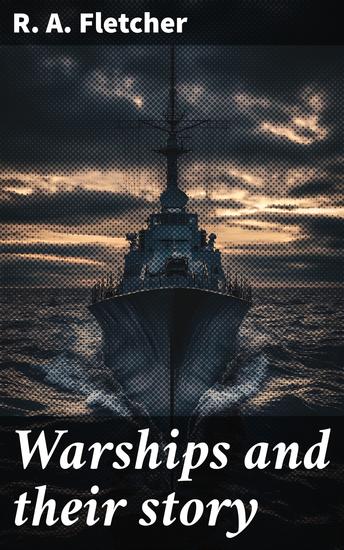
Warships and their story - cover

Warships and their story

R. A. Fletcher

Editorial: Good Press

  • 0
  • 0
  • 0

Sinopsis

In 'Warships and Their Story,' R. A. Fletcher meticulously chronicles the evolution of naval warfare and the pivotal role played by warships throughout history. Blending rigorous research with evocative prose, Fletcher explores key technological advancements, strategic developments, and the interpersonal narratives underpinning maritime conflict. The book is situated within a rich literary tradition that includes naval history and military strategy, inviting readers to consider both the tangible mechanics of warfare and the human stories that emerge from it. Fletcher's skillful integration of historical analysis with a narrative flair makes this work a compelling study for enthusiasts and scholars alike. R. A. Fletcher is a distinguished naval historian with extensive experience at the crossroads of military strategy and maritime studies. His scholarly pursuits have drawn him to archives around the globe, enabling him to unearth lesser-known accounts that enrich the overarching narrative of naval warfare. Fletcher's passion for history and keen analytical mind have shaped his understanding of the significance of warships, culminating in a rigorous exploration that reflects his profound respect for the complexities of maritime conflict. For readers captivated by history and the intricacies of naval warfare, 'Warships and Their Story' offers an enlightening journey through time. Fletcher's authoritative voice and vivid storytelling not only engage the intellect but also evoke a deep appreciation for the indelible impact of warships on the course of human history. This book is a must-read for scholars, historians, and any maritime enthusiast eager to explore the profound stories behind these storied vessels.
Disponible desde: 02/03/2025.
Longitud de impresión: 140 páginas.

Otros libros que te pueden interesar

  • Courageous Women of the Bible - 30 timeless lessons on faith courage wisdom and devotion - cover

    Courageous Women of the Bible -...

    Arcelio Hernández Mussio

    • 0
    • 0
    • 0
    The Bible often remembers and celebrates the names of great men of God. People like Abraham, Moses, David, Paul, Isaiah, and Elijah are well-known for their important roles in the story of God's people. These men are honored for their faith, leadership, and the key parts they played in God's plan. 
    However, as we delve into the Scriptures, we often overlook the equally significant contributions of women of God. The Bible, while rich with the stories of these men, also holds accounts of extraordinary women whose strength, wisdom, and faithfulness were crucial to the unfolding of God's narrative. For instance, Sarah's faith in God's promise of a son, Ruth's loyalty to her mother-in-law, and Mary's acceptance of her role in God's plan. Yet, these women often remain in the background, their stories less frequently told, their virtues less regularly celebrated. 
    This book is a necessary contribution to Christian literature, as it celebrates the strength and wisdom of prominent women in the Bible. In the pages you are about to read, you will get a glimpse into the lives of these extraordinary women. Their faith and actions were significant and played pivotal roles in shaping the Biblical narrative. The book is organized chronologically, starting with the Old Testament and moving through to the New Testament, to provide a comprehensive view of these women's contributions. 
    This book celebrates these 30 women, each embodying unique qualities and virtues that can guide and inspire us in our modern lives. Their stories offer timeless lessons on resilience, faith, leadership, and profound love, demonstrating that the challenges and virtues they faced are just as relevant and applicable in our lives today. Whether it is Hannah's unwavering faith, Abigail's strategic wisdom, or Ruth's selfless loyalty, these women provide powerful examples of how to live with purpose and integrity in our contemporary world.
    Ver libro
  • Mithras - The Fictional God Who Was Worshipped by the Romans - cover

    Mithras - The Fictional God Who...

    Kelly Mass

    • 0
    • 0
    • 0
    Mithraism was a Roman mystery religion centered around the god Mithras, also referred to as the Mithraic mysteries. While the Roman version of Mithras was inspired by the Iranian worship of the Zoroastrian god Mithra, the iconography and practices associated with Roman Mithras diverged significantly from their Persian counterparts. The degree of continuity between Persian and Greco-Roman rituals is a subject of ongoing debate among scholars. Mithraism flourished from the 1st to the 4th century CE, particularly among the soldiers of the Roman Empire. 
    The worship of Mithras involved a complex system of initiation, with seven distinct levels that initiates progressed through. This initiation process was accompanied by ceremonial feasts, and those who joined the religion were called *syndexioi*, meaning "joined by the handshake." These initiates gathered in vast numbers within underground shrines known as *mithraea*. The religion likely originated in Rome, but its influence spread throughout the western Roman Empire, reaching as far as Roman Africa, Numidia, and Roman Britain. Mithraism also had a lesser presence in Roman Syria in the east, though it was never as widespread in that region. 
    In the early centuries of the Roman Empire, Mithraism and early Christianity were seen as competing religious systems, with Christians later persecuting Mithraists during the 4th century. Over time, Mithraism was gradually repressed and eventually eradicated from the Roman Empire by the end of the 4th century.
    Ver libro
  • Shiloh: The History of the First Major Battle in the Western Theater during the Civil War - cover

    Shiloh: The History of the First...

    Jonathan Gianos-Steinberg

    • 0
    • 0
    • 0
    After Union General Ulysses S. Grant captured Fort Henry and Fort Donelson in early 1862, Confederate General Albert Sidney Johnston, widely considered the Confederacy’s best general, concentrated his forces in northern Georgia and prepared for a major offensive that culminated with the biggest battle of the war to that point, the Battle of Shiloh. On the morning of April 6, Johnston directed an all out attack on Grant’s army around Shiloh Church, and though Grant’s men had been encamped there, they had failed to create defensive fortifications or earthworks. They were also badly caught by surprise. With nearly 45,000 Confederates attacking, Johnston’s army began to steadily push Grant’s men back toward the river. 
    The Battle of Shiloh lasted two days, but the battle over the battle had just begun. Grant’s army had just won the biggest battle in the history of North America, with nearly 24,000 combined casualties among the Union and Confederate forces. Usually the winner of a major battle is hailed as a hero, but Grant was hardly a winner at Shiloh. The Battle of Shiloh took place before costlier battles at places like Antietam and Gettysburg, so the extent of the casualties at Shiloh shocked the nation. Moreover, at Shiloh the casualties were viewed as needless; Grant was pilloried for allowing the Confederates to take his forces by surprise, as well as the failure to build defensive earthworks and fortifications, which nearly resulted in a rout of his army. Speculation again arose that Grant had a drinking problem, and some even assumed he was drunk during the battle. Though the Union won, it was largely viewed that their success owed to the heroics of General Sherman in rallying the men and Don Carlos Buell arriving with his army, and General Buell was happy to receive the credit at Grant’s expense.
    Ver libro
  • The Nicomachean Ethics - cover

    The Nicomachean Ethics

    Aristotle

    • 0
    • 0
    • 0
    This landmark work from the ancient Greek philosopher takes an in-depth look at the goal of life: happiness. One of Aristotle’s most widely read and influential works, The Nicomachean Ethics examines how to live well and be a good person. Aristotle explores the nature of happiness and how we achieve it. He discusses numerous moral virtues, such as courage, temperance, liberality, and magnanimity, as well as their corresponding vices. He also elucidates the concepts of pleasure, love, and friendship. The Nicomachean Ethics is considered one of the most important philosophical works in history. It influenced the Middle Ages as well as modern philosophy and European law and theology.
    Ver libro
  • A Rare Recording of Roald Dahl - cover

    A Rare Recording of Roald Dahl

    Roald Dahl

    • 0
    • 0
    • 0
    Roald Dahl (September 13, 1916 - November 23, 1990), born in Cardiff, Wales, was a novelist, poet, screenwriter, and short story author, as well as a fighter pilot and intelligent officer in the Royal Air Force (RAF) during World War II. Considered one of the greatest storytellers for children of the 20th century, Dahl's classic works include Charlie and the Chocolate Factory, James and the Giant Peach, The Witches, The Twits and Matilda. His books have sold more than 300 million copies worldwide.
    Ver libro
  • Living Resistance - An Indigenous Vision for Seeking Wholeness Every Day - cover

    Living Resistance - An...

    Kaitlin B. Curtice

    • 0
    • 0
    • 0
    In an era in which "resistance" has become tokenized, popular Indigenous author Kaitlin Curtice reclaims it as a basic human calling. Resistance is for every human who longs to see their neighbors' holistic flourishing. We each have a role to play in the world right where we are, and our everyday acts of resistance hold us all together. 


    Curtice shows that we can learn to practice embodied ways of belonging and connection to ourselves and one another through everyday practices, such as getting more in touch with our bodies, resting, and remembering our ancestors. She explores four "realms of resistance"—the personal, the communal, the ancestral, and the integral—and shows how these realms overlap and why all are needed for our liberation. Listeners will be empowered to seek wholeness in whatever spheres of influence they inhabit.
    Ver libro