¡Acompáñanos a viajar por el mundo de los libros!
Añadir este libro a la estantería
Grey
Escribe un nuevo comentario Default profile 50px
Grey
Suscríbete para leer el libro completo o lee las primeras páginas gratis.
All characters reduced
Mastering Generative AI Systems Engineering - Design Train and Deploy Powerful Generative Models Across Vision Language and Multimodal AI Workflows - cover

Mastering Generative AI Systems Engineering - Design Train and Deploy Powerful Generative Models Across Vision Language and Multimodal AI Workflows

Praveen Kumar

Editorial: Orange Education Pvt Ltd

  • 0
  • 0
  • 0

Sinopsis

Create, Imagine, and Innovate with the Power of Generative AIKey Features● Get a free one-month digital subscription to www.avaskillshelf.com● Comprehensive coverage of generative models—from VAEs and GANs to Diffusion and LLMs.● Hands-on projects using PyTorch, TensorFlow, LangChain, and modern AI toolchains.Book DescriptionGenerative AI is rapidly transforming how organizations create content, build intelligent systems, and automate complex tasks. Understanding how these models work—and how to build them—is now a career-defining skill for developers and data professionals.Mastering Generative AI Systems Engineering begins with the core foundations of generative AI. You will explore the essential mathematics, latent spaces, probability concepts, and neural network principles behind VAEs and GANs. The book then guides you through advanced systems such as CycleGANs, StyleGANs, and cutting-edge Diffusion Models—the engines behind today’s most powerful generative tools.What you will learn● Design, train, and fine-tune state-of-the-art GANs, VAEs, and diffusion models.● Build powerful LLM and GPT-based applications using RAG, LangChain, and agentic workflows.● Apply core mathematical concepts to understand and optimize generative architectures.Who is This Book For?This book is designed for machine learning engineers, data scientists, AI developers, NLP engineers, computer vision specialists, research scientists, and software engineers aiming to advance their expertise in generative AI. Readers should have the basic knowledge of Python, deep learning fundamentals, and familiarity with neural networks to fully benefit from the hands-on projects and real-world case studies.Table of Contents1. Introduction to Generative Models2. Mathematical Foundations3. Introduction to Variational Autoencoders4. Introduction to Generative Adversarial Networks5. Deep Convolutional GANs6. Conditional Generative Adversarial Networks7. Cycle GANs8. Style GANs9. Variational Autoencoders Revisited: β-VAE and CVAE10. Diffusion Models11. Data Augmentation with Generative Models12. Generative Models in Natural Language Processing13. Model Evaluation and Optimization14. Deployment of Generative Models15. Ethical Considerations and Future Directions16. Introduction to Large Language Models17. Generative Pre-Trained Transformers18. Langchain: Building AI-Powered Applications19. Prompt Engineering, RAG, and Fine-Tuning20. Advanced Concepts21. Best Practices for Generative Models       Index 
Disponible desde: 25/02/2026.
Longitud de impresión: 550 páginas.
Otros libros que te pueden interesar

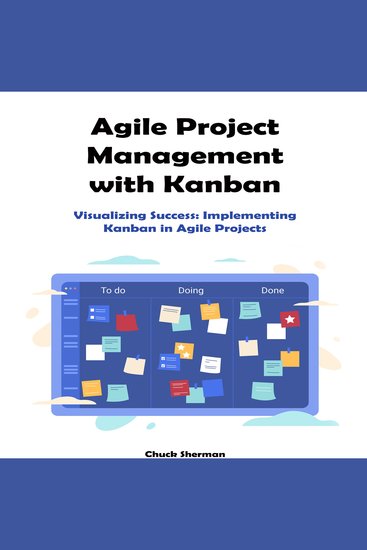
  • Agile Project Management with Kanban - Visualizing Success: Implementing Kanban in Agile Projects - cover

    Agile Project Management with...

    Chuck Sherman

    • 0
    • 0
    • 0
    Agile Project Management with Kanban: Visualizing Success takes you on a transformative journey into the world of Agile project management, where efficiency, adaptability, and collaboration converge to achieve outstanding results. Within these pages, you will unlock the power of the Kanban methodology, a visual and intuitive approach to managing projects, enabling you to streamline workflows, optimize productivity, and visualize success in every endeavor. 
    The book begins with a solid foundation, introducing you to the key principles and concepts of both Agile and Kanban. You will learn how to set up your own Kanban board, define work items, and create a seamless workflow that aligns with your project's unique needs. 
    Discover how visualizing work items on a Kanban board empowers your team to gain insights into the flow of tasks and understand where bottlenecks may arise. By implementing work in progress (WIP) limits, you will maintain focus, foster collaboration, and keep projects on track, all while improving overall efficiency. 
    Agile Project Management with Kanban not only demonstrates how to utilize Kanban in various project environments but also offers guidance on integrating it with other Agile frameworks like Scrum. The book equips you with the tools to extend Kanban practices to non-software development projects, amplifying the potential for success across industries. 
    Agile Project Management with Kanban: Visualizing Success equips you with the tools and insights to embark on a transformative journey towards success. Embrace the power of visualizing your projects, foster collaboration, and cultivate a culture of continuous improvement that will elevate your project management to new heights. Join us on this celestial voyage as we navigate the path to visualizing success through Agile Project Management with Kanban. 
     
    Ver libro
  • Data Visualization Guide - Clear Guide to Data Science and Visualization - cover

    Data Visualization Guide - Clear...

    Alexa Campbell

    • 0
    • 0
    • 0
    Have you ever wondered how you can work with large volumes of data sets? 
    Do you ever think about how you can use these data sets to identify hidden patterns and make an informed decision? 
    Do you know where you can collect this information? 
    Have you ever questioned what you can do with incomplete or incorrect data sets? 
    If you said yes to any of these questions, then you have come to the right place. 
    Most businesses collect information from various sources. This information can be in different formats and needs to be collected, processed, and improved upon if you want to interpret it. You can use various data mining tools to source the information from different places. These tools can also help with the cleaning and processing techniques. 
    You can use this information to make informed decisions and improve the efficiency and methods in your business. Every business needs to find a way to interpret and analyze large data sets. To do this, you will need to learn more about the different libraries and functions used to improve data sets. Since most data professionals use Python as the base programming language to develop models, this book uses some common libraries and functions from Python to give you a brief introduction to the language. 
    If you are a budding analyst or want to freshen up on your concepts, this book is for you. It has all the basic information you need to help you become a data analyst or scientist.
    Ver libro
  • Invention: The Sewing Machine - cover

    Invention: The Sewing Machine

    Lucy Williams

    • 0
    • 0
    • 0
    This book is about the invention of the sewing machine.   Since the sewing machine has been considered by some as one of the most important inventions of 19th-century America, of equal importance to this story of the invention is the history of the sewing machine's development into a practical, popular commodity.
    Ver libro
  • Why Trust Science? - cover

    Why Trust Science?

    Naomi Oreskes, Marc Lange,...

    • 0
    • 0
    • 0
    This provocative audiobook reveals why the social character of scientific knowledge makes it trustworthy
    
    Featuring narration by Kelly Burke, John Chancer, Nancy Crane, Richard Lyddon, and Kerry Shale
    
    Do doctors really know what they are talking about when they tell us vaccines are safe? Should we take climate experts at their word when they warn us about the perils of global warming? Why should we trust science when our own politicians don't? In this landmark book, Naomi Oreskes offers a bold and compelling defense of science, revealing why the social character of scientific knowledge is its greatest strength—and the greatest reason we can trust it.
    
    Tracing the history and philosophy of science from the late nineteenth century to today, Oreskes explains that, contrary to popular belief, there is no single scientific method. Rather, the trustworthiness of scientific claims derives from the social process by which they are rigorously vetted. This process is not perfect—nothing ever is when humans are involved—but she draws vital lessons from cases where scientists got it wrong. Oreskes shows how consensus is a crucial indicator of when a scientific matter has been settled, and when the knowledge produced is likely to be trustworthy.
    
    Based on the Tanner Lectures on Human Values at Princeton University, this timely and provocative book features critical responses by climate experts Ottmar Edenhofer and Martin Kowarsch, political scientist Jon Krosnick, philosopher of science Marc Lange, and science historian Susan Lindee, as well as a foreword by political theorist Stephen Macedo.
    Ver libro
  • Advanced Scrum Case Studies Vol 1 - What to do about Bossy Bobbie? - cover

    Advanced Scrum Case Studies Vol...

    Frederik Mark Fowler

    • 0
    • 0
    • 0
    You are a Scrum Master and you have a challenge: 
    You have been hired to "fix" a poorly performing software development team.  When you join the group you find that it is dominated by a very capable by a strong willed woman that the team calls "Bossy Bobbie".  She makes every decision and assigns tasks to all of the other developers.  She follows them up and takes over their tasks if they fall behind.  No one is happy about the situation, but no one seems willing to do anything about it.   
    Now the problem has fallen into your lap.  What do you do about it? 
    This case and the others in the series come from the real-world experiences of a group of Scrum professionals who meet regularly to discuss the Scrum Framework and how to apply it to actual situations they have encountered.  These discussions have been led since 2015 by Frederik Mark Fowler, A Doctor of Scrum and Holder of the Professional Scrum Master level III certification awarded by Scrum.org.  Fred has worked with the Scrum Framework for almost 20 years and has trained more then 300 people to become Scrum Masters and Product Owners.  For more information, visit www.Patreon.com/SiliconValleyScrum.
    Ver libro
  • Imagined Life - A Speculative Scientific Journey among the Exoplanets in Search of Intelligent Aliens Ice Creatures and Supergravity Animals - cover

    Imagined Life - A Speculative...

    Michael Summers, James Trefil

    • 0
    • 0
    • 0
    The captivating possibilities of extraterrestrial life on exoplanets, based on current scientific knowledge of existing worlds and forms of life 


    It is now known that we live in a galaxy with more planets than stars. The Milky Way alone encompasses 30 trillion potential home planets. Scientists Trefil and Summers bring listeners on a marvelous experimental voyage through the possibilities of life—unlike anything we have experienced so far—that could exist on planets outside our own solar system. 


    Life could be out there in many forms: on frozen worlds, living in liquid oceans beneath ice and communicating (and even battling) with bubbles; on super-dense planets, where they would have evolved body types capable of dealing with extreme gravity; on tidally locked planets with one side turned eternally toward a star; and even on "rogue worlds," which have no star at all. Yet this is no fictional flight of fancy: the authors take what we know about exoplanets and life on our own world and use that data to hypothesize about how, where, and which sorts of life might develop. Imagined Life is a must-have for anyone wanting to learn how the realities of our universe may turn out to be far stranger than fiction.
    Ver libro