Junte-se a nós em uma viagem ao mundo dos livros!
Adicionar este livro à prateleira
Grey
Deixe um novo comentário Default profile 50px
Grey
Assine para ler o livro completo ou leia as primeiras páginas de graça!
All characters reduced
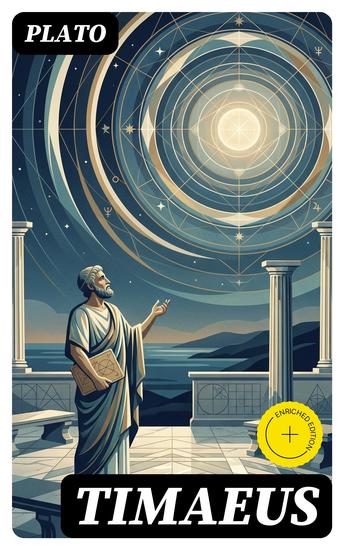
Timaeus - Enriched edition - cover
LER

Timaeus - Enriched edition

Plato

Tradutor Benjamin Jowett

Editora: DigiCat

  • 0
  • 0
  • 0

Sinopse

In "Timaeus," Plato presents a profound exploration of the cosmos, weaving together philosophical inquiry and natural science through the dialogue of Timaeus, Critias, and Socrates. At its core, the text delves into the nature of the universe, positing a world created by a divine craftsman and emphasizing the importance of mathematics in understanding reality. This work reflects Plato's innovative literary style, characterized by rich metaphors and allegorical narratives. Stylistically, it intertwines philosophical discourse with speculative cosmology, setting the stage for later developments in both metaphysics and natural philosophy. Plato, the eminent Athenian philosopher and student of Socrates, wrote "Timaeus" around 360 BCE, during a period that sought to reconcile myth with reason. His experiences in the tumultuous political landscape of Athens, coupled with the influence of Pythagorean thought, shaped his contemplation of the cosmos and the human condition. This work is not only a testament to his philosophical legacy but also reflects his intention to bridge the realms of science and spirituality. "Timaeus" is essential for anyone interested in the foundations of Western philosophy and science. It invites readers to engage in a deep intellectual journey that probes the essence of existence and the ordered beauty of the universe. Those seeking to understand the origins of philosophical discourse will find in Plato's text a timeless and illuminating source.

In this enriched edition, we have carefully created added value for your reading experience:
- A succinct Introduction situates the work's timeless appeal and themes.
- The Synopsis outlines the central plot, highlighting key developments without spoiling critical twists.
- A detailed Historical Context immerses you in the era's events and influences that shaped the writing.
- An Author Biography reveals milestones in the author's life, illuminating the personal insights behind the text.
- A thorough Analysis dissects symbols, motifs, and character arcs to unearth underlying meanings.
- Reflection questions prompt you to engage personally with the work's messages, connecting them to modern life.
- Hand‐picked Memorable Quotes shine a spotlight on moments of literary brilliance.
- Interactive footnotes clarify unusual references, historical allusions, and archaic phrases for an effortless, more informed read.
Disponível desde: 28/05/2022.
Comprimento de impressão: 178 páginas.
Outros livros que poderiam interessá-lo

  • Battle of Ravenna The: The History of the Most Famous Battle of the Italian Wars - cover

    Battle of Ravenna The: The...

    Editors Charles River

    • 0
    • 0
    • 0
    In 1494, there were five sovereign regional powers in Italy: Milan, Venice, Florence, the Papal States and Naples. In 1536, only one remained: Venice. These decades of conflict precipitated great anxiety among Western thinkers, and Italians responded to the fragmentation of Latin Christendom, the end of self-governance for Italians, and the beginning of the early modern era in various ways. They were always heavily influenced by the lived experience of warfare between large Christian armies on the peninsula. The diplomatic and military history of this 30-year period is a complex one that one eminent Renaissance historian, Lauro Martines, has described as "best told by a computer, so many and tangled are the treatises, negotiations and battles." At the same time, the fighting went in tandem with the Renaissance and was influenced by it.  
    	Before 1494, death tolls were counted in hundreds rather than thousands, but that would change over the next generation, and among the many battles fought, few stood out like the Battle of Ravenna in 1512. Ravenna is an ancient city in northern Italy on the Adriatic Coast that replaced Rome as capital of the Western Roman Empire for much of the 5th century and continued to serve as a regional center for its successor states, including the Ostrogoths, Byzantines, and Papal States. On April 11 of that year, two great armies met near Ravenna, which had been the site of conflict at least six times before on account of its strategic importance. It was a well-protected city with connections to rich Mediterranean ports, and it guarded the routes to central and southern Italy. Over 44,000 troops gathered, a vast number for the time, to fight over Italy’s destiny, which had become important to France, Austria, and Spain, the great powers of the time.
    Ver livro
  • There's Nothing Like This - The Strategic Genius of Taylor Swift - cover

    There's Nothing Like This - The...

    Kevin Evers

    • 0
    • 0
    • 0
    Singer-songwriter. Trailblazer. Mastermind. The Beatles of her generation. From her genre-busting rise in country music as a teenager to the economic juggernaut that is the Eras Tour, Taylor Swift has blazed a path that is uniquely hers. But how exactly has she managed to scale her success—multiple times—while dominating an industry that cycles through artists and stars like fashion trends? How has she managed to make and remake herself time and again while remaining true to her artistic vision? And how has she managed to master the constant disruption in the music business that has made it so hard for others to adapt and endure? 


    In There's Nothing Like This, Kevin Evers, a senior editor at Harvard Business Review, answers these questions in riveting detail. With the same thoughtful analysis usually devoted to iconic founders, game-changing innovators, and pioneering brands, Evers chronicles the business and creative decisions that have defined each phase of Swift's career. 


    Mixing business and art, analysis and narrative, and pulling from research in innovation, creativity, psychology, and strategy, There's Nothing Like This presents Swift as the modern and multidimensional superstar that she is—a songwriting savant and a strategic genius.
    Ver livro
  • Eliminate Negativity : 2 Books in 1 - Eliminate Negativity : 2 Books in 1 : How to Stop Negative Thinking + Toxic Positivity – Break the Cycle of Overthinking Overcome Rumination Reframe Your Thoughts and Master Emotions - cover

    Eliminate Negativity : 2 Books...

    Chase Hill

    • 0
    • 0
    • 0
    There is a massive amount of shame that comes with negative thinking. You blame yourself for the intrusive thoughts that blindside you. You feel guilty for not being more optimistic. It’s time to stop. 
    Negative thinking isn’t as simple as looking at the glass half empty. It is a debilitating mindset that seeps into every area of your life. 
    Negative thinking happens automatically -- it’s not your fault. 
    The brain is indeed negatively biased. However, science has confirmed that you can rewire the way you think. And you can start doing this today! 
    In How to Stop Negative Thinking, here is just a fraction of what you will discover:How to overcome every type of negative thinking from intrusive thoughts to rumination in 7 simple stepsSimple strategies with practice exercises that will help you overcome the negative thought patterns3 crucial tools you can use to pinpoint the roots of your negative thinkingHow to put a stop to toxic behavior, passive aggression, and protect your new mindsetHow to love and accept yourself despite your negative thinking 
    + Plus as a bonus, you'll also get "Toxic Positivity" to help you to master your emotions and stay true to yourself by avoiding toxic positivity pitfalls. 
    In Toxic Positivity, you will discover:How to identify common toxic positivity traps -- and the strategies you can use to avoid themHow to calm trails of negative thoughts, quit overthinking, and stop dwelling on past painful eventsHow to deal with toxic positivity from external sources to help you protect your mental state without losing friends or quitting social media
    Ver livro
  • Indiana Jones and Philosophy - Why Did it Have to be Socrates - cover

    Indiana Jones and Philosophy -...

    Dean A. Kowalski

    • 0
    • 0
    • 0
    If adventure has a name, it must be Indiana Jones! He's both a mild-mannered archaeology professor and an intrepid adventurer traversing the globe in search of lost artifacts. Whether seeking the Ark of the Covenant in Egypt, the Sankara Stones in India, the Holy Grail in Turkey, or a mysterious crystal skull in Peru, Indy's adventures never fail to delight audiences. 


    Indiana Jones and Philosophy takes you on a whirlwind journey to investigate some of the most enduring questions about the human condition. You'll learn about how Indy has wronged Marion Ravenwood, how a virtuous person would make amends, the strides Indy makes to repair his relationship with his father, why Indy distinguishes fact from truth when he pursues archaeological treasures, and much more. With trusty guides such as Aristotle, Camus, Kant, and Nietzsche at your side, you'll consider possible answers to these questions and see Indiana Jones in a whole new light! 


    Comprehensive, immersive, and engaging, Indiana Jones and Philosophy offers you an accessible and lively opportunity to dive deeper into the world of Indiana Jones and appreciate the character's greatness anew!
    Ver livro
  • The Complete Leadership Collection - The Art of War The Prince The Book of Five Rings Tao Te Ching Analects On War Arthashastra & More - cover

    The Complete Leadership...

    Sun Tzu, Niccolò Machiavelli,...

    • 0
    • 0
    • 0
    Lead with wisdom. Command with confidence. Think like history’s greatest leaders. 
    The Complete Leadership Collection brings together the most influential voices on leadership, power, and responsibility—fully modernized for today’s listener.  
    From the battlefield to the palace to the quiet mind of a sage, these works offer timeless insight into how great leaders think, act, and inspire. 
    This audiobook includes: 
    - The Art of War by Sun Tzu – Leadership through planning, timing, and adaptability 
    - The Prince and The Art of War by Niccolò Machiavelli – The dynamics of political leadership and military control 
    - The Book of Five Rings by Miyamoto Musashi – Mental clarity and discipline for personal and organizational leadership 
    - Tao Te Ching by Laozi – Powerful leadership through restraint and humility 
    - The Analects by Confucius – Moral guidance and leading by example 
    - Arthashastra by Kautilya – Real-world strategy for diplomacy, economics, and power 
    - The Maxims of War by Napoleon Bonaparte – Sharp principles for leadership under pressure 
    - Instructions to His Generals by Frederick the Great – Precision, delegation, and military wisdom 
    - On War by Carl von Clausewitz – Deep reflection on leadership in the face of uncertainty 
    - The Commentaries by Julius Caesar – Tactical brilliance from history’s most strategic general 
    - History of the Peloponnesian War by Thucydides – Realism, leadership, and the cost of ambition 
    And many more fundamental leadership classics. 
    Each work is introduced with helpful context and narrated in crisp, modern language. Whether you lead teams, communities, or your own path—this collection is your essential guide.
    Ver livro
  • End of World War II in the Pacific The: The History of the Final Campaigns that Led to Imperial Japan’s Surrender - cover

    End of World War II in the...

    Editors Charles River

    • 0
    • 0
    • 0
    By the spring of 1943, American military planners had begun to create a plan to dislodge Japan from east and southeast Asia. To do so, parts of the Philippines were considered main strategic points in the potential Allied attack in the Pacific. The end goal of the Allied plan was an invasion of the Japanese home islands, in which heavy aerial bombardment would precede a ground assault. In order for this to occur, Allied forces would have to occupy areas surrounding Japan, with China adding to Luzon (the largest island in the Philippines) and Formosa (a large island off the coast of China) to create a triangle from which they could launch their bombers. 
    When Admiral Chester Nimitz was directed to capture an island in the Bonin group, Iwo Jima stood out for its importance in making progress against the mainland, with three airfields that would allow American air forces to attack the Japanese mainland. But the Japanese were also well aware of how important Iwo Jima was, and they fought desperately in bunkers and tunnels that required the Americans to carefully clear them out gradually.  
    Near the end of 1944, as Allied forces were pushing across the Pacific and edging ever closer to Japan, plans were drawn up to invade the Ryuku islands, the most prominent of them being Okinawa. Given the horrific nature of the combat, and the fact that it was incessant for several weeks, it’s no surprise that Okinawa had a profound psychological effect on the men who fought, but it also greatly influenced the thinking of military leaders who were planning subsequent campaigns, including a potential invasion of the Japanese mainland. The casualty tolls at Okinawa ultimately helped compel President Truman to use the atomic bombs on Hiroshima and Nagasaki in an effort to end the war before having to attempt such an invasion.
    Ver livro