Junte-se a nós em uma viagem ao mundo dos livros!
Adicionar este livro à prateleira
Grey
Deixe um novo comentário Default profile 50px
Grey
Assine para ler o livro completo ou leia as primeiras páginas de graça!
All characters reduced
The Republic - A Foundational Dialogue on Justice Society and the Ideal State - cover
LER

The Republic - A Foundational Dialogue on Justice Society and the Ideal State

Plato, Zenith Evergreen Literary Co.

Editora: Zenith Evergreen Literary Co.

  • 0
  • 0
  • 0

Sinopse

What is justice? What is the best way to live? Can an ideal society exist?

In The Republic, the philosopher Plato presents a powerful conversation between Socrates and his disciples as they explore the meaning of justice, the role of education, the nature of reality, and the qualities of an ideal ruler. Written around 375 BC, this dialogue remains one of the most influential works of political theory, ethics, and metaphysics.

Whether you're a student, thinker, or seeker, this book challenges you to reexamine the principles that govern our lives—and imagine a better society shaped by reason and virtue.

💬 "The Republic is not just a book—it's a blueprint for philosophical thought and civil governance."

🧠 Why It Belongs in Every Thinker's Library:
Essential reading in philosophy, political science, and classical studies

Engages with timeless questions about morality, power, education, and truth

Ideal for fans of Aristotle, Machiavelli, Seneca, and Karl Marx

📣 Start the Conversation That Shaped Western Thought.
Buy The Republic today and dive into the dialogue that continues to inspire debate and discovery.
Disponível desde: 21/04/2025.
Comprimento de impressão: 400 páginas.

Outros livros que poderiam interessá-lo

  • Youth and Society - Examining the Social Lives of Young People - cover

    Youth and Society - Examining...

    Fred Grandsen

    • 0
    • 0
    • 0
    Youth is a dynamic and socially constructed stage of life, shaped by cultural, economic, and historical factors. It is not merely a biological phase between childhood and adulthood but a period influenced by social expectations, policies, and institutional frameworks. While age-based definitions exist, they vary across cultures and societies, making "youth" a flexible and evolving category. 
    Historically, the concept of youth has changed over time. In traditional societies, young people transitioned quickly into adult roles through work, marriage, and family responsibilities. However, industrialization, urbanization, and formal education systems extended this period, creating a distinct youth culture. In contemporary society, youth is often associated with identity exploration, self-discovery, and the gradual assumption of adult responsibilities. This shift has been influenced by structural changes such as the expansion of higher education, delayed workforce entry, and evolving family dynamics. 
    The social construction of youth is evident in the ways governments, media, and institutions define and regulate young people’s lives. Policies related to education, employment, and legal adulthood shape how youth are perceived and treated in different regions. For example, the legal age for voting, drinking, and working varies across countries, reflecting societal expectations of maturity and responsibility. Similarly, media representations often portray youth either as a time of opportunity and innovation or as a period of rebellion and risk, shaping public perceptions and policy decisions.
    Ver livro
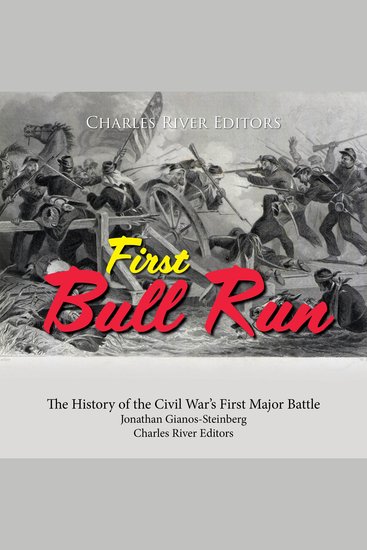
  • First Bull Run: The History of the Civil War’s First Major Battle - cover

    First Bull Run: The History of...

    Jonathan Gianos-Steinberg

    • 0
    • 0
    • 0
    After the Battle of Fort Sumter in April 1861 ignited the Civil War, many in the North expected a relatively quick victory, including President Abraham Lincoln. While that seems naïve in hindsight, given the knowledge that the war lasted over four years, these expectations seemed entirely realistic at the time due to the Union’s overwhelming economic advantages over the South. At the start of the war, the Union had a population of over 22 million, whereas the South had a population of 9 million, nearly 4 million of whom were slaves. Union states contained 90% of the manufacturing capacity of the country and 97% of the weapon manufacturing capacity. Union states also possessed over 70% of the total railroads in the pre-war United States at the start of the war, and the Union also controlled 80% of the shipbuilding capacity of the pre-war United States. 
    McDowell’s strategy during the First Battle of Bull Run was grand, and in many ways it was the forerunner of a tactic Robert E. Lee, Stonewall Jackson and James Longstreet executed brilliantly on nearly the same field during the Second Battle of Bull Run in August 1862. McDowell’s plan called for parts of his army to pin down General P.G.T. Beauregard’s Confederate soldiers in front while marching another wing of his army around the flank and into the enemy’s rear, rolling up the line. McDowell assumed the Confederates would be forced to abandon Manassas Junction and fall back to the next defensible line, the Rappahannock River. In July 1861, however, this proved far too difficult for his inexperienced troops to carry out effectively. 
    As the first major land battle of the Civil War, the First Battle of Bull Run made history in several ways. The two sides fought near the railroad junction at Manassas on July 21, 1861, just 25 miles away from Washington, which was close enough for many civilians from the nation’s capital to come and watch what they expected to be a rout of Confederate forces.
    Ver livro
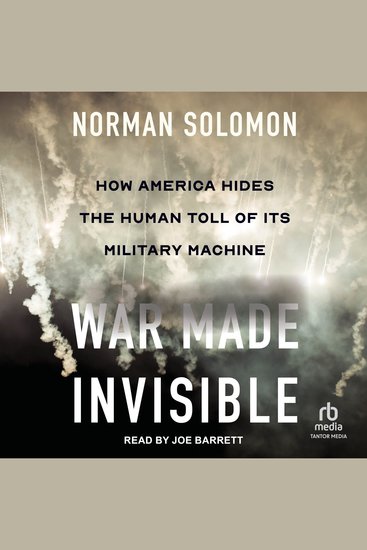
  • War Made Invisible - How America Hides the Human Toll of Its Military Machine - cover

    War Made Invisible - How America...

    Norman Solomon

    • 0
    • 0
    • 0
    More than twenty years ago, 9/11 and the war in Afghanistan set into motion a hugely consequential shift in America's foreign policy: a perpetual state of war that is almost entirely invisible to the American public. War Made Invisible, by the journalist and political analyst Norman Solomon, exposes how this happened, and what its consequences are, from military and civilian casualties to drained resources at home. 


    From Iraq through Afghanistan and Syria and on to little-known deployments in a range of countries around the globe, the United States has been at perpetual war for at least the past two decades. Yet many of these forays remain off the radar of average Americans. Compliant journalists add to the smokescreen by providing narrow coverage of military engagements and by repeating the military's talking points. Meanwhile, the increased use of high technology, air power, and remote drones has put distance between soldiers and the civilians who die. Back at home, Solomon argues, the cloak of invisibility masks massive Pentagon budgets that receive bipartisan approval even as policy makers struggle to fund the domestic agenda. 


    Necessary, timely, and unflinching, War Made Invisible is an eloquent moral call for counting the true costs of war.
    Ver livro
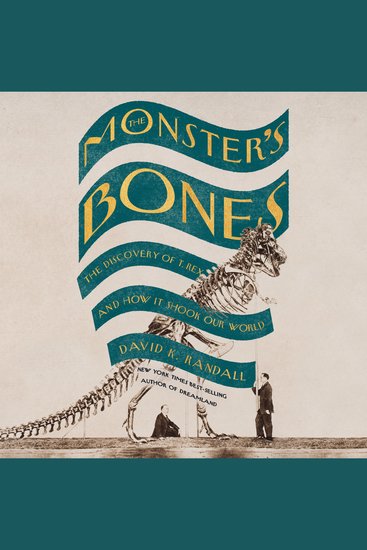
  • The Monster's Bones - The Discovery of T Rex and How It Shook Our World - cover

    The Monster's Bones - The...

    David K. Randall

    • 0
    • 0
    • 0
    In the dust of the Gilded Age Bone Wars, two vastly different men emerge with a mission to fill the empty halls of New York's struggling American Museum of Natural History: Henry Fairfield Osborn, a socialite whose reputation rests on the museum's success, and intrepid Kansas-born fossil hunter Barnum Brown. 


    When Brown unearths the first Tyrannosaurus Rex fossils in the Montana wilderness, forever changing the world of paleontology, Osborn sees a path to save his museum from irrelevancy. With four-foot-long jaws capable of crushing the bones of its prey and hips that powered the animal to run at speeds of twenty-five miles per hour, the T. Rex suggests a prehistoric ecosystem more complex than anyone imagined. As the public turns out in droves to cower before this bone-chilling giant of the past and wonder at the mysteries of its disappearance, Brown and Osborn together turn dinosaurs from a biological oddity into a beloved part of culture. 


    The Monster's Bones journeys from prehistory to present day, from remote Patagonia to the badlands of the American West to the penthouses of Manhattan. With a wide-ranging cast of robber barons, eugenicists, and opportunistic cowboys, New York Times bestselling author David K. Randall reveals how a monster of a bygone era ignited a new understanding of our planet and our place within it.
    Ver livro
  • Imperialism - cover

    Imperialism

    Vladimir Lenin

    • 0
    • 0
    • 0
    Written in 1916 against the backdrop of the First World War, Imperialism: The Highest Stage of Capitalism explains the flaws and power of capitalism, which inevitably lead to monopolies, imperialism and colonialism. Lenin develops Marx’s theories of political economy, which had been put forward 50 years earlier in Das Kapital. He goes on to argue that imperialism is the most advanced state of capitalism, characterised by the domination of monopolies on an international scale, with the export of capital leading to the big imperialist powers carving up the world.More than a century later, Imperialism remains highly relevant in understanding the historical background to the strategies of many of today’s major nations.
    Ver livro
  • A Rare Recording of Dr Royal R Rife - cover

    A Rare Recording of Dr Royal R Rife

    Dr. Royal R. Rife

    • 0
    • 0
    • 0
    Dr. Royal R. Rife (May 16, 1888-August 5, 1971) was a prolific American inventor and early promoter of high-magnification time-lapse cinemicrography. In the 1930s, he claimed that by using his specially designed optical microscope, he could observe microbes that were too small to view with the current technology. Rife also invented a "beam ray" device that could potentially weaken or destroy cancer cells.  
     
    Rife still has a strong following among the wellness and holistic health communities, who believe that his anticancer technologies have been suppressed and should be given a thorough review. Royal Raymond Rife's devices are now being manufactured by independent electronics companies.
    Ver livro