¡Acompáñanos a viajar por el mundo de los libros!
Añadir este libro a la estantería
Grey
Escribe un nuevo comentario Default profile 50px
Grey
Suscríbete para leer el libro completo o lee las primeras páginas gratis.
All characters reduced
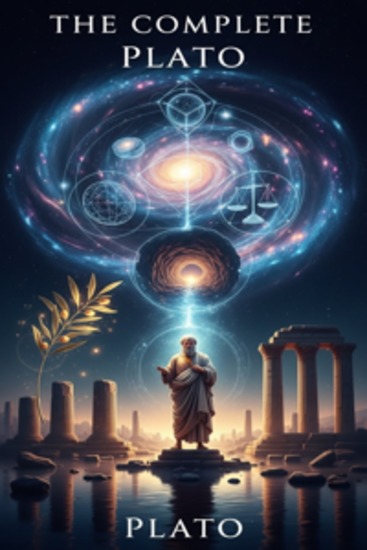
The Complete Plato - cover

The Complete Plato

Plato

Editorial: Bu Classics Books

  • 0
  • 0
  • 0

Sinopsis

Access the entire corpus of Western philosophy's founding father in a single comprehensive collection, spanning his early Socratic dialogues to his late metaphysical works. Readers can trace the evolution of Plato's thought on justice, reality, art, and politics through the distinct phases of his literary career. This anthology provides the full context necessary to understand the depth and breadth of Platonic idealism and its massive footprint on history. It is an indispensable resource for witnessing the birth of critical thinking and the dialogue form.
Disponible desde: 29/01/2026.
Longitud de impresión: 2661 páginas.

Otros libros que te pueden interesar

  • Today Hong Kong Tomorrow the World - What China's Crackdown Reveals About Its Plans to End Freedom Everywhere - cover

    Today Hong Kong Tomorrow the...

    Mark L. Clifford

    • 0
    • 0
    • 0
    For 150 years as a British colony, Hong Kong was a beacon of prosperity where people, money, and technology flowed freely, and residents enjoyed many civil liberties. In preparation for handing the territory over to China in 1997, Deng Xiaoping promised that it would remain highly autonomous for fifty years. An international treaty established a Special Administrative Region (SAR) with a far freer political system than that of Communist China. 


    But as the halfway mark of the SAR's lifespan approaches in 2022, it is clear that China has not kept its word. Universal suffrage and free elections have not been instituted, harassment and brutality have become normalized, and activists are being jailed en masse. This tragic backslide has dire worldwide implications. 


    Today Hong Kong, Tomorrow the World tells the complete story of how a city once famed for protests so peaceful that toddlers joined grandparents became a place where police have fired tear gas, rubber bullets and even live ammunition at their neighbors, while pro-government hooligans attack demonstrators. A Hong Kong resident from 1992 to 2021, author Mark L. Clifford has witnessed this transformation firsthand. A powerful and dramatic mix of history and on-the-ground reporting, this book is the definitive account of one of the most important geopolitical standoffs of our time.
    Ver libro
  • American Political Parties - Why They Formed How They Function and Where They're Headed - cover

    American Political Parties - Why...

    John Kenneth White, Matthew R....

    • 0
    • 0
    • 0
    American Political Parties is a core textbook on political parties in the United States that places the US party system into a framework designed around the disagreements between Alexander Hamilton and Thomas Jefferson. White and Kerbel argue that the two-party system in the United States began with a common agreement on the key values of freedom, individual rights, and equality of opportunity but that Hamilton and Jefferson disagreed—often vehemently—over how to translate these ideals into an acceptable form of governance. 


    While Hamilton wanted to marry freedom to a strong, active federal government with an energetic president who would act on behalf of all citizens, Jefferson believed that freedom should be allied to local civic virtue, with governmental responsibilities placed primarily at the local level. Today, Hamiltonian nationalism finds its home in the Democratic Party, while Republicans have espoused Jeffersonian localism since 1964. Using this historical framework, American Political Parties examines a range of topics including marketing and social media, campaign finance, reforms in the presidential nominating process, political demography, and third parties. In this new edition, the authors describe four possible futures in the wake of the 2020 election and why Americans believed it was "the most important" election in their lifetimes.
    Ver libro
  • Self-Censorship - cover

    Self-Censorship

    Glenn C. Loury

    • 0
    • 0
    • 0
    There is no such thing as free, unconstrained speech. Laws and constitutions may protect us from the state when we speak our minds. But the state is just one possible constraint. Glenn Loury, one of America's most outspoken and important intellectuals, provides a provocative and dazzling analysis of the powerful social forces that can prevent speakers from voicing unpopular views in public forums.Every society, Loury notes, has norms to enforce. That can be a good thing: There ought to be social sanctions for, say, compulsive liars. When, however, a society shows a low degree of tolerance for speech about matters of political importance, self-censorship proliferates and public discourse and policy suffer. The answer, Loury argues, is for as many of us as possible to be braver and more human—to take a risk and unapologetically "live within the truth".Loury first presented these ideas in the 1990s in a celebrated and prophetic essay about "political correctness." In Self-Censorship he expands and updates the account, deploying his analytical powers and psychological acuity to diagnose our current political climate. The result illuminates prevailing social dynamics with the same brilliant and startling effect that made the paper an instant classic thirty years ago.
    Ver libro
  • Becoming Eisenhower - How Ike Rose from Obscurity to Supreme Allied Commander - cover

    Becoming Eisenhower - How Ike...

    Michael Lee Lanning

    • 0
    • 0
    • 0
    When Dwight Eisenhower graduated from West Point in 1915, few would have predicted he was destined for greatness. Yet the young officer made the most of the opportunities he was given, made a lasting impression on superiors, and eventually gained a reputation as an excellent staff officer. 


    Fifty-nine graduates became generals during World War II, but none of that was clear at the time, especially not for the young Dwight Eisenhower, who graduated sixty-first in a class of 164. 


    During the 1920s into the early 1930s Eisenhower started to catch the eye of superiors and earned positions under the U.S. Army's leading lights. 


    Eisenhower joined the General Staff in Washington, DC, where he helped develop war plans and eventually became deputy chief of staff under George Marshall. When the time came to appoint a commander to execute the plans, Marshall knew Eisenhower was the man for the job. 


    Becoming Eisenhower is the story of a young man who first pursued the army for its free education, the story of an officer who was initially overlooked, the story of how General Eisenhower carried these experiences not only into Supreme Command but also the presidency.
    Ver libro
  • The Pentecost of Calamity - cover

    The Pentecost of Calamity

    Owen Wister

    • 0
    • 0
    • 0
    Nonfiction. Appalled by the savagery of World War I, Owen Wister in 1915 published an attempt to move the United States out of neutrality into joining the Allies against Germany. His aim was the quicker defeat of that nation. (Wister: “the new Trinity of German worship – the Super-man, the Super-race, and the Super-state.”) He was but one of many literary personages who joined in this effort. A moving quote: “Perhaps nothing save calamity will teach us what Europe is thankful to have learned again – that some things are worse than war, and that you can pay too high a price for peace; but that you cannot pay too high for the finding and keeping of your own soul.” (Summary by David Wales)
    Ver libro
  • Alarms & Discursions - Reflections on Englishness and humanity - cover

    Alarms & Discursions -...

    G K Chesterton

    • 0
    • 0
    • 0
    The fragments of futile journalism or fleeting impression which are here collected are very like the wrecks and riven blocks that were piled in a heap round my imaginary priest of the sun. They are very like that grey and gaping head of stone that I found overgrown with the grass. Yet I will venture to make even of these trivial fragments the high boast that I am a medievalist and not a modern. That is, I really have a notion of why I have collected all the nonsensical things there are. I have not the patience nor perhaps the constructive intelligence to state the connecting link between all these chaotic papers. But it could be stated. This row of shapeless and ungainly monsters which I now set before the reader does not consist of separate idols cut out capriciously in lonely valleys or various islands. These monsters are meant for the gargoyles of a definite cathedral. I have to carve the gargoyles, because I can carve nothing else; I leave to others the angels and the arches and the spires. But I am very sure of the style of the architecture, and of the consecration of the church. -- From the introduction
    Ver libro