Junte-se a nós em uma viagem ao mundo dos livros!
Adicionar este livro à prateleira
Grey
Deixe um novo comentário Default profile 50px
Grey
Assine para ler o livro completo ou leia as primeiras páginas de graça!
All characters reduced
Menexenus - cover
LER

Menexenus

Plato

Tradutor Benjamin Jowett

Editora: DigiCat

  • 0
  • 0
  • 0

Sinopse

In "Menexenus," Plato presents a captivating dialogue that unfolds as a mock funeral oration, showcasing the art of rhetoric and philosophy. Written in a style that blends praise for the Athenian state with a satirical twist, this work is notable for its exploration of themes such as patriotism, civic duty, and the construction of identity through collective memory. The dialogue also serves as an insightful commentary on the role of the philosopher in society, particularly in relation to the oratorical excesses of contemporary rhetoric, reflecting Plato's larger philosophical discourse on truth and morality. Plato, one of the most influential philosophers in Western thought, was deeply engaged with the political and ethical dilemmas of his time. His experiences during tumultuous periods in Athenian history, including the Peloponnesian War, profoundly shaped his views on governance and the nature of the human soul. "Menexenus" emerges as both a tribute to the fallen and a critique of the glorification of war, illustrating Plato's unique ability to navigate personal and societal themes through dialogue. I highly recommend "Menexenus" to readers interested in the intersection of philosophy, politics, and rhetoric. This work not only deepens our understanding of Athenian culture but also challenges us to reconsider the narratives we construct about our own civic identities.
Disponível desde: 15/09/2022.
Comprimento de impressão: 26 páginas.

Outros livros que poderiam interessá-lo

  • Man In My Head Has Lost His Mind The (What Makes Us Conscious?) - A thought experiment exploring consciousness and free will identity and the moral self - cover

    Man In My Head Has Lost His Mind...

    Carter Blakelaw

    • 0
    • 0
    • 0
    The howl of the bedside clock-radio carves through your dreams like a buzz-saw through butter, and you are awake. In another place. 
    Never mind the bright yellow sunlight that flecks your pillow and warms your face; you are rudely awake, and resent it. Gah! 
    You roll onto your side, cantilever your legs over the side of the bed and plant your feet squarely on the carpet. You rub your face. Massage your neck. Oh, what it is to be alive!--and conscious--oh oh oh, indeed. 
    But what is it to be alive, and conscious? 
    Alive, we have some inkling of; you eat, you sleep, you exercise. You stay healthy and keep your body going as best you can. But conscious? What even is that? 
    A good question is what that is, and a question for which this book has an answer. 
    So in this text, first I set the scene:Did our consciousness evolve?Does consciousness give us free will?Which animals do we think are conscious?Where does consciousness go when we sleep?How does consciousness deliver meaning?What might a theory of consciousness look like? 
    Then I propose:A model for consciousness at the macro scaleA mechanism for consciousness at the micro scale 
    Finally, I suggest some real world tests that science will one day be able to perform which will either corroborate or invalidate the theory I present here. This is a workable, testable theory. Science and philosophy demand nothing less. 
    A must-listen for the curious-minded, which you are, are you not? So listen on...
    Ver livro
  • Mark - The World English Bible Book 41 (Unabridged) - cover

    Mark - The World English Bible...

    Various Authors

    • 0
    • 0
    • 0
    The Gospel of Mark is the second of the four canonical gospels and of the three synoptic Gospels. It tells of the ministry of Jesus from his baptism by John the Baptist to his death, burial, and the discovery of his empty tomb. There is no miraculous birth or doctrine of divine pre-existence, nor, in the original ending (Mark 16:1-8), any post-resurrection appearances of Jesus. It portrays Jesus as a teacher, an exorcist, a healer, and a miracle worker. He refers to himself as the Son of Man.
    Ver livro
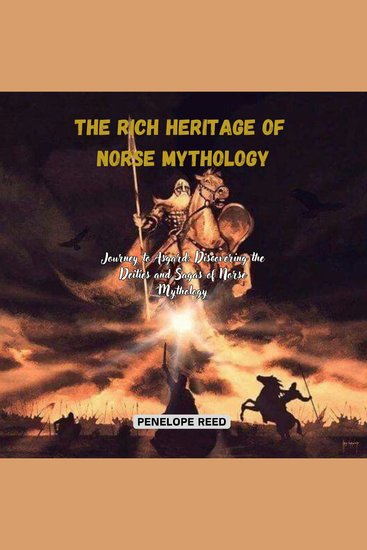
  • The Rich Heritage of Norse Mythology - Journey to Asgard: Discovering the Deities and Sagas of Norse Mythology - cover

    The Rich Heritage of Norse...

    Penelope Reed

    • 0
    • 0
    • 0
    Perhaps the greatest mythological tradition ever: "The Rich Heritage of Norse Mythology: Journey to Asgard: Discovering the Deities and Sagas of Norse Mythology." It offers the opportunity to really delve into that fabulous realm of Norse legend, where heroes, gods, and cosmic forces blur into a presentation of stories that have had enduring significance and breathtaking grandeur. 
    The book begins with the backgrounds of existence in the primordial nothingness of Ginnungagap, set behind the unifying axes of the mighty Yggdrasil. The Norse universe is created and understood through the actions and fates of its gods Odin, Thor, Freyja, and Loki, who are the Æsir and Vanir. Learn these cosmic characters for their expressions of universal knowledge, love, chaos, and courage through telling and perceptive analyses. 
    For instance, the book can prove its cultural and historical importance for such immortal stories by describing in bold legendary sagas, be they from Sigurd's chivalry to the horror cycles of the Völsunga saga. It does so even as it tries to probe at the horrific happenings of Ragnarök while revealing the cyclical dynamics of Norse cosmology characterized by destruction and renewal. 
    This will provide readers with an appreciation of how the myths arose and what elements of them are actually valid, through the discussions of such cultural, historical, and spiritual contexts that defined these myths. In connoisseur or novice to Norse mythology, this richly detailed journey to Asgard is sure to captivate, educate, and inspire as the complex legacy of the legendary culture brings to life today.
    Ver livro
  • Haunted New Orleans - History & Hauntings of the Crescent City - cover

    Haunted New Orleans - History &...

    Troy Taylor

    • 0
    • 0
    • 0
    Travel beyond Bourbon Street into the macabre history of one of the most haunted cities in the United States with the author of Wicked New Orleans as your guide. 


    New Orleans—the Big Easy, the birthplace of jazz, home of Cafe du Monde, and what some call the most haunted city in America. Beneath the indulgence and revelry of the Crescent City lies a long history of the dark and mysterious. From the famous "Queen of Voodoo," Marie Laveau, who is said to haunt the site of her grave, to the wicked LaLauries, whose true natures were hidden behind elegance and the trappings of high society, New Orleans is filled with spirits of all kinds. Some of the ghosts in these stories have sordid and scandalous histories, while others are friendly specters who simply can't leave their beloved city behind. Join supernatural historian Troy Taylor as he takes listeners beyond the French Quarter and shows a side of New Orleans never seen.
    Ver livro
  • The Apology of Socrates - Adapted for the Contemporary Reader - cover

    The Apology of Socrates -...

    James Harris, Plato

    • 0
    • 0
    • 0
    The Apology of Socrates, by Plato, is the dialogue that presents the speech of legal self-defence, which Socrates presented at his trial for impiety and corruption, in 399 BC. 
    ★ Specifically: The Apology of Socrates is a defence against the charges of “corrupting the youth” and “not believing in the same gods as the city, but in other gods which are novel” to Athens. 
    ★ The Apology of Socrates is the dialogue that depicts the trial, written by Plato who details the final days of the philosopher great Socrates.  
    ★ This book has been carefully adapted into modern English to allow for easy reading. ✓
    Ver livro
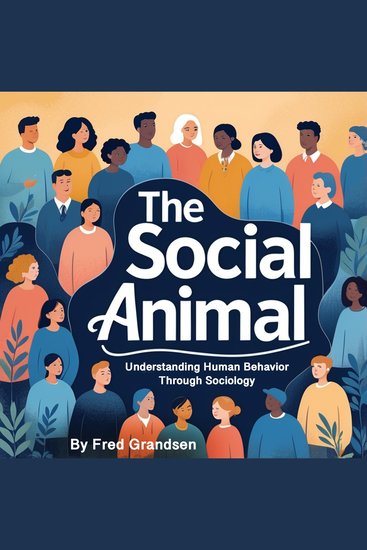
  • The Social Animal - Understanding Human Behavior Through Sociology - cover

    The Social Animal -...

    Fred Grandsen

    • 0
    • 0
    • 0
    Human beings are inherently social creatures, shaped by the need to interact, communicate, and form relationships with others. The social nature of humans is deeply rooted in evolutionary history, where cooperation and group cohesion were essential for survival. Over time, human societies have become increasingly complex, but the fundamental need for social connection remains central to human identity and behavior. This chapter explores the biological, psychological, and sociological foundations of human sociality and how they shape individual and collective behavior. 
    From an evolutionary perspective, human beings have always relied on social bonds for protection, resource sharing, and collective problem-solving. Early human groups depended on coordinated hunting, gathering, and defense mechanisms to survive in harsh environments. Natural selection favored individuals who could effectively communicate, cooperate, and form alliances, leading to the development of social behaviors such as empathy, altruism, and social hierarchies. The human brain evolved to process social information, with structures such as the prefrontal cortex playing a critical role in understanding and responding to social cues. 
    Psychologically, the need for social connection is reflected in the human desire for belonging, acceptance, and emotional support. Attachment theory, developed by John Bowlby, suggests that early attachment to caregivers forms the foundation for future social relationships.
    Ver livro