Junte-se a nós em uma viagem ao mundo dos livros!
Adicionar este livro à prateleira
Grey
Deixe um novo comentário Default profile 50px
Grey
Assine para ler o livro completo ou leia as primeiras páginas de graça!
All characters reduced
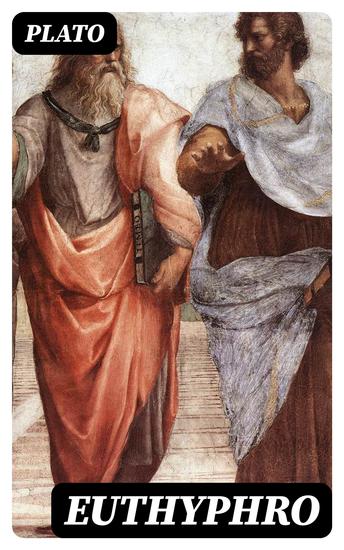
Euthyphro - cover
LER

Euthyphro

Plato

Tradutor Benjamin Jowett

Editora: DigiCat

  • 0
  • 0
  • 0

Sinopse

In "Euthyphro," Plato presents a profound dialogue that explores the nature of piety and the essence of moral virtue through a conversation between Socrates and Euthyphro. Set against the backdrop of Athenian society, this text employs a Socratic method to scrutinize popular theological beliefs and ethical principles, raising essential questions about the relationship between divine command and moral obligation. The dialogue is characterized by its incisive logic and literary elegance, typical of Plato's style, inviting readers to re-evaluate their understanding of what it means to be virtuous and religiously devout. Plato, a student of Socrates and a pivotal figure in Western philosophy, wrote "Euthyphro" during a period marked by political upheaval and philosophical inquiry within Athens. His exposure to Socratic dialogue and the Socratic method undoubtedly influenced his thought process, as he sought to analyze and contextualize ethical concepts through rigorous debate. The text embodies an early exploration of moral philosophy, reflecting Plato's ongoing quest for truth and understanding amidst the complexities of human behavior and belief. "Euthyphro" is an essential read for anyone interested in ethics, philosophy, or theology. Through its rich examination of piety, it encourages readers to engage in self-reflection and critical thought about their own moral convictions. This dialogue remains relevant today, offering insights into the enduring questions of justice, morality, and the nature of the divine.
Disponível desde: 15/09/2022.
Comprimento de impressão: 23 páginas.
Outros livros que poderiam interessá-lo

  • Grief - A Philosophical Guide - cover

    Grief - A Philosophical Guide

    Michael Cholbi

    • 0
    • 0
    • 0
    Experiencing grief at the death of a person we love or who matters to us—as universal as it is painful—is central to the human condition. Surprisingly, however, philosophers have rarely examined grief in any depth. In Grief, Michael Cholbi presents a groundbreaking philosophical exploration of this complex emotional event, offering valuable new insights about what grief is, whom we grieve, and how grief can ultimately lead us to a richer self-understanding and a fuller realization of our humanity. 


    Drawing on psychology, social science, and literature as well as philosophy, Cholbi explains that we grieve for the loss of those in whom our identities are invested, including people we don't know personally but cherish anyway, such as public figures. Their deaths not only deprive us of worthwhile experiences; they also disrupt our commitments and values. Yet grief is something we should embrace rather than avoid, an important part of a good and meaningful life. The key to understanding this paradox, Cholbi says, is that grief offers us a unique and powerful opportunity to grow in self-knowledge by fashioning a new identity. Although grief can be tumultuous and disorienting, it also reflects our distinctly human capacity to rationally adapt as the relationships we depend on evolve.
    Ver livro
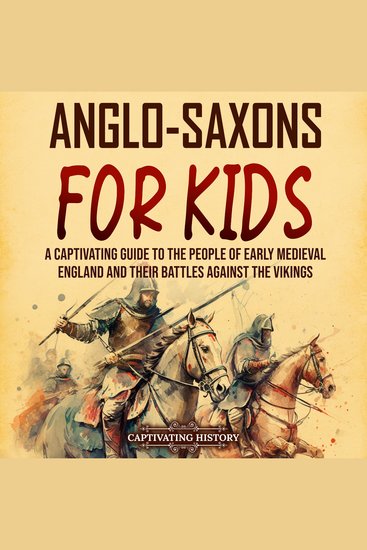
  • Anglo-Saxons for Kids: A Captivating Guide to the People of Early Medieval England and Their Battles Against the Vikings - cover

    Anglo-Saxons for Kids: A...

    Captivating History

    • 0
    • 0
    • 0
    Embark on an exciting journey to the past to meet the Anglo-Saxons! 
    The Anglo-Saxons were people from Northern Germany who came to Britain in waves and quickly established their own kingdoms between the time of the Romans and the Normans. At first glance, it may seem like the Anglo-Saxons did not contribute much to British history. They didn’t even have a writing system until Christian missionaries arrived!  
    So, why are the Anglo-Saxons so important to British history? Some people may think of this time as a dark time full of feuding kings. Although there were a lot of kings and plenty of fighting, the Anglo-Saxons also laid the foundation for modern English society. They created the structure needed to form one country out of different tribes. When the Normans took over in 1066, they built on top of Anglo-Saxon social and political structures.  
    For years, people have focused on leaders like King Alfred the Great or events like the Norman Conquest. But the Anglo-Saxons were more than just a few leaders or events. They structured a nation that would go on to conquer vast swaths of the modern world, and their ingenuity still structures life as we know it today.  
    It’s time to sail back into history and learn about the many facets of the Anglo-Saxons. In this new and captivating history audiobook, you’ll learn what made the Anglo-Saxons special and how they still shape our lives today. 
    Here are some of the questions you will uncover in this audiobook: 
    Was King Arthur real?  
    What made Wessex so special? 
    Which Germanic tribes came to Britain as the Anglo-Saxons? 
    Who was St. Augustine? 
    Where did the Normans come from? 
    Who was the first King of England? 
    Why did William the Conqueror come to England? 
    What is the difference between modern and Old English? 
    Scroll up and click the “add to cart” button to learn more about the history of the Anglo-Saxons!
    Ver livro
  • The Limits of Critique - cover

    The Limits of Critique

    Rita Felski

    • 0
    • 0
    • 0
    Why must critics unmask and demystify literary works? Why do they believe that language is always withholding some truth, that the critic’s task is to reveal the unsaid or repressed? In this book, Rita Felski examines critique, the dominant form of interpretation in literary studies, and situates it as but one method among many, a method with strong allure—but also definite limits.Felski argues that critique is a sensibility best captured by Paul Ricoeur’s phrase “the hermeneutics of suspicion.” She shows how this suspicion toward texts forecloses many potential readings while providing no guarantee of rigorous or radical thought. Instead, she suggests, literary scholars should try what she calls “postcritical reading”: rather than looking behind a text for hidden causes and motives, literary scholars should place themselves in front of it and reflect on what it suggests and makes possible.By bringing critique down to earth and exploring new modes of interpretation, The Limits of Critique offers a fresh approach to the relationship between artistic works and the social world.
    Ver livro
  • Dark Justice - Inside the World of Paedophile Hunters - cover

    Dark Justice - Inside the World...

    Mark de Rond

    • 0
    • 0
    • 0
    It is difficult to imagine a more heinous crime than the sexual abuse of children. Yet, terrifyingly, a new case of child sexual abuse is reported every seven minutes. In response to this crisis, self-appointed groups of citizens are fashioning themselves as pedophile hunters." Operating outside the law, these groups use social media to bait and expose those seeking to engage children sexually, both on- and offline. Their work has been remarkably effective, but at what cost? Following four years of unprecedented access to the UK's most prolific team of pedophile hunters, Mark de Rond offers balanced and insightful answers to the perplexing question of why these groups persist in using extreme methods to hold predators to account in view of less harmful alternatives. In doing so, he invites us to consider the societal impacts of pedophile hunters on our laws and institutions, as well as societal cohesion and safety. 


    Contains mature themes.
    Ver livro
  • Goldfinch by Donna Tartt The (Book Analysis) - Detailed Summary Analysis and Reading Guide - cover

    Goldfinch by Donna Tartt The...

    Bright Summaries

    • 0
    • 0
    • 0
    Unlock the more straightforward side of The Goldfinch with this concise and insightful summary and analysis!
    This engaging summary presents an analysis of The Goldfinch by Donna Tartt, which follows Theo Decker as he comes to terms with the death of his mother in a terrorist attack and grapples with his guilt over the famous painting he stole in the confusion following the attack. As he grows up, he works in an antique store, falls in love, befriends the cosmopolitan Boris, and gradually becomes drawn into the criminal underworld. The Goldfinch is Donna Tartt's third novel, after The Secret History in 1992 and The Little Friend in 2002. It quickly became an international bestseller and was awarded the Pulitzer Prize for Fiction and the Andrew Carnegie Medal for Excellence in Fiction in 2014.
    Find out everything you need to know about The Goldfinch in a fraction of the time!
    This in-depth and informative reading guide brings you:
    •A complete plot summary
    •Character studies
    •Key themes and symbols
    •Questions for further reflection
    Why choose BrightSummaries.com?
    Available in print and digital format, our publications are designed to accompany you on your reading journey. The clear and concise style makes for easy understanding, providing the perfect opportunity to improve your literary knowledge in no time.
    See the very best of literature in a whole new light with BrightSummaries.com!
    Ver livro
  • How to Get Over a Breakup - An Ancient Guide to Moving On (Ancient Wisdom for Modern Readers) - cover

    How to Get Over a Breakup - An...

    Ovid

    • 0
    • 0
    • 0
    Breakups are the worst. On one scale devised by psychiatrists, only a spouse's death was ranked as more stressful than a marital split. Is there any treatment for a breakup? The ancient Roman poet Ovid thought so. Having become famous for teaching the art of seduction in The Art of Love, he then wrote Remedies for Love (Remedia Amoris), which presents thirty-eight frank and witty strategies for coping with unrequited love, falling out of love, ending a relationship, and healing a broken heart. How to Get Over a Breakup presents an unabashedly modern prose translation of Ovid's lighthearted and provocative work, complete with a lively introduction. 


    Ovid's advice—which he illustrates with ingenious interpretations of classical mythology—ranges from the practical, psychologically astute, and profound to the ironic, deliberately offensive, and bizarre. Some advice is conventional—such as staying busy, not spending time alone, and avoiding places associated with an ex. Some is off-color, such as having sex until you're sick of it. And some is simply and delightfully weird—such as becoming a lawyer and not eating arugula. 


    Whether his advice is good or bad, entertaining or outrageous, How to Get Over a Breakup reveals an Ovid who sounds startlingly modern.
    Ver livro