¡Acompáñanos a viajar por el mundo de los libros!
Añadir este libro a la estantería
Grey
Escribe un nuevo comentario Default profile 50px
Grey
Suscríbete para leer el libro completo o lee las primeras páginas gratis.
All characters reduced
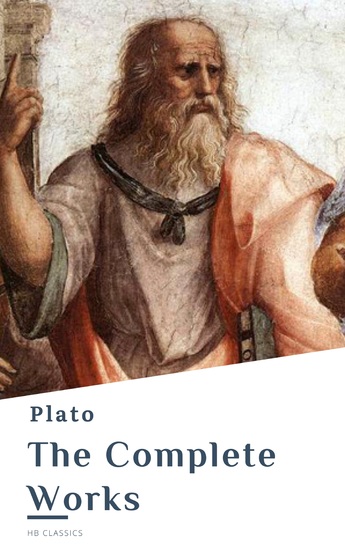
Plato: The Complete Works (31 Books) - cover

Plato: The Complete Works (31 Books)

Plato Plato, HB Classics

Traductor Benjamin Jowett

Editorial: HB Classics

  • 0
  • 0
  • 0

Sinopsis

Plato was a philosopher in Ancient Greece. He was an essential figure in the development of philosophy, especially the Western tradition, and he founded the Academy in Athens, the first institution of higher learning in the Western world.

Plato's dialogues have been used (and are still used) to teach a range of subjects, including philosophy, logic, ethics, rhetoric, religion and mathematics. His lasting themes include Platonic love, the theory of forms, the five regimes, innate knowledge, among others. His theory of forms launched a unique perspective on abstract objects, and led to a school of thought called Platonism.

This collection contains the following works by Plato:

Early Works
•Apology
•Charmides, or Temperance
•Crito
•Euthyphro
•Gorgias
•Hippias, Lesser
•Hippias, Greater
•Ion
•Laches
•Lysis
•Protagoras

Transitional Works
•Cratylus
•Euthydemus
•Meno
•Parmenides
•Phaedo
•Phaedrus
•Symposium
•The Republic

Middle Works
•Theaetetus

Late Works
•Critias
•Laws
•Philebus
•Sophist
•Statesman
•Timaeus

Works of Disputed Authorship
•Alcibiades I & II
•Eryxias
•Menexenus
•Theages
Disponible desde: 21/11/2022.
Longitud de impresión: 3000 páginas.
Otros libros que te pueden interesar

  • Thrive in Your Body - "Revitalize your health routine! Dive into immersive audio lessons designed to empower your body" - cover

    Thrive in Your Body -...

    Lucian Arkwright

    • 0
    • 0
    • 0
    Thrive in Your Body 
    ⭐⭐ A Simplified Guide to Embrace Your True Self ⭐⭐ 
    Are you ready to explore your sexuality beyond societal norms and fully embrace who you truly are? 
    Searching for a comprehensive resource that encompasses everything you need to embark on this transformative journey? 
    Your quest ends here! 
    This guide is your ultimate companion for enhancing your understanding, applying your insights, and engaging in meaningful exercises that encourage personal growth and self-discovery. 
    Updated for the latest insights and approaches. 
    Key Features of This Comprehensive Guide: 
    - In-depth explorations of sexuality and identity 
    - Thoughtful discussions on embracing your true self 
    - Effective strategies for personal development and self-acceptance 
    Our guide stands out with thorough coverage, which is essential for your journey toward self-discovery. Concepts are explored in depth, allowing for a deeper understanding of your identity. 
    Please note that this guide is an independent resource and is not affiliated with any official organizations. 
    Crafted with a structured format and straightforward language, our guide ensures smooth transitions between topics. Say farewell to convoluted terminology and embrace clear, precise, and engaging content. 
    So, why hesitate? Click the BUY NOW button, claim your guide, and start your journey toward embracing your true self today! 
    Embark on this empowering journey and truly thrive in your body!
    Ver libro
  • Daily Life in Ancient Egypt - Society Culture and Customs - cover

    Daily Life in Ancient Egypt -...

    Omar Khalil

    • 0
    • 0
    • 0
    Ancient Egyptian society was highly structured, with a rigid hierarchy that defined people’s roles and responsibilities. At the top of this social order was the pharaoh, considered both a political ruler and a divine figure. Below the pharaoh were the nobility and officials who managed the kingdom’s affairs. The middle class consisted of scribes, artisans, and merchants, while the majority of the population comprised farmers, laborers, and slaves. Each social group played a crucial role in maintaining Egypt’s stability and prosperity. 
    The pharaoh was the central authority in Egypt, believed to be the living embodiment of a god. His rule was absolute, and his primary duty was to maintain ma’at, the divine balance of order and justice. He oversaw military campaigns, religious ceremonies, and massive building projects, including temples and pyramids. The royal court and government officials assisted the pharaoh in administration. These officials, often chosen from the nobility, held positions such as viziers, tax collectors, and governors, ensuring the kingdom functioned efficiently. 
    Scribes, artisans, and merchants formed the middle class, contributing to Egypt’s economy and culture. Scribes were essential for maintaining records, writing official documents, and preserving religious texts. Their education was rigorous, requiring years of training in hieroglyphic writing. Artisans, including sculptors, painters, and metalworkers, created the intricate decorations found in tombs and temples. Merchants facilitated trade both within Egypt and with foreign lands, bringing valuable goods such as gold, spices, and precious stones. Although they did not hold political power, the middle class enjoyed a stable livelihood and social respect.
    Ver libro
  • Red Army into the Reich - The 1945 Russian Offensive - cover

    Red Army into the Reich - The...

    Simon Forty

    • 0
    • 0
    • 0
    The last year of the war saw Russian offensives that cleared the Germans out of their final strongholds in Finland and the Baltic states, before advancing into Finnmark in Norway and the east European states that bordered Germany: Poland, Czechoslovakia, and Hungary. By spring 1945 the Red Army had reached to Vienna and the Balkans, and had thrust deep into Germany where they met American, French, and British troops advancing from the west. The final days of the Third Reich were at hand. Berlin was first surrounded, then attacked and taken. Hitler's suicide and his successors' unconditional surrender ended the war. 


    For writers and historians who concentrate on the Western Allies and the battles in France and the Low Countries, the Eastern Front comes as a shock. The sheer size of both the territories and the forces involved; the savagery of both weather and the fighting; the appalling suffering of the civilian populations of all countries; and the wreckage of towns and cities—it's no wonder that words like Armageddon are used to describe the annihilation. 


    A must-listen narrative history, Red Army into the Reich provides a detailed account of how the Red Army pushed west and into Berlin in 1945.
    Ver libro
  • Geronimo - The Influential Medicine Man of the Apache Tribe - cover

    Geronimo - The Influential...

    Kelly Mass

    • 0
    • 0
    • 0
    Geronimo, a legendary Apache leader and medicine man from the Bedonkohe band, played a pivotal role in resisting Mexican and American military forces during the 19th century. Between 1850 and 1886, he worked with warriors from three other Chiricahua Apache bands—Tchihende, Tsokanende, and Nednhi—to carry out daring raids and resist encroachments on Apache lands. Their campaigns spanned northern Mexico, including the states of Chihuahua and Sonora, and the southwestern territories of the United States, particularly New Mexico and Arizona.  
    This era of conflict was part of the broader Apache–United States struggle, which arose after American colonization of Apache territories following the conclusion of the U.S.-Mexico War in 1848. For the Apaches, life on government-imposed reservations clashed with their fiercely independent spirit and traditional nomadic lifestyle. Geronimo emerged as a key figure leading resistance against these constraints. Despite his reputation, Geronimo was not a chief of the Chiricahua or Bedonkohe bands. However, his exceptional skills as a leader in raids and warfare earned him the loyalty of many Apache warriors, often commanding between 30 and 50 fighters at a time. 
    Ver libro
  • Gepids The: The History and Legacy of the Germanic Tribe that Controlled Central Europe during the Fall of Rome - cover

    Gepids The: The History and...

    Editors Charles River

    • 0
    • 0
    • 0
    The Gepids were a Germanic tribe often overshadowed by the Huns because they shared roughly the same space in Cntral Europe, yet they did not menace nearly as extensive an area. They are also overlooked because they were all but wiped out by the late 6th century, but while they were around, they influenced the course of events in central and Eastern Europe. The Gepids were no less bellicose than the other Germanic tribes or the Huns, for that matter, causing immense destruction throughout Europe and constantly threatening the stability of the Eastern Roman Empire, which later became the Byzantine Empire. It is this destruction for which the Gepids are best remembered, as well as the threat they were able to parlay into creating a sizable kingdom in what is today Hungary, but the Gepids were not merely brutal warriors. Some of their rulers demonstrated incredible political acumen. The Gepids knew how to use the powerful Byzantine Empire to their advantage and to make alliances with other Germanic tribes that helped them keep their hold on the power.  
    	By the early 6th century CE, Gepids were major players in the geopolitics of the region, and their kings knew how to use diplomacy - as much as warfare - to their advantage. However, despite their abiliites, the Gepids were eventually defeated and driven out like the Huns before them and the Avars after them. Europe was a tough place at the time, so the fact the Gepids were able to dominate there as long as they did is a testament to their marital prowess and diplomatic skills.
    Ver libro
  • The Daimon and the Soul of the West - Finding identity meaning and purpose in a sacrificial life - cover

    The Daimon and the Soul of the...

    Bernardo Kastrup

    • 0
    • 0
    • 0
    We, Western minds, have forgotten who we are, despite having never once stopped being who we are. We've lost touch with the impersonal, Daimonic forces that give us direction and the sacrificial nature of our existence. No longer do we realize that our lives aren't, have never been, and will never be about ourselves. Consequently, we've lost our ability to sense the immanent context that couches our lives in meaning and purpose. Our alienation from our own inborn nature and role has led to a tragic schism: a divorce between essence and narrative, being and action. This book is an effort to help heal this schism. It's about re-encountering our natural selves and guiding Daimon, retuning into the archetypal dispositions we embody, and relearning how to navigate the choppy waters of life in a spontaneous and fulfilling manner.
    Ver libro