


Laches
Plato Plato
Editorial: Project Gutenberg
Sinopsis
Lo sentimos, ahora mismo no disponemos de sinopsis para este libro. Entra a leerlo en 24symbols.com
Disponible desde: 01/12/1998.

Editorial: Project Gutenberg
Lo sentimos, ahora mismo no disponemos de sinopsis para este libro. Entra a leerlo en 24symbols.com
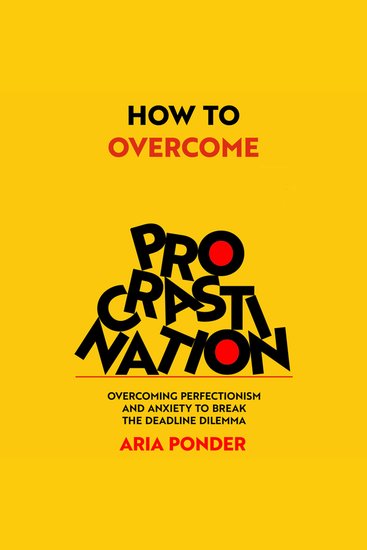
Unlock the secrets to a more productive, fulfilling life with “How to Overcome Procrastination”!
If you’re tired of watching important tasks pile up while procrastination overwhelms you, then get ready to:
1.     Dive into the psychology of chronic procrastination, unraveling motives, and mastering strategies for lasting change.
2.     Conquer perfectionism, reshape your mindset, and adopt effective motivational techniques.
This transformative guide offers:
●      Science-Backed Insights: Delve into the procrastinator’s brain, recognizing behaviors, and breaking the procrastination cycle.
●      Proven Strategies: Acquire time management techniques, cognitive restructuring, and habit-breaking tools for lasting change.
●      Master Discipline: Develop resilience, set goals, and foster disciplined habits to overcome setbacks.
●      Embrace Mindfulness: Embrace mindfulness for enhanced focus, decision-making, and stress management.
●      BONUS Confidence Boost: Confront Imposter Syndrome with strategies for cultivating unshakable self-confidence.
And more!
If you’ve been dreaming of a life where tasks are tackled head-on, goals are achieved, and the weight of unfinished business is lifted, then get ready to break free from the procrastination cycle, and start living the proactive, fulfilling life you deserve with “How to Overcome Procrastination”!
Your transformative journey begins today!
Ver libro

In this 2025 conversation with Justine Willis Toms, Briskin and Gelinas reveal that we are immersed in a universe of invisible energy fields, like swimmers in a vast ocean. Often beyond awareness, these forces shape and are shaped by us. This dialogue explores the Personal, Social, and Noetic fields and how conscious awareness of them helps us create a more just and compassionate world.
Alan Briskin, Ph.D. earned his doctorate in organizational psychology and is a pioneer in the field of organizational learning. He is co-founder of the Collective Wisdom Initiative and has been consultant to many large corporations including Lucasfilm, Sutter Health, Kaiser Permanente, and the Goi Peace Foundation. His books include:The Stirring of Soul in the Workplace (Berrett-Koehler 1998),The Power of Collective Wisdom and the Trap of Collective Folly (co-authors, Sheryl Erickson, Tom Callanan, and John Ott)(Berrett-Koehler 2009) and Daily Miracles: Stories and Practices of Humanity and Excellence in Health Care (co-author Jan Boller) (Sigma Theta Tau International; 1st edition 2006)
 Mary V. Gelinas, Ed.D. is an organizational development consultant devoted to the art of conscious social change. As an educator and consultant with more than forty years of experience working in brain research, contemplative practices, social psychology, and systems thinking. Her organizational redesign projects focus on innovative and inclusive solutions for business, government, health care, and education, for such diverse clients as the Global Covenant of Mayors for Climate and Energy and Vanderbilt University Medical Center. She is the author of Talk Matters: Saving the World One Word at a Time. (Friesen Press 2026)
 Briskin and Gelinas are the co-authors of Space is Not Empty: How Hidden Fields Are Shaping Your Life and Our World (Friesen Press 2025)
Ver libro
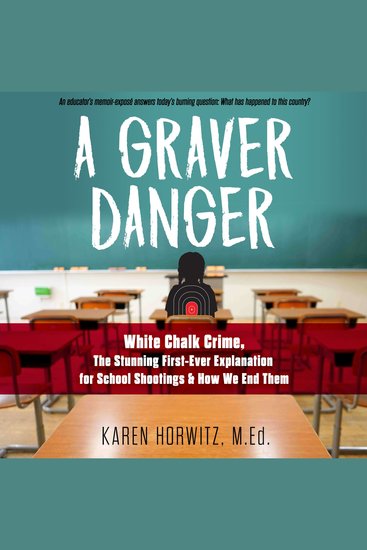
You will be thrilled to find a book that answers what happened to America so you can help heal our beloved country. In 1995, Karen Horwitz, aka the CHANGE EVERYTHING TEACHER, discovered our schools suffered from the 'Harvey Weinstein syndrome'—the powerful get their way no matter how wicked until someone finds the courage to expose them. She wrote a memoir to do to those running our schools what that brave actress who testified against Weinstein did — expose and end wrongdoing of a different kind. Readers will learn why we have school shootings and how to end them and restore democracy.She names the corruption that transformed our schools from revered institutions to mere shells White Chalk Crime™ and reveals how it dismantled democracy. The sheer audacity and disbelief of this corruption prompted her to write a book so that citizens could comprehend its extent. She warns, "There are consequences for a society that allows evil an honored home. One is school shootings, which are the tip of the democracy-destroying iceberg, taking our country down Titanic-style. Abraham Lincoln warned, 'The philosophy of the schoolroom in one generation will be the philosophy of government in the next.' When I taught, it was as if Trump ran our schools."She reveals that those in power secretly thwart school reform and presents an 'idea invention' that will revolutionize education as Jeff Bezos did to marketing and Steve Jobs to computers. It includes a blueprint for top-notch schools that ensures a home for great teachers and tells about a grassroots movement for change.This book is a beacon of hope, showing that change is within reach. It inspires the reader to feel optimistic about the future of education and democracy. This engaging and insightful book on education takes those who cherish democracy and fear autocracy on a journey deep inside our schools, where the root of many of this nation's challenges lies. It will change a whole lot. PDFs at WhiteChalkCrime.com/audioVer libro
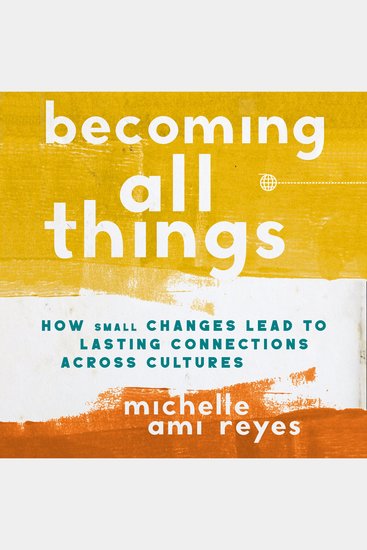
WINNER OF THE 2022 ECPA CHRISTIAN BOOK AWARD FOR NEW AUTHOR
Healthy relationships across cultures are possible. Dr. Michelle Reyes takes a close look at the concept of cultural accommodation found in Scripture—and especially in the letter of 1 Corinthians—to redefine how Christians interact with cultural narratives that are different from their own.
Christians—whose standard of living is oneness in Christ, whose gospel is radically nonexclusive—should be at the frontlines of justice and of cross-cultural unity. But many of us struggle to reach outside of our own cultural bubbles and form real relationships that move beyond stereotypes and lead to understanding, healing, and solidarity across cultural lines.
Why is that?Why is it so difficult to reconcile our call to be united in Christ with a celebration of different cultural expressions?What are the reasons for cultural differences and how do they so often lead to stereotyping, appropriation, gentrification, racism, and other forms of injustice?What does the Bible say about human beings as cultural image bearers?How do we reevaluate our awareness of culture identity in a healthy and constructive way?
These are just some of the questions that Dr. Reyes explores as she faces the challenges surrounding cross-cultural relationships in America today and her thoughts on the way forward.
Spoiler Alert! The way forward does require willingness to change. It requires embracing cultural discomfort. But by engaging with this book, you will be empowered to learn how to become all things to all people—that is: how to reflect Jesus' love in a multicultural, multiracial body of Christ and to share that love with a hurting world.
Ver libro

“Kim is a young detective, starting out on her career. Whilst at a gay bar, she meets an older woman and their passion leads to a discovery of mutual interests and a surprise discovery as they begin to really know each other”
All characters depicted in this work of fiction are 18 years of age or older.
Ver libro

Border control, at its core, is a delicate balance between maintaining national security and upholding human rights, between enforcing laws and fostering economic opportunities. As global mobility increases through migration, trade, and technology, managing borders has evolved into a complex issue that transcends national boundaries. It’s no longer just a matter of controlling who enters and exits a country; it’s about managing flows of people, goods, information, and even ideas in ways that protect citizens while also adhering to international law.

The importance of border control is particularly evident in the context of rising global challenges, such as terrorism, organized crime, and pandemics. These threats have pushed governments to implement stringent measures to secure their territories. However, such measures often come at the expense of migrants seeking refuge from war, poverty, and persecution. The political and humanitarian debates around immigration and border control have intensified in recent years, with many countries grappling with how to secure their borders without violating the rights of vulnerable populations.
Complicating this issue further is the reality of globalization. While the free flow of goods, services, and information has been the cornerstone of global trade and cooperation, it has also made it easier for individuals to move across borders—both legally and illegally. This has led to increased challenges for border agencies, who are now tasked with identifying and managing the movement of millions of people each year. Additionally, technological advancements, while offering new tools for surveillance and control, also raise concerns about privacy, data security, and the ethics of surveillance practices.
Ver libro





