¡Acompáñanos a viajar por el mundo de los libros!
Añadir este libro a la estantería
Grey
Escribe un nuevo comentario Default profile 50px
Grey
Suscríbete para leer el libro completo o lee las primeras páginas gratis.
All characters reduced
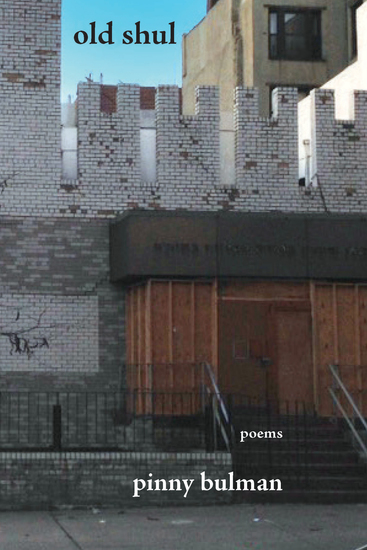
Old Shul - Poems - cover

Old Shul - Poems

Pinny Bulman

Editorial: Ben Yehuda Press

  • 0
  • 0
  • 0

Sinopsis

he swam way out past the shadows cast / by the steel towers of the indifferent gray bridge / shielding the traffic flowing rhythmically back and / forth, far above the little dead lighthouse that stopped working long / ago when there was nothing left down there / that anyone still wanted to see.
 
Pinny Bulman's poems chronicle his coming of age as a young religious Jewish man against the backdrop of the Dominican and Puerto Rican culture in Washington Heights - two worlds that co-exist but rarely overlap. As he moves beyond the past while holding on to it, Bulman creates the presence of people, prayers, and places long gone, in the same way "time could turn loss into patina." Bulman's precise language allows him to conjure up poignant moments without running the risk of becoming overtly sentimental: but in the end when things melt / what we're left with are these carved out spaces / each with its own beauty of absence.
Disponible desde: 06/01/2024.
Longitud de impresión: 130 páginas.
Otros libros que te pueden interesar

  • The Secrets of the Federal Reserve - cover

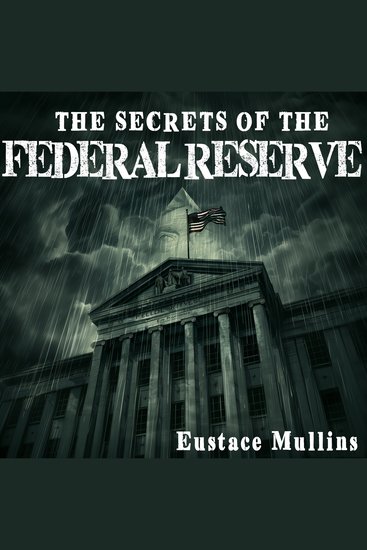
    The Secrets of the Federal Reserve

    Eustace Mullins

    • 0
    • 0
    • 0
    The Secrets of the Federal Reserve* by Eustace Mullins investigates the origins, structure, and influence of the U.S. Federal Reserve System, arguing that it was created not solely to stabilize the economy but to serve the interests of an elite banking group. Mullins traces the Reserve’s formation back to a secret meeting on Jekyll Island and explores how this institution has impacted U.S. and global economics. The book examines key figures, banks, and historical contexts behind the Reserve, presenting a controversial view that challenges mainstream narratives about its purpose and control. This work is often cited by those critical of centralized banking power and has sparked much debate in economic and historical circles.
    Ver libro
  • The Will to Believe - cover

    The Will to Believe

    William James

    • 0
    • 0
    • 0
    "The Will to Believe" is a philosophical essay written by William James in 1896. The essay is a defense of the concept of religious faith and argues that belief can be justified even in the absence of objective evidence. 
    James argues that there are some beliefs, such as religious beliefs, that cannot be proven or disproven by empirical evidence. He contends that in cases where there is insufficient evidence to support a belief, individuals are justified in using their will to believe in order to hold on to what they consider to be important or valuable beliefs. 
    James also argues that the act of believing itself can have positive effects on an individual's life. Belief can provide a sense of meaning and purpose, as well as a framework for understanding the world. Furthermore, James contends that individuals who possess a strong will to believe are more likely to succeed in achieving their goals, as they are more motivated and focused. 
    "The Will to Believe" was a controversial work in its time, and it continues to be debated by philosophers and scholars today. While some have criticized James's arguments for promoting irrationality and dogmatism, others have praised his defense of personal autonomy and individual freedom of thought. Overall, "The Will to Believe" is an important contribution to the ongoing philosophical discourse on the nature of belief and faith.
    Ver libro
  • Wicked Bozeman - cover

    Wicked Bozeman

    Kelly Suzanne Hartman

    • 0
    • 0
    • 0
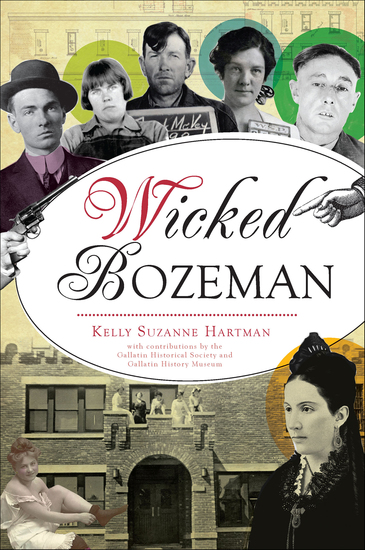
    Wicked Bozeman delves into a dangerous and dark pastThe Gallatin History Museum, housed in the old Gallatin County Jail, holds many secrets. From the house of ill repute on Mendenhall Street to the earliest jail break in 1873, the historic crimes are replete with con artists, forgers, robbers and the insane each leaving a trail of deceit and mystery. There is laughter, shock and the hard reality of a life lost to time behind bars. Using the original jail ledgers as a jumping off point, Museum Curator Kelly Suzanne Hartman takes the reader along on an investigative journey through Bozeman's seedier past.
    Ver libro
  • The Book Of Enoch - cover

    The Book Of Enoch

    Unknown Unknown

    • 0
    • 0
    • 0
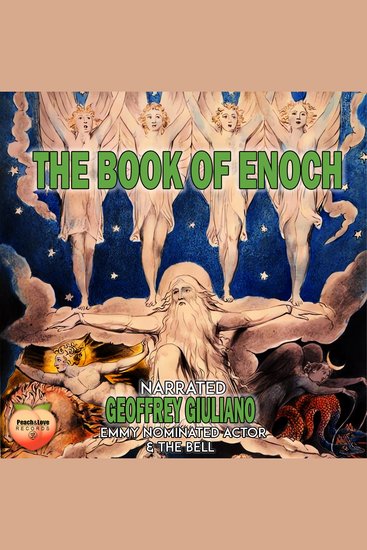
    The Book of Enoch, an ancient text attributed to the biblical figure Enoch, unveils a captivating narrative that transcends traditional religious boundaries. This enigmatic work, also known as 1 Enoch, delves into realms seldom explored in mainstream religious texts. Comprising various sections, the Book of Enoch offers a vivid portrayal of cosmic visions, angelic hierarchies, and apocalyptic prophecies. Its pages weave a tapestry of mysticism, blending elements of otherworldly journeys and divine revelations. As readers traverse the intricate prose, they encounter a vivid spectrum of celestial beings, from the righteous Watchers to the fallen angels. The Book of Enoch, with its ethereal imagery and prophetic insights, invites contemplation on the complexities of the divine, leaving an indelible mark on those who seek to unravel the mysteries it presents.
    Ver libro
  • Medieval Bosnia: The Turbulent History of Bosnia and the Region during the Middle Ages - cover

    Medieval Bosnia: The Turbulent...

    Editors Charles River

    • 0
    • 0
    • 0
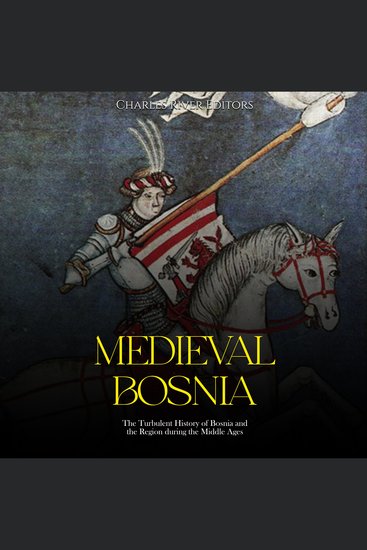
    Much has been written about Western intervention during the breakup of Yugoslavia, and whether it made matters worse, prevented worse atrocities, or was simply ineffective. In early 1992, however, what was clear was that Europe was hopelessly divided over the best course of action to take towards Yugoslavia, and after several years of fighting, the Bosnian War was one of the most violent conflagrations in Europe since the end of World War II.  
    That war had been the byproduct of centuries of tensions in the Balkans, and an attempt in the wake of World War I to redraw the political boundaries of Europe and the Middle East. That included forming the Kingdom of Yugoslavia, initially known as the Kingdom of Serbs, Croats and Slovenes, a particularly fragile enterprise, and there was almost constant tension between the majority Serbs and the other Yugoslav nationalities, especially the Croats.  
    Depending on the source, many authors have focused on different catalysts for Yugoslavia’s demise, but Vesna Drapac may have succinctly summed the situation up when he wrote that by the end, the state “lacked a reason to exist.” There is certainly something in this sentiment, but the disintegration came at an enormous cost. 
    Given what happened in Yugoslavia, it should be little surprise that Bosnia did not have its fully-established borders until the 19th century, and even in modern times, in many respects the people distinguished and defined Bosnia as a polity more than its shifting borders, and regardless of whether Bosnia operated as an independent state or kingdom. It was during the Middle Ages that Bosnia’s culture and ethnic makeup truly began to coalesce, despite the politically rocky nature of the era in the Balkans. 
    Ver libro
  • Criminology - The Intricacies of Criminal and Social Justice (2 in 1) - cover

    Criminology - The Intricacies of...

    Kevin Thorley

    • 0
    • 0
    • 0
    This book contains two titles, which are the following: 
    1 - The key processes in the criminal justice system are investigation, arrest, prosecution, pretrial, trial, sentencing, corrections, and reentry. Investigation involves law enforcement investigating a crime, gathering evidence, and identifying suspects. Arrest involves taking suspects into custody based on probable cause. Prosecution involves prosecutors reviewing evidence, deciding on charges, and filing them in court. Pretrial includes bail hearings, plea bargaining, and preliminary hearings. Trial is a court proceeding to determine the guilt or innocence of the accused, including opening statements, witness testimonies, and closing arguments. Sentencing involves a judge determining the sentence for a convicted offender. Corrections involve offenders serving their sentences in correctional facilities or through community-based programs. Reentry involves programs to help former inmates reintegrate into society, aiming to reduce recidivism. 
    2 - Social justice has a rich and complex history, shaped by numerous social, political, and economic movements over centuries. Its roots can be traced back to the Enlightenment era, where philosophers like John Locke and Jean-Jacques Rousseau introduced ideas of equality, individual rights, and the social contract. These concepts laid the groundwork for future social justice movements by emphasizing the inherent rights and dignity of every individual.
    Ver libro