Junte-se a nós em uma viagem ao mundo dos livros!
Adicionar este livro à prateleira
Grey
Deixe um novo comentário Default profile 50px
Grey
Assine para ler o livro completo ou leia as primeiras páginas de graça!
All characters reduced
Microsoft Defender for Identity in Depth - An exhaustive guide to ITDR breach prevention and cyberattack response - cover
LER

Microsoft Defender for Identity in Depth - An exhaustive guide to ITDR breach prevention and cyberattack response

Pierre Thoor

Editora: Packt Publishing

  • 0
  • 0
  • 0

Sinopse

Written by a recognized cybersecurity expert, Microsoft Defender for Identity in Depth not only lays the groundwork for deploying and managing MDI, but also takes your knowledge to expert levels, enabling you to strengthen your organization against the most advanced cyber threats.
You’ll familiarize yourself with the essentials of MDI, from seamless setup to leveraging PowerShell for automation, setting the stage for exploring advanced integrations and capabilities. Through practical, real-world examples, you’ll learn how to extend MDI’s reach by using APIs and conducting proactive threat hunting with KQL to turn insights into actions.
The book gradually shifts focus to operational excellence, helping you develop expertise in investigating alerts, optimizing action accounts, and troubleshooting, which will empower you to master the building and maintenance of a robust ITDR framework and strengthen your security posture.
By the end of this book, you’ll be able to harness the full potential of MDI’s functionalities, positioning you as a key player in your organization’s cybersecurity defenses.
Disponível desde: 20/12/2024.
Comprimento de impressão: 380 páginas.

Outros livros que poderiam interessá-lo

  • White Noise Sleep Sounds - Ambient Mix of White Noise Sounds for Deep Sleep and Stress Relief - cover

    White Noise Sleep Sounds -...

    Sleeptime Publications

    • 0
    • 0
    • 0
    Block Out Distractions and Sleep Deeply—Naturally. 
    Do you struggle to fall asleep because of background noise, stress, or a racing mind? White noise and nature sounds create a calm, consistent environment that helps you relax, unwind, and drift into deep, uninterrupted sleep.Mask Disruptions and Relax Instantly with Soothing Soundscapes. 
    White noise works by drowning out sudden noises—like traffic or voices—so your brain stays in a relaxed state. Meanwhile, nature sounds like rain, ocean waves, and rustling leaves have been shown to reduce stress and promote deeper sleep by mimicking the rhythms of the natural world. Research in The Journal of Cognitive Neuroscience found that white noise improves sleep stability, while a study in Scientific Reports confirmed that nature sounds lower heart rate and cortisol levels, reducing stress and enhancing relaxation.Simply Press Play and Let the Sounds of Nature Lull You to Sleep. 
    With this audiobook, you’ll experience: 
    ✅ A calming blend of white noise and nature sounds for deep relaxation 
    ✅ Scientifically backed sound therapy to improve sleep quality 
    ✅ A natural way to reduce stress and block out disruptions 
    ✅ Uninterrupted, restful sleep for a refreshed mind and bodyTurn Off the Noise and Tune Into Restful Sleep. 
    Let soothing soundscapes create the perfect sleep environment. Press play now and experience the power of white noise for deep, peaceful rest.
    Ver livro
  • Carbon Technocracy - Energy Regimes in Modern East Asia - cover

    Carbon Technocracy - Energy...

    Victor Seow

    • 0
    • 0
    • 0
    A forceful reckoning with the relationship between energy and power through the history of what was once East Asia’s largest coal mine. 
     
    The coal-mining town of Fushun in China’s Northeast is home to a monstrous open pit. First excavated in the early twentieth century, this pit grew like a widening maw over the ensuing decades, as various Chinese and Japanese states endeavored to unearth Fushun’s purportedly “inexhaustible” carbon resources. Today, the depleted mine that remains is a wondrous and terrifying monument to fantasies of a fossil-fueled future and the technologies mobilized in attempts to turn those developmentalist dreams into reality. 
     
    In Carbon Technocracy, Victor Seow uses the remarkable story of the Fushun colliery to chart how the fossil fuel economy emerged in tandem with the rise of the modern technocratic state. Taking coal as an essential feedstock of national wealth and power, Chinese and Japanese bureaucrats, engineers, and industrialists deployed new technologies like open-pit mining and hydraulic stowage in pursuit of intensive energy extraction. But as much as these mine operators idealized the might of fossil fuel–driven machines, their extractive efforts nevertheless relied heavily on the human labor that those devices were expected to displace. Under the carbon energy regime, countless workers here and elsewhere would be subjected to invasive techniques of labor control, ever-escalating output targets, and the dangers of an increasingly exploited earth. 
     
    Although Fushun is no longer the coal capital it once was, the pattern of aggressive fossil-fueled development that led to its ascent endures. As we confront a planetary crisis precipitated by our extravagant consumption of carbon, it holds urgent lessons. This is a groundbreaking exploration of how the mutual production of energy and power came to define industrial modernity and the wider world that carbon made.
    Ver livro
  • A Little Cocaine to Loosen My Tongue - cover

    A Little Cocaine to Loosen My...

    Sigmund Freud

    • 0
    • 0
    • 0
    In the 1880s, Freud discovered cocaine and became enthusiastic about what was not yet considered a party drug. Favoring the use of cocaine in the treatment of neurasthenia, as an energizer, or as an anesthetic, Freud made a creative and fashionable use of it, heralding practices that our society knows well. Several surprising texts are gathered here on cocaine. Freud recounts the use of coca in history, particularly in South America, from where it was imported. In Cocaine Addiction and Cocaine Phobia, the inventor of psychoanalysis defended coca against its accusers as a dangerous product. Finally, in the letters to Martha Bernays, his future wife, we discover an intimate and loving Freud, telling how he escaped boring dinners thanks to his dear magic substance.
    Ver livro
  • Earth: Over 4 Billion Years in the Making - cover

    Earth: Over 4 Billion Years in...

    Chris Packham, Andrew Cohen

    • 0
    • 0
    • 0
    ‘Combines the natural history of programmes such as David Attenborough’s Planet Earth with the planetary focus of Brian Cox’s Universe’ Guardian 
    A beautiful, full colour book to accompany the 5 part BBC TV series telling the most important story of all, the deep history of our own planet. 
    With the trademark dramatic storytelling techniques of The Planets and The Universe, Andrew Cohen and Chris Packham narrate the biography of the Earth, revealing the most epic moments from its history, from the first seconds of its existence to the arrival of its most incredible inhabitants, us. 
    But humans take a back seat for this story as the Earth takes centre stage. We’ll witness those moments where our planet’s future hung in the balance in the face of massive bombardments from space, extreme changes in climate, the collision of whole continents and more, and we’ll tell the story of how Earth’s most incredible creations – life and intelligence – are set to have the same lasting impact on Earth’s story as any meteorite or earthquake. 
    This is the epic 4 billion year story of the place we call home. 
    Chris Packham's EARTH is a top-tier exploration of the evolution of our planet. This latest contribution to the science genre offers a new perspective, placing Earth and its history at the centre of the narrative. 
    For fans of Andrew H. Knoll (A Brief History of Earth), John Muir Laws (The Laws Field Guide to Sierra Birds), Hamza Yassin (Be a Birder), Isabella Tree (Wilding), and Alice Roberts (The Incredible Unlikeliness of Being). 
    HarperCollins 2023
    Ver livro
  • Impasse - Climate Change and the Limits of Progress - cover

    Impasse - Climate Change and the...

    Roy Scranton

    • 0
    • 0
    • 0
    A Next Big Idea Club "Must Read" for August 2025! 
     
    Extreme heat, fires, floods, and storms are transforming our planet. Yet we get increasing emissions, divisive politics, and ersatz solutions that offer more of the same: more capitalism, more complexity, more "progress." 
     
    The impasse we face is not only political and institutional, but cognitive, existential, and narrative. We're incapable of grasping the scale, speed, and impact of global warming. And we optimistically cling to a narrative that promises a better tomorrow if we just keep doing what we're doing. 
     
    It's past time to free ourselves from our dangerous and dogmatic faith. Such unwarranted optimism will accelerate our disintegration. If we want to have hope for the future, it must be grounded in a recognition of human limits—a view Scranton calls ethical pessimism. 
     
    Scranton describes the challenges we face in making sense of our predicament, from problems in communication to questions of justice, from the inherent biases in human perception to the difficulties of empirical knowledge. What emerges is a challenging but hopeful proposition: if we have the courage to accept our limits, we may find a way to embrace our future.
    Ver livro
  • Hubble Space Telescope and James Webb Space Telescope The: The History of the World’s Most Important Telescopes - cover

    Hubble Space Telescope and James...

    Editors Charles River

    • 0
    • 0
    • 0
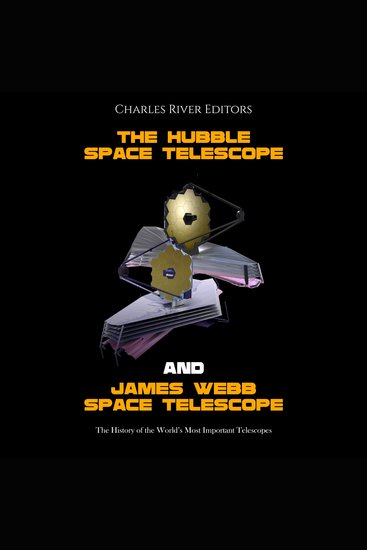
    By the time the Hubble telescope reached orbit, it was already the world’s most famous telescope, but it was also the most scorned. The telescope cost nearly $2 billion more to complete than anticipated, and to make matters worse, the first images it sent back were skewed. However, within about a year of fixing it, the telescope captured images of a major event in the solar system. In July 1994, the telescope provided a firsthand observation of a comet, Shoemaker-Levy 9, breaking apart and slamming into Jupiter. The comet broke into about two dozen pieces, some of them more than a mile wide, and hit the giant planet with the force of millions of atomic bombs.In addition to capturing the streaking comet breaking up and colliding with Jupiter, the telescope captured images of the impact marks that were left on Jupiter’s surface, helping astronomers study Jupiter’s atmosphere and debris left by major impacts. 
    The increase in excitement was palpable. Scientists had viewed much of the universe through Hubble, almost as it was when it was formed, but they learned that none of these galaxies were the first ones formed. Then ultimately realized that “Hubble wasn’t the right instrument to detect those first galaxies.” “The farther we can see in space, the farther we can see in time…and that’s not a metaphor. That’s actually literally true,” explained scientist Amber Straughn. The Webb Space Telescope represents “looking in a part of space that we’ve never seen before.” The telescope will be able to detect the earliest galaxies because of its unparalleled sensitivity. Another factor is the kind of light it will collect, “light that our eyes aren’t designed to see.”
    Ver livro