Junte-se a nós em uma viagem ao mundo dos livros!
Adicionar este livro à prateleira
Grey
Deixe um novo comentário Default profile 50px
Grey
Assine para ler o livro completo ou leia as primeiras páginas de graça!
All characters reduced
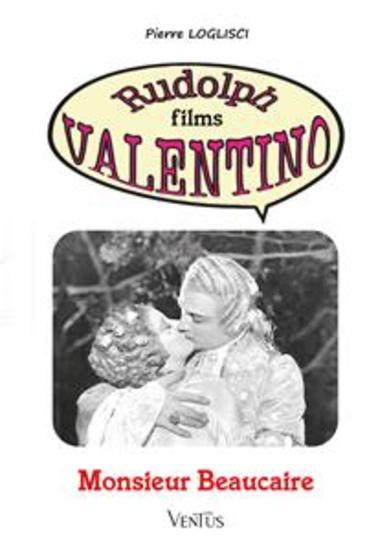
Monsieur Beaucaire - Rudolph films Valentino - cover
LER

Monsieur Beaucaire - Rudolph films Valentino

Pierre Loglisci

Editora: Ventus

  • 0
  • 0
  • 0

Sinopse

"Monsieur Beaucaire" is a distinguished silent film that features Rudolph Valentino in the role of the Duke of Chartres, who, under the guise of Monsieur Beaucaire, a barber, navigates the intricacies of love and deception in the French court. This film, set against the opulent backdrop of 18th-century France, showcases Valentino's versatility as he portrays a character caught in a web of romantic entanglements and political intrigue. The blend of comedy, drama, and romance, along with lavish costumes and settings, highlights the film's exploration of identity, honor, and the pursuit of true love. Valentino's performance as both a nobleman and a commoner offers a compelling look at societal norms and personal integrity, making "Monsieur Beaucaire" a memorable piece of silent film history.
Disponível desde: 19/02/2024.
Comprimento de impressão: 132 páginas.


Outros livros que poderiam interessá-lo

  • Meaning Of Colors - cover

    Meaning Of Colors

    Niina Niskanen

    • 0
    • 0
    • 0
    Unlock the hidden power of colors with our captivating audiobook, "The Meaning of Colors: A Journey of Creativity and Knowledge." Delve into the fascinating world of color psychology and discover how colors can inspire, influence, and enhance your life. Immerse yourself in the soothing narration as you explore the symbolism behind each hue and gain a deeper understanding of their impact on emotions and creativity. And as a special bonus, experience a guided meditation at the end to help you tap into the energy of colors for ultimate relaxation and self-discovery. Let this audiobook be your guide to unlocking the true meaning behind every shade. 
    Colors have various different meanings in different cultures 
    From happiness and prosperity to sadness and mourning. For instance, in western cultures yellow is the symbol of happiness, while in Egypt, it reprepsents mourning. Likewise in Japan, red signifies life and energy, whereas in South Africa, it represents death. More over, the color white, is used for mourning in China, and is considered as symbol of purity and innocense in western cultures. These various interpretations of color, highlight the importance of cultural understanding and the mindset that we communite when using colors in different context. 
    Ver livro
  • Inside the Dancer's Art - cover

    Inside the Dancer's Art

    Rose Eichenbaum

    • 0
    • 0
    • 0
    In this gorgeous book, the acclaimed photographer Rose Eichenbaum captures the spirit, beauty, and commitment of dancers along with the dancers' own words of wisdom and guidance. More than 250 color and black and white photographs are paired with inspirational quotes from legendary and emerging dancers, including Bill T. Jones, Katherine Dunham, Ann Reinking, Mark Morris, Pina Bausch, Jawole Willa Jo Zollar, Gregory Hines, Mitzi Gaynor, Desmond Richardson, Rennie Harris, Paul Taylor, Ohad Naharin, Tiler Peck, and many more. Here, words and images explore creativity, art making, the communicative power of the human body, the challenges of balancing everyday life with the physical and practical demands of the dancer's art, and more. In these intimate portraits, Eichenbaum reveals and celebrates the world of the dancer. Sensual and mesmerizing, these images will entrance dancer and non-dancer alike—as well as anyone who loves fine photography—with their powerful depiction of the human body.
    Ver livro
  • Jung and Active Imagination with James Hillman - cover

    Jung and Active Imagination with...

    James Hillman

    • 0
    • 0
    • 0
    James Hillman is the father of Archetypal Psychology. This rare program focuses on Education, Imagination and Myth with James Hillman. 
     
    The emergence of C.G. Jung’s Red Book from years of storage in a Swiss vault has re-kindled interest in active imagination. This method of self-exploration involves actively engaging one’s own imagination in dialogue, through writing, art, or the spoken word. 
     
    In this 2.5 -hour streaming video program, James Hillman —noted author, psychologist, and the first Director of Studies at the Jung Institute in Zurich — introduces the method and delves deeply into the therapeutic value it offers in an increasingly noisy and demanding world. 
     
    Hillman considers the history and theory of active imagination in Jung, its relationship to making art, and offers examples for scrutiny and discussion. He discusses the fear of inviting demons and opening wounds, and addresses the difference between the voices of inner figures and auditory hallucinations. 
     
    The major re-examination of Jung’s original ideas and inspiration doesn’t stop there, though. Hillman goes on to examine the role of imagination in contemporary culture, and whether imagination itself might need re-imagining. 
     
    Hillman’s seminar was taped December 9, 2009, in California. 
     
    ISBN: 9781637570593
    Ver livro
  • Hollywood’s Favorite Screwball Actresses: The Lives and Legacies of the Women Who Popularized the Comedy Genre - cover

    Hollywood’s Favorite Screwball...

    Editors Charles River

    • 0
    • 0
    • 0
    “If I couldn't laugh, I'd rather die.” – Claudette Colbert 
    The 1930s were the height of the classical Hollywood era, known for lavish studio productions by heavyweights like MGM, RKO, Warner Brothers, Paramount, and 20th Century Fox, which were operating at the height of their powers. Every major studio possessed a long roster of contract players, and films were released at such a rapid pace that it made for an especially competitive environment within the industry. Even while America remained in the throes of the Great Depression, the film industry continued to flourish, and movies easily supplanted the theater as the main attraction for American entertainment. Indeed, it would be no exaggeration to claim that the film industry reached its zenith during the decade precisely because it offered an affordable (if very temporary) escape from the anxieties of the economic woes of the era. 
    When the American Film Institute ranked its top 50 screen legends of the 20th century, many of the people named had careers spanning several decades, but one of them managed the feat despite living less than three decades. Ranked as the 22nd greatest actress of the 20th century, Jean Harlow was on the screen for less than 10 years, but in that time the “Blonde Bombshell” became the most popular actress of the 1930s, eclipsing superstars like Joan Crawford and Norma Shearer along the way. In fact, the platinum blonde accomplished that feat as a leading lady for just five years before her premature death of renal failure at the age of 26. 
    Carole Lombard has been memorialized in many fitting ways as an actress, and one of her biggest contributions to Hollywood was the blond archetype that the film industry used successfully for decades in screwball comedies, paving the way for the success of women like Marilyn Monroe. Perhaps the most remarkable aspect of that fact is that it was actually based on Carole’s gushing personality. 
    Ver livro
  • Art Therapy - The Study and Practice of Using Art as a Therapeutic Tool - cover

    Art Therapy - The Study and...

    Vivian Westlake

    • 0
    • 0
    • 0
    Art has been an integral part of human expression for millennia, transcending language and culture to communicate thoughts, emotions, and experiences. In the realm of therapy, art serves as a transformative tool, offering individuals a unique way to process their emotions, explore their identities, and navigate life’s challenges. Art therapy bridges the gap between the conscious and unconscious mind, enabling a form of expression that words often fail to capture. 
    At its core, art therapy leverages the creative process to foster emotional healing and psychological growth. Unlike traditional talk therapy, where verbal articulation is central, art therapy focuses on the act of creation itself. This approach allows individuals to externalize their feelings, making abstract emotions tangible and, therefore, easier to understand and address. Whether through painting, drawing, sculpting, or digital media, the act of making art provides a safe and nonjudgmental space for self-reflection and exploration. 
    The power of art in therapy lies in its accessibility. You do not need to be an artist to benefit from art therapy. The emphasis is not on the aesthetic value of the work but on the process and what it reveals. For children, who may lack the vocabulary to articulate complex feelings, art therapy offers a way to communicate visually. Adults, too, find solace in the creative process, as it can unlock suppressed emotions and provide clarity in moments of confusion or distress.
    Ver livro
  • This is Not New - Art Culture and the Promise of Change - cover

    This is Not New - Art Culture...

    David Balzer

    • 0
    • 0
    • 0
    Praise for Curationism: "Balzer writes with zest, skepticism, and sly humor" —Sheila Heti, author of Pure Colour 


    What does it mean to call something "new"? Why is Western art and culture, even after postmodernism, still so obsessed with the concept? What are the consequences of relying on culture to bring about social change? 


    In this provocative book, David Balzer argues that Western culture was never designed to produce truly new or original artifacts. Rather, we move from fixation to fixation, trend to trend—a cycle of creation and destruction with deep origins in Judeo-Christianity and the paganism that preceded it. The culture industry promises its own form of change while preserving existing systems of power exactly as they are. 


    From the New Jerusalem to the New Left, from Vannevar Bush to Kate Bush, This is Not New asks difficult questions about the role of culture not in making change, but in delaying—even preventing—it.
    Ver livro