¡Acompáñanos a viajar por el mundo de los libros!
Añadir este libro a la estantería
Grey
Escribe un nuevo comentario Default profile 50px
Grey
Suscríbete para leer el libro completo o lee las primeras páginas gratis.
All characters reduced
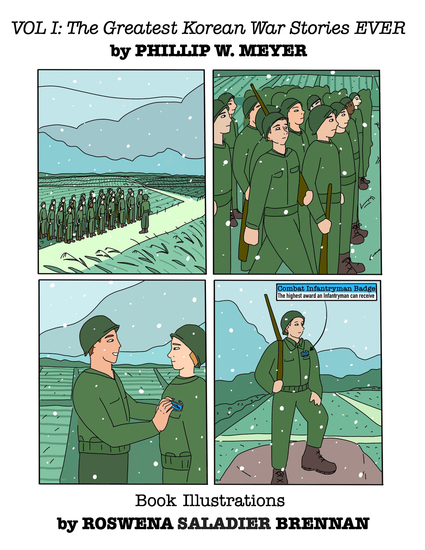
The Greatest Korean War Stories EVER - Volume I - cover

The Greatest Korean War Stories EVER - Volume I

Phillip W. Meyer

Editorial: PM Media LLC

  • 0
  • 0
  • 0

Sinopsis

Follow Private Meyer's wartime memoirs as he travels you back in time to 1950 to 1952, as an infantry soldier on the frontlines of the Korean War, only just turning 17 years old. Be inspired by these true life stories with fully illustrated comics for each one. See him survive harsh winters in foxholes and deal with the life at war. Motivating, captivating, and sometimes even funny. So grab a cup of coffee, sit back, and enjoy these greatest ever stories by a U.S. Army veteran.
 
At 90 years old Phillip W. Meyer still enjoys writing stories and poems.
 
Each story in this book includes a fully illustrated comic.
Disponible desde: 14/06/2023.
Longitud de impresión: 134 páginas.

Otros libros que te pueden interesar

  • I Feel Happy Today - cover

    I Feel Happy Today

    Kim Mitzo Thompson, Karen Mitzo...

    • 0
    • 0
    • 0
    Kids will love this playful story to explore a variety of feelings with relatable life examples. Simple sentence structures and repetitive words will encourage young children to fall in love with learning to read.  Kids will enjoy following along word-for-word with the recorded story that features sound effects and professional voices to help children develop vocabulary and improve listening skills.  This reader features adorable art showing diversity to help children form a sense of acceptance and understanding of different races and individual differences.
    Ver libro
  • Liberty Equality Fashion - The Women who Styled the French Revolution - cover

    Liberty Equality Fashion - The...

    Anne Higonnet

    • 0
    • 0
    • 0
    Joséphine Bonaparte, future Empress of France; Térézia Tallien, the most beautiful woman in Europe; and Juliette Récamier, muse of intellectuals, had nothing left to lose. After surviving incarceration and forced incestuous marriage during the worst violence of the French Revolution of 1789, they dared sartorial revolt. Together, Joséphine and Térézia shed the underwear cages and massive, rigid garments that women had been obliged to wear for centuries. They slipped into light, mobile dresses, cropped their hair short, wrapped themselves in shawls, and championed the handbag. Juliette made the new style stand for individual liberty. 


    The erotic audacity of these fashion revolutionaries conquered Europe, starting with Napoleon. Everywhere a fashion magazine could reach, women imitated the news coming from Paris. It was the fastest and most total change in clothing history. Two centuries ahead of its time, it was rolled back after only a decade by misogynist rumors of obscene extravagance. 


    New evidence allows the real fashion revolution to be told. This is a story for our time: of a revolution that demanded universal human rights, of self-creation, of women empowering each other, and of transcendent glamor. 


    This audiobook includes bonus lectures from the author's "Clothing" course she teaches as professor of art history at Barnard College, Columbia University.
    Ver libro
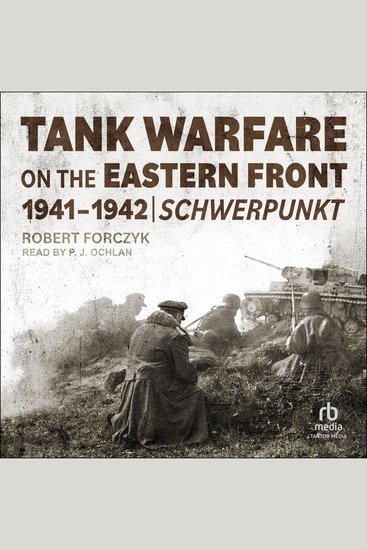
  • Tank Warfare on the Eastern Front 1941-1942 - Schwerpunkt - cover

    Tank Warfare on the Eastern...

    Robert A. Forczyk

    • 0
    • 0
    • 0
    The German panzer armies that swept into the Soviet Union in 1941 were an undefeated force that had honed their skill in combined arms warfare to a fine edge. The Germans focused their panzers and tactical air support at points on the battlefield defined as Schwerpunkt—main effort—to smash through any defensive line and then advance to envelope their adversaries. 


    Initially, these methods worked well in the early days of Operation Barbarossa and the tank forces of the Red Army suffered defeat after defeat. Although badly mauled in the opening battles, the Red Army's tank forces did not succumb to the German armored onslaught and German planning and logistical deficiencies led to over-extension and failure in 1941. In the second year of the invasion, the Germans directed their Schwerpunkt toward the Volga and the Caucasus and again achieved some degree of success, but the Red Army had grown much stronger and by November 1942, the Soviets were able to turn the tables at Stalingrad. 


    Robert Forczyk's incisive study offers fresh insight into how the two most powerful mechanized armies of WWII developed their tactics and weaponry during the early years of the Russo-German War. He uses German, Russian, and English sources to provide the first comprehensive overview and analysis of armored warfare from the German and Soviet perspectives.
    Ver libro
  • Playing through Pain - The Violent Consequences of Capitalist Sport - cover

    Playing through Pain - The...

    Daniel Sailofsky

    • 0
    • 0
    • 0
    For many fans and casual observers, professional sports and violence are deeply connected. Violence on the field has real consequences for players, notably in the form of life-altering injuries from concussions. Off the field, in the last several decades, scores of athletes have committed violent acts, from domestic abuse and sexual assault to animal abuse and murder. Beyond athletes, sport also serves as a site of political and structural violence, from the displacement and hyperpolicing of everyday people for mega-events to the "sportswashing" of environmentally harmful industries. 


    Daniel Sailofsky examines the endemic violence in professional sports and argues that—while related to masculinity, misogyny, and individual factors like alcohol consumption and gambling—it is most intimately tied to capitalism and to capitalist modes of consumption and profit. Sailofsky explains how capitalism creates the conditions for violence to thrive and uncovers how sports leaders—coaches, league officials, and team owners—obfuscate these relationships to avoid accountability. 


    From minor league baseball exploitation to spectator hooliganism, Sailofsky shows the connections between the business of sports and violence, but also, more importantly, he imagines new forms of sport that are not places of harm.
    Ver libro
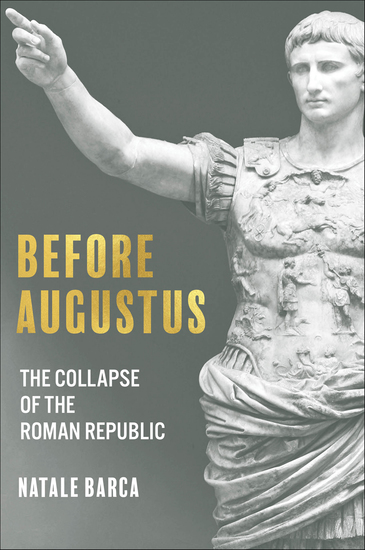
  • Before Augustus - The Collapse of the Roman Republic - cover

    Before Augustus - The Collapse...

    Natale Barca

    • 0
    • 0
    • 0
    "...the author does an admirable job of showing just how complicated and interconnected all the great patrician families were and how their jealousies and rivalries ultimately led to their undoing and the end of the great Roman Republic." — New York Journal of BooksThe political process that culminated in the transition from Republic to Empire in ancient Rome began with the military reform of Caius Marius in the last decades of the 2nd century BC. Following the Civil War and Sulla’s dictatorship, it developed further with the First Triumvirate of Caesar, Pompey, and Crassus, and two further civil wars. These wars, which saw Caesar pitted against Pompey, and Octavian fighting Anthony, ended in 27 BC with the rise to power of Octavian, the adoptive son of Caesar.  Before Augustus outlines a summary of the last years of the Roman Republic, weaving together the military, political, and social aspects. Scholar Natale Barca sets the protagonists within the complex societal and political system that they operated, analyzing their actions, and the epic battles that ensued.
    Ver libro
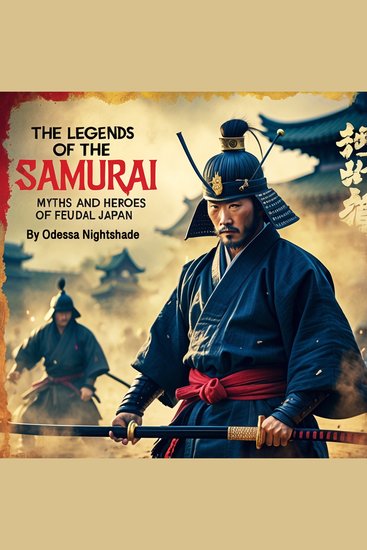
  • The Legends of the Samurai - Myths and Heroes of Feudal Japan - cover

    The Legends of the Samurai -...

    Odessa Nightshade

    • 0
    • 0
    • 0
    The samurai have long stood as symbols of discipline, honor, and martial prowess, their legends woven into the very fabric of Japan’s history. Emerging as a distinct warrior class in the Heian period, the samurai gradually rose to power, shaping the political and social landscape of feudal Japan for centuries. Their influence extended beyond the battlefield, deeply embedding itself in Japanese culture, philosophy, and even governance. While many envision the samurai as noble warriors upholding a strict moral code, the reality of their existence was far more complex—marked by fierce loyalty, political intrigue, and the constant struggle for survival.  
      
    At the heart of samurai life was Bushidō, the Way of the Warrior, a code that dictated their principles and behavior. Bushidō emphasized values such as loyalty, honor, self-discipline, and an unwavering acceptance of death. While often romanticized, this code was not a singular, rigid doctrine but rather an evolving philosophy influenced by Buddhism, Confucianism, and Shintoism. Some samurai embodied these ideals to the fullest, becoming paragons of virtue, while others used their martial skills for personal gain, engaging in deception, betrayal, and ruthless ambition. The reality of the samurai was one of contradiction—both noble protectors and fierce conquerors, loyal vassals and rebellious warlords.  
      
    As the samurai class grew in power, their stories became legendary, passed down through generations in both historical records and folklore. Figures like Miyamoto Musashi, the undefeated duelist, or the 47 Ronin, who avenged their fallen lord, continue to capture the imagination of people worldwide. Yet, separating historical fact from myth can be challenging. Many tales have been embellished over time, transformed into romanticized narratives that obscure the grittier truths of samurai life.
    Ver libro