Junte-se a nós em uma viagem ao mundo dos livros!
Adicionar este livro à prateleira
Grey
Deixe um novo comentário Default profile 50px
Grey
Assine para ler o livro completo ou leia as primeiras páginas de graça!
All characters reduced
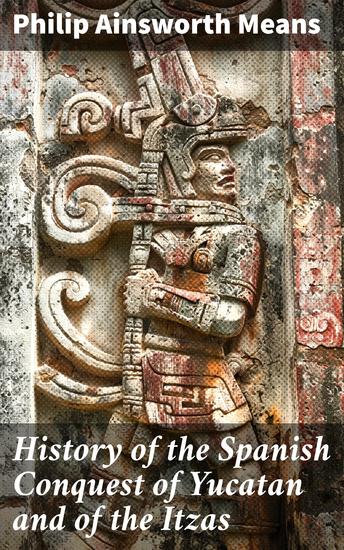
History of the Spanish Conquest of Yucatan and of the Itzas - Enriched edition Unveiling the Spanish Conquest of Yucatan and the Itzas: A Detailed Expedition into Mesoamerican History - cover
LER

History of the Spanish Conquest of Yucatan and of the Itzas - Enriched edition Unveiling the Spanish Conquest of Yucatan and the Itzas: A Detailed Expedition into Mesoamerican History

Philip Ainsworth Means

Editora: Good Press

  • 0
  • 0
  • 0

Sinopse

In "History of the Spanish Conquest of Yucatan and of the Itzas," Philip Ainsworth Means meticulously chronicles the complex interactions between Spanish conquistadors and the Indigenous civilizations of Yucatan, particularly the Itzas, during the 16th century. This scholarly work showcases Means's adeptness in blending narrative history with critical analysis, emphasizing the socio-political dynamics and the cultural ramifications of the conquest. Utilizing a range of historical sources, Means portrays the clash of civilizations, offering insights into indigenous resistance and adaptation, all while situating the events within a broader context of European colonial ambitions. Philip Ainsworth Means, an eminent historian and archaeologist, dedicated much of his career to Central American studies, inspired by a lifelong commitment to uncovering the narratives of marginalized communities. His extensive fieldwork in Yucatan and engagement with local histories contribute to a nuanced understanding of both the colonizers and the colonized. Means's scholarly rigor and cultural sensitivity elevate this work beyond mere historical recounting to a profound commentary on the legacy of conquest. This book is a must-read for historians, anthropologists, and anyone interested in the intricate tapestry of colonial history. Means's work not only illuminates the past but also compels readers to grapple with the enduring implications of that history in contemporary discussions on identity, power, and cultural resilience.

In this enriched edition, we have carefully created added value for your reading experience:
- Hand‐picked Memorable Quotes shine a spotlight on moments of literary brilliance.
- Interactive footnotes clarify unusual references, historical allusions, and archaic phrases for an effortless, more informed read.
Disponível desde: 04/10/2023.
Comprimento de impressão: 211 páginas.


Outros livros que poderiam interessá-lo

  • The Shocking Truth about Political Ideologies - cover

    The Shocking Truth about...

    Zoey Fraisers

    • 0
    • 0
    • 0
    The history of political ideologies is as old as civilization itself. Since the dawn of organized society, people have debated how power should be structured, who should govern, and what principles should guide leadership. These debates have given rise to various ideologies that have shaped nations, influenced policies, and determined the course of history. From monarchy and democracy to socialism and capitalism, political ideologies have evolved, merged, and sometimes clashed, reflecting the values and priorities of different societies.  
      
    At their core, political ideologies serve as frameworks for understanding the role of government, individual rights, and economic systems. They define the relationship between the state and its citizens, offering a vision of how a society should function. Some ideologies emphasize individual liberty and free markets, while others advocate for collective responsibility and state intervention. The spectrum of political thought is broad, ranging from the conservative defense of tradition to radical calls for revolution. While some ideologies have remained relatively stable over time, others have adapted to changing social and economic conditions.  
      
    Throughout history, political ideologies have been both a source of progress and division. The struggle between competing ideas has led to revolutions, wars, and the rise and fall of empires. Ideologies have inspired movements that fought for freedom, equality, and justice, but they have also justified oppression, discrimination, and totalitarian rule. The power of ideology lies in its ability to unite people under a common cause, but it can also create deep divisions, leading to conflict and unrest. Understanding political ideologies is crucial in making sense of global events, public policies, and societal changes.  
    Ver livro
  • Urban Sociology - A Global Perspective - cover

    Urban Sociology - A Global...

    Fred Grandsen

    • 0
    • 1
    • 0
    Urban sociology is the study of social life, interactions, and institutions within cities and urban areas. As the global population continues to urbanize, understanding the social dynamics of cities has become increasingly important. Urban sociology examines how cities evolve, how people experience urban life, and how social, economic, and political forces shape urban environments. From towering metropolises to small urban centers, cities function as hubs of economic activity, cultural exchange, and political power. They also reflect and reinforce social inequalities, providing a unique lens through which to study contemporary social issues. 
    The development of urban sociology as a discipline emerged in response to the rapid urbanization of the 19th and 20th centuries. Industrialization transformed rural societies into urban ones, drawing millions of people into cities in search of economic opportunities. Early sociologists, such as Georg Simmel, studied how urban life altered human interactions, emphasizing the psychological impact of living in densely populated environments. The Chicago School of Sociology, led by scholars like Robert Park and Louis Wirth, further explored urban life by analyzing migration, social organization, and spatial patterns. Their work laid the foundation for modern urban sociology by introducing key concepts such as social ecology and urban subcultures.
    Ver livro
  • The Abolitionist’s Journal - Memories of an American Antislavery Family - cover

    The Abolitionist’s Journal -...

    James D. Richardson

    • 0
    • 0
    • 0
    Over the course of more than twenty years, James D. Richardson and his wife, Lori, retraced the steps of his ancestor, George Richardson (1824–1911), across nine states, uncovering letters, diaries, and more memoirs hidden away. Their journey brought them to the brink of the racial divide in America, revealing how his great-great-grandfather Richardson played a role in the Underground Railroad, served as a chaplain to a Black Union regiment in the Civil War, and founded a college in Texas for the formerly enslaved. 


    In narrating this compelling life, The Abolitionist's Journal explores the weight of the past as well as the pull of one's ancestral history. The author raises questions about why this fervent commitment to the emancipation of African Americans was nearly forgotten by his family, exploring the racial attitudes in the author's upbringing and the ingrained racism that still plagues our nation today. 


    As America confronts a generational reckoning on race, these important perspectives add a layer to our larger national story.
    Ver livro
  • Brazil - From Colonization to Independence - Understanding the History of Brazil - cover

    Brazil - From Colonization to...

    History Retold

    • 0
    • 0
    • 0
    In the delicate, intricate world of Brazil's history, the lives of individuals and the fate of nations are intertwined in a web of beauty and complexity. Our latest book is an exploration of Brazil's rich cultural heritage, a story that celebrates the beauty and diversity of this remarkable country. 
    Through its pages, readers will discover: 
    • Brazil's history and culture. 
    • A deep and insightful exploration of the political, social, and cultural forces that shaped Brazil's history 
    • A celebration of the vibrant art, music, and literature of the Brazilian People.  
    Brazil has long been a source of inspiration for people around the world. Through this book, readers will gain a deeper appreciation for the richness and diversity of Brazil's cultural legacy. 
    So don't wait - order your copy today and dive into the the beauty and complexity of Brazil's remarkable culture and heritage.
    Ver livro
  • Stalingrad - cover

    Stalingrad

    Kelly Mass

    • 0
    • 0
    • 0
    Stalingrad has changed names. It's now called Volgograd and is still one of the largest cities in Russia. But we can't ignore the fact that for a significant time in history, it was called Stalingrad, named after the tyrant and leader of the Soviet Union in the Second World War, Joseph Stalin. Let's explore the history of this city during the Second World War, and why the battles fought there were so horrendous and pivotal in history.At the time of the Battle of Stalingrad In Southern Russia, Germany and its allies combated the Soviet Union for control of Stalingrad (now Volgograd). It is just one of the bloodiest engagements in the history of warfare, with an approximated 2 million general losses. It's marked by intense close-quarters battle and direct attacks on people in air campaign. The German High Command was pushed to eliminate substantial army forces from other theaters of war after their defeat at Stalingrad.The Stalingrad battle has been represented in the movies “Stalingrad” and “Enemy at the Gates.” It has become a level in video games like the “Call of Duty” series. Its casualties were many. Its circumstances brutal and took a very long time. Let’s take a look at what took place, why it was such a heroic turning point for the Russians against Hitler’s Nazi armies, and what happened after the Germans were pushed back.
    Ver livro
  • Isaac - cover

    Isaac

    Robert Karmon

    • 0
    • 0
    • 0
    Isaac, based on a true story, follows the journey of a Polish teen-aged boy from. near-death to ultimate triumph. In parable-like prose, it captures Isaac's miraculous survival of the Nazi massacre of his family and fellow Poles and his escape into a vast, nightmarish European forest. After being saved by a gentile from near his village, Isaac joins a group of Russian partisans and becomes a demolition expert. He falls in love with a Russian partisan nurse while striving—even among the partisans—to hide his Jewish background. This is a coming-of-age story amid the horrors and passions of war that demonstrates how determination, love, and friendship can overpower the force of hatred, discrimination, and unthinkable loss.
    Ver livro