Junte-se a nós em uma viagem ao mundo dos livros!
Adicionar este livro à prateleira
Grey
Deixe um novo comentário Default profile 50px
Grey
Assine para ler o livro completo ou leia as primeiras páginas de graça!
All characters reduced
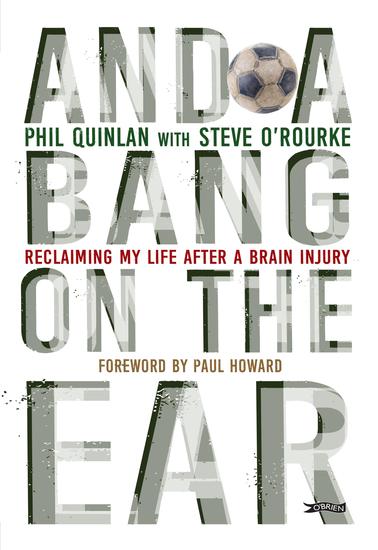
And a Bang on the Ear - Reclaiming My Life After a Brain Injury - cover
LER

And a Bang on the Ear - Reclaiming My Life After a Brain Injury

Phil Quinlan

Editora: The O'Brien Press

  • 0
  • 0
  • 0

Sinopse

Phil Quinlan was a sports-mad fifteen year old when he packed his bag one Sunday morning in 1989 to play a game of football. A clash of heads on the pitch changed his life forever. Falling into a coma, he was given a twenty-five-percent chance to live. He regained consciousness six weeks later, waking to a world filled with pain.

Full of hope and humour, rage and despair, this is Phil's story of chronic pain and rehabilitation, travelling the globe and finding love.
A hugely inspirational tale of determination to overcome the results of a devastating injury.
Disponível desde: 20/03/2023.
Comprimento de impressão: 256 páginas.

Outros livros que poderiam interessá-lo

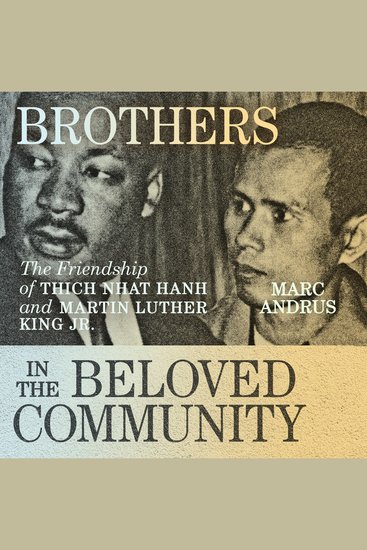
  • Brothers in the Beloved Community - The Friendship of Thich Nhat Hanh and Martin Luther King Jr - cover

    Brothers in the Beloved...

    Marc Andrus

    • 0
    • 0
    • 0
    The never-before-told story of the friendship between Martin Luther King Jr. and Thich Nhat Hanh—icons who changed each other and the worldThe day after Martin Luther King Jr. was assassinated in 1968, Thich Nhat Hanh wrote a heartbroken letter to their mutual friend Raphael Gould. He said: "I did not sleep last night. . . . They killed Martin Luther King. They killed us. I am afraid the root of violence is so deep in the heart and mind and manner of this society. They killed him. They killed my hope. I do not know what to say. . . . He made so great an impression in me. This morning I have the impression that I cannot bear the loss."  Only a few years earlier, Thich Nhat Hanh wrote an open letter to Martin Luther King Jr. as part of his effort to raise awareness and bring peace in Vietnam. There was an unexpected outcome of Nhat Hanh's letter to King: The two men met in 1966 and 1967 and became not only allies in the peace movement, but friends. This friendship between two prophetic figures from different religions and cultures, from countries at war with one another, reached a great depth in a short period of time. Dr. King nominated Thich Nhat Hanh for the Nobel Peace Prize in 1967. He wrote: "Thich Nhat Hanh is a holy man, for he is humble and devout. He is a scholar of immense intellectual capacity. His ideas for peace, if applied, would build a monument to ecumenism, to world brotherhood, to humanity."The two men bonded over a vision of the Beloved Community: a vision described recently by Congressman John Lewis as "a nation and world society at peace with itself." It was a concept each knew of because of their membership within the Fellowship of Reconciliation, an international peace organization, and that Martin Luther King Jr. had been popularizing through his work for some time. Thich Nhat Hanh, Andrus shows, took the lineage of the Beloved Community from King and carried it on after his death.
    Ver livro
  • No Haven - The Connecticut Mob and the Rise of America's Model City - cover

    No Haven - The Connecticut Mob...

    Paul Bleakley

    • 0
    • 0
    • 0
    With Boston to the north and New York City to the south, Connecticut's history of organized crime is often overlooked. This is the untold story of New Haven's illegal past. 


    One of America's most historic and enduring cities, New Haven has wrangled with a perpetual identity struggle, torn between worlds that occasionally converged in chaos and violence. In the 1930s, Connecticut became a region where Mafia families like the Genoveses, Gambinos, Colombos, and Patriarcas shared turf—working together with enough profits to go around or descending into open war to rival that experienced in any major city. Central to this conflict were three men who were, at different times, cautious allies or sworn nemeses. Representing the Genoveses, Midge Renault reigned supreme thanks to his reputation for wanton violence. Meanwhile, Colombo capo Ralph "Whitey" Tropiano maintained a lower profile, which belied his reputation as a vicious killer. But it was his lieutenant, Billy "The Wild Guy" Grasso, who ultimately rose to the top after joining the New England Patriarca Family, enjoying a short rule that ended with a murder plot that left him on the wrong end of a bullet.
    Ver livro
  • Blanche - The Life and Times of Tennessee Williams's Greatest Creation - cover

    Blanche - The Life and Times of...

    Nancy Schoenberger

    • 0
    • 0
    • 0
    A penetrating consideration of Tennessee Williams’s most enduring character—Blanche DuBois from A Streetcar Named Desire—written by the co-author of The Fabulous Bouvier Sisters and Furious Love. 
    Ever since Jessica Tandy glided onto the stage in Tennessee Williams’s A Streetcar Named Desire at the Ethel Barrymore Theatre in 1947, Blanche DuBois has fascinated generations of audiences worldwide and secured a place in the history of literature, theater, and film. One of Williams’s greatest creations, Blanche has bedazzled, amused, and broken the hearts of generations of audiences. Before the Covid pandemic, the stage classic was performed somewhere in the world every hour. It has been adapted into a ballet and an opera, and it was satirized in an episode of The Simpsons. The final twelve words Blanche utters at the play’s end—“I have always depended on the kindness of strangers”—have taken on a life of their own. Endlessly fascinating, this indelible figment of one of America’s greatest midcentury playwrights garners nearly universal interest—but why? 
    In Blanche, Nancy Schoenberger searches for the answer. An exploration of the cultural impact of Blanche DuBois, Schoenberger’s absorbing study examines Tennessee Williams's most enduring creation through the performances of seven brilliant actresses who have taken on the role—Jessica Tandy, Vivien Leigh, Ann-Margret, Jessica Lange, Patricia Clarkson, Cate Blanchett, and Jemier Jenkins—as well as the influence of the playwright's tragic sister, Rose Williams, the person he was most haunted and inspired by. In examining various Blanches from throughout the decades and their critical reception, Schoenberger analyzes how our perception and understanding of this mesmerizing figure has altered and deepened over time. Exploring themes of womanhood, sexuality, mental illness, and the idealized South, Blanche is an engrossing cultural history of a rich and complex character that sheds light on who we are.
    Ver livro

  • Alpine Divorce An - From their pens to your ears genius in every story - cover

    Alpine Divorce An - From their...

    Robert Barr

    • 0
    • 0
    • 0
    Robert Barr was born in Glasgow, Scotland on the 16th September 1849.  Five years later the family emigrated to a farm near Muirkirk in Upper Canada.  
    His early years were uneventful as the family settled into their new lives and Barr began his education. 
    A career path as a teacher opened up for him and, by 1874, he had been appointed as headmaster at the Central School at Windsor.  Concurrently he also wrote travel and humourous articles for magazines.  Within two years their success in the regional periodicals encouraged him to change careers to become a reporter and columnist. 
    In August 1876, at age 27, he married Eva Bennett and they began a family. 
    A half decade later he was the exchange editor of the ‘Free Press’ but decided to relocate to London to establish an English edition and to write fiction, which both met with much success. 
    Over the years he was a prolific writer and in 1892, along with Jerome K Jerome, he established ‘The Idler’ magazine and, just after the turn of the century, became its sole proprietor. 
    Although a number of his crime novels and short stories are parodies on Sherlock Holmes and other best-selling detectives of the time, he also wrote short stories across a whole range of subjects and genres usually with intriguing ideas and many laced with wit and humour. 
    Robert Barr died at his home in Woldingham, Surrey of heart disease on the 21st October 1912.  He was 63.
    Ver livro
  • EvvaLution: Life-Inspired Memoirs of Serendipity Courage and Coming of Age - cover

    EvvaLution: Life-Inspired...

    Evva Fenison

    • 0
    • 0
    • 0
    "EvvaLution is a captivating memoir that shares the transformative experiences of a remarkable woman, highlighting her life-changing journey. The memoir delves into the pivotal moments that shaped her life, from unexpected encounters to bravery, and the trials and triumphs of coming of age. It is an inspiring testament to the power of resilience and self-discovery, highlighting the importance of courage and self-reflection in embracing one's true potential and finding meaning in the serendipitous moments that shape our existence." 
    "Evva and I have supported and helped each grow through professional, personal and spiritual evolution for over a decade. An accomplished and empowered individual, Evva lends her wisdom and experiences to this phenomenal guide with the intention of helping others. As I state that my purpose is to empower women to make a difference for the better on this planet thus raising the value of the woman globally, Evva's purpose is surely to connect to everyone she encounters with an attitude of empathy and kindness. Evva's book, Evva Lution, is a real life roadmap to choosing to follow one's dreams, move through life with purpose and achieve personal growth. A fantastic read with lots of insights from a true friend who has had an impact on my life and continues to inspire others." 
    Elena Cardone, 10X Entrepreneur, Author, Billionaire, International Speaker & Real Estate Mogul
    Ver livro
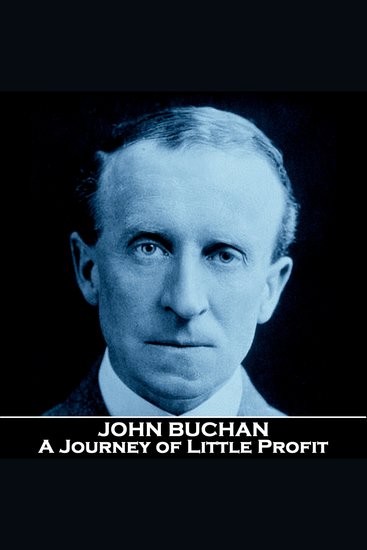
  • A Journey of Little Profit - From their pens to your ears genius in every story - cover

    A Journey of Little Profit -...

    John Buchan

    • 0
    • 0
    • 0
    The Scottish novelist John Buchan enjoyed a remarkable career as politician, historian and Governor General. He was born John Buchan on 26th August 1875 and later added 1st Baron Tweedsmuir PC GCMG GCVO CH to his name.  
    Buchan studied at Hutchesons’ Grammar School, Glasgow and at seventeen won a scholarship to the University of Glasgow to study classics. There he began to write poetry. In 1895 he transferred to Oxford to continue his study of Classics and in 1896 ‘Sir Quixote of the Moors’ was published followed by the non-fiction ‘Scholar-Gipsies’. His prolific literary output now hardly faltered. 
    He graduated in 1900 and became the private secretary to Alfred Milner, the High Commissioner for Southern Africa and other colonies. Buchan found the same inspiration in the African landscape as he had in the Scottish Borders, and would later set many works here. Returning to London he became a partner in a publishing house, and garnered an editorial role at The Spectator. He also completed his law studies. He was called to the bar in 1901 but never practiced.  
    On 15th July 1907 Buchan married Susan Charlotte Grosvenor, the cousin of the Duke of Westminster. In 1910 he wrote ‘Prester John’, the first of a series set in South Africa.  
    In 1911 Buchan entered politics as a Unionist candidate in the Scottish Borders advocating the support of free trade, women’s suffrage, national insurance, and reducing the power of the House of Lords.  
    The Great War saw Buchan writing for the War Propaganda Bureau and as Times correspondent in France. In 1915, he published ‘The Thirty-Nine Steps’, his most famous book and a follow-up Richard Hannay novel, ‘Greenmantle’, in 1916.  
    In 1916 Buchan enlisted in the Intelligence Corps which included writing speeches for Sir Douglas Haig. By 1917 he was Director of Information under Lord Beaverbrook. Buchan called it “the toughest job he ever took on”. He somehow found time to assist in a history of the war magazine. This was later published in 24 volumes: Nelson’s History of the War. 
    After the war his writing focused on historical studies. In 1927 Buchan became the Unionist Party Member of Parliament for the Combined Scottish Universities. In a speech to Parliament he said “I believe every Scotsman should be a Scottish nationalist. If it could be proved that a Scottish parliament were desirable… Scotsmen should support it.”  
    Over the next decade he continued to distinguish himself politically and in literature.  On the 1st June 1935 he became 1st Baron Tweedsmuir of Elsfield in the County of Oxford.  
    He was now also given the position of Governor General in Canada and resolved to travel all over Canada to gain a better insight of the country. Having crossed both length and breadth he saw the cultural shift between areas and their common ground and helped bring about a clear national Canadian identity. 
    On the 6th February 1940 he collapsed from a stroke and sustained a very serious head injury in falling. Two rounds of surgery to stabilise his condition were unsuccessful and Buchan died on the 11th February. After a state funeral in Ottawa his ashes were returned to his estate in Oxfordshire.
    Ver livro