Join us on a literary world trip!
Add this book to bookshelf
Grey
Write a new comment Default profile 50px
Grey
Subscribe to read the full book or read the first pages for free!
All characters reduced
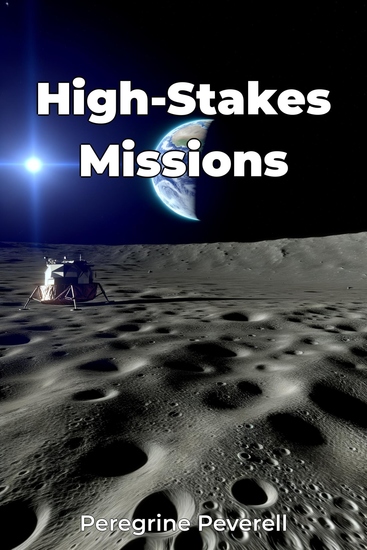
High-Stakes Missions - cover

High-Stakes Missions

Peregrine Peverell

Translator A AI

Publisher: Publifye

  • 0
  • 0
  • 0

Summary

'High-Stakes Missions' offers a compelling exploration of history's most challenging military and civilian operations, weaving together the intricate planning and execution of high-risk missions across space exploration, military rescue operations, and civilian emergency responses. Through meticulous analysis of declassified documents and firsthand accounts, the book reveals the delicate balance between risk assessment and operational success that defines these extraordinary undertakings.

 
The narrative progresses through three distinct sections, beginning with space exploration missions like the Apollo program and Space Shuttle operations, where readers witness NASA's approach to crisis management during events such as the Apollo 13 incident. The military section examines fascinating operations including the 1980 Iranian Embassy siege and the 2018 Thai cave rescue, showcasing how tactical planning and split-second decisions shape mission outcomes. The final section bridges these learnings to civilian emergency responses, demonstrating how military and space protocols influence modern rescue operations.

 
What sets this book apart is its comprehensive approach to analyzing high-stakes operations through both technical and human lenses. Using mission timelines, risk assessment matrices, and detailed case studies, it provides readers with practical insights into operational procedures while maintaining an engaging narrative style. The book serves as both a historical record and a practical guide, making complex operational concepts accessible to military history enthusiasts and professionals in high-risk fields alike.
Available since: 01/31/2025.
Print length: 113 pages.

Other books that might interest you

  • Walking Through Tuscany - A Travel Memoir on the Via Francigena - cover

    Walking Through Tuscany - A...

    Griffin Smyth

    • 0
    • 0
    • 0
    You don’t need to walk across Italy to find meaning. But it sure doesn’t hurt. 
    Walking Through Tuscany is a memoir about swapping comfort for carafes of wine, trail dust, and a slower kind of travel. What started as a long-distance walk along the Via Francigena turned into something more human—mountains crossed, vineyards wandered, and strangers turned friends. 
    This isn’t a guidebook. It’s the story of what happens when you stop rushing: broken sandals, golden hour moments, and a version of Tuscany you won’t find on a postcard. 
    We thought we were just walking. Turns out, we were writing the story of our lives.
    Show book
  • The Pyramids of Giza - Architecture and Engineering Secrets - cover

    The Pyramids of Giza -...

    Omar Khalil

    • 0
    • 0
    • 0
    The story of the Pyramids of Giza begins long before the massive limestone structures rose on the western edge of the Nile. To understand their origins, one must look back to the early burial traditions of ancient Egypt, where the desire to honor and protect the dead laid the foundation for increasingly complex funerary architecture. In the earliest periods, Egypt's elite were buried in simple rectangular tombs called mastabas, built from mudbrick and later stone. These low, flat structures served as a prototype for more ambitious designs that would come to define ancient Egypt’s monumental legacy. 
    As the Egyptian state grew more centralized during the Early Dynastic Period and into the Old Kingdom, the architectural evolution of tombs became a symbol of royal power and divine authority. The concept of the king as a god on earth demanded a burial structure that reflected his eternal status. This shift led to the experimentation with stepped designs, culminating in the Step Pyramid of Djoser at Saqqara, designed by the architect Imhotep during the Third Dynasty. This innovation marked the beginning of the pyramid as a distinct architectural form and demonstrated a newfound mastery of stone construction. 
    With each successive generation, the ambition behind royal tombs expanded. The transition from stepped to smooth-sided pyramids represented not just an aesthetic shift but a symbolic one, intended to reflect the pharaoh's journey to the heavens. By the time the Fourth Dynasty began, kings such as Sneferu pioneered structural advancements, including multiple attempts at pyramid design that culminated in the Bent Pyramid and the Red Pyramid. These efforts set the stage for the apex of pyramid construction: the Pyramids of Giza.
    Show book
  • Circling Home - What I Learned By Living Elsewhere - cover

    Circling Home - What I Learned...

    Terry A Repak

    • 0
    • 0
    • 0
    When Terry Repak and her husband moved to West Africa with two small children at the height of the AIDS epidemic in the 1990s, she seized the opportunity to connect with people of other cultures and bear witness to the ravages of the disease. "Circling Home" chronicles the adventures and challenges of raising children overseas and trying to find home in countries as diverse as Ivory Coast, Tanzania, and Switzerland. Her memoir spotlights the complexity, struggles, and profound lessons at the heart of the expat journey.
    Show book
  • South West Scotland - cover

    South West Scotland

    Tom Atkinson

    • 0
    • 0
    • 0
    The lovely land of hills, moors and beaches is bounded by the Atlantic and the Solway. Steeped in history and legend, still unspoiled, it is a land whose peace and grandeur are at least comparable to the Highlands, and yet it is hardly known. No area of Scotland better repays exploration than this.
    From the Auld Kirk of Alloway where tales of Tam O'Shanter resound, to the legends of St Ninian at one of Scotland's earliest Christian sites, Whithorn, this region is lovingly described by a local author, who will explore with you the splendour of Culzean Castle and delights of Wanlockhead, Scotland's highest village.
    Show book
  • The Passenger: Rome - cover

    The Passenger: Rome

    Passenger The

    • 0
    • 0
    • 0
    The best new writing, photography, art, and reportage from and about Rome—in the series that’s “like a literary vacation” (Publishers Weekly). 
     
    If you believe recent chatter about Rome—in the media and by its residents—the city is on the verge of collapse. Each year, it slips further down the ranking of the world’s most livable cities. To the problems faced by all large capitals—hit-and-run tourism, traffic, the divide between elegant, Airbnb-dominated city centers and run-down suburbs—in recent years Rome seems to have added a list of calamities of its own: a string of failing administrations, widespread corruption, the resurgence of fascist movements, rampant crime. A seemingly hopeless situation, perfectly symbolized by the fact that Rome currently leads the world in the number of self-combusting public buses. 
     
    One might expect mass migration in the face of problems like these—yet the vast majority of Romans don’t think for a second of “betraying” their hometown, and the many newcomers who’ve populated it in recent decades resemble the natives in the profound love that binds them to the city. 
     
    The largest metropolis in Europe is a place of contradictions and opposites. We think of it as ancient, but it is profoundly modern—it was founded almost three millennia ago, but 92 per cent of its buildings have been built after 1945. To understand Rome and fix its problems, we should start considering it a normal city, not unlike Chicago or Manchester . . . just incomparably more beautiful. This volume is filled with portraits of Rome and thoughts not just on its famous past but its present and future, including: 
     
    Rome doesn’t judge you by Nicola Lagioia · The soul of the city by Matteo Nucci · 39 memos for a book about Rome by Francesco Piccolo · Plus: a guide to the sounds of Rome by Letizia Muratori; the feigned unrest and real malaise of the suburbs; the influence of the Vatican; the excessive power of real estate speculators and the rule of gangs; disillusioned trappers; football fans of every age, and much more . . .  
     
    “A pleasure to read.” —La Repubblica
    Show book
  • Wildly Weird But Totally True: Australia - Australian fun facts true stories and Trivia - cover

    Wildly Weird But Totally True:...

    Seana Smith

    • 0
    • 0
    • 0
    Your kids will love reading the weird and wonderful facts about Australia in this fun book! 
    Check out this hilarious Australian kids book, chock full of amazing facts, trivia and stories. 
    Learn about Australia in this amusing and entertaining children’s book, which will appeal to the adults too. 
    You will laugh and you will gasp, and then you will want to explore Australia and see its amazing animals and places for yourself. 
    Can you answer these questions: 
    o What name was almost used for Vegemite? 
    o Who fought the Emu Wars? 
    o Is Australia an island? 
    o What shape is wombat poo? 
    o What is the unique secret of emu’s feathers? 
    o What is the big controversy over the pavlova? 
    o Why was a book written about the anzac biscuit? 
    o Is Cow Bay named after a dairy cow? 
    o Is Uluru the world’s largest rock? 
    o What’s unique about the dinosaur fossils at Lark Quarry? 
    o What did First Nations Australians use as a football? 
    Australia is a huge country and it is a really unique and amazing place, and not just because of its sharks, crocodiles, spiders and snakes?Kids love fun facts and parents love to see kids reading!This book makes a terrific gift for the children in your life!
    Show book