Junte-se a nós em uma viagem ao mundo dos livros!
Adicionar este livro à prateleira
Grey
Deixe um novo comentário Default profile 50px
Grey
Assine para ler o livro completo ou leia as primeiras páginas de graça!
All characters reduced
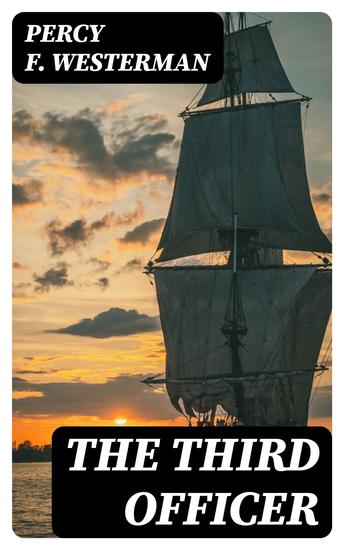
The Third Officer - cover
LER

The Third Officer

Percy F. Westerman

Editora: DigiCat

  • 0
  • 0
  • 0

Sinopse

In "The Third Officer," Percy F. Westerman presents a gripping nautical adventure that embodies the spirit of early 20th-century literature. The novel unfolds aboard a British naval vessel, blending meticulous attention to maritime details with vivid character development. Westerman's prose is both engaging and accessible, pulling readers into the complexities of maritime life, camaraderie, and the ethical dilemmas faced by young officers. Set against the backdrop of a world on the brink of conflict, the book resonates with themes of duty, honor, and personal growth, typical of Westerman's oeuvre which often reflects the contemporary tensions of the era. Percy F. Westerman (1876-1959) was a prolific British author whose literary career spanned several decades, focusing primarily on adventure stories for younger readers. His extensive experience at sea and deep-rooted passion for naval history greatly influenced his writing. Westerman's own naval background provided him with a unique insight into both the technical aspects of maritime operations and the psychological landscapes of those who serve at sea, lending authenticity and depth to his characters and narratives. "The Third Officer" is highly recommended for readers who enjoy maritime literature, adventure tales, or historical fiction. Westerman's ability to weave thrilling plots with educational undertones makes this novel a captivating read for both young adults and mature audiences alike.
Disponível desde: 11/10/2022.
Comprimento de impressão: 231 páginas.

Outros livros que poderiam interessá-lo

  • At Christmas Time - From their pens to your ears genius in every story - cover

    At Christmas Time - From their...

    Anton Chekhov

    • 0
    • 0
    • 0
    Anton Pavlovich Chekhov was born on 29th January 1860 in Taganrog, on the south coast of Russia.  
    His family life was difficult; his father was strict and over-bearing but his mother was a passionate story-teller, a subject Chekhov warmed to. As he later said; ‘our talents we got from our father, but our soul from our mother’.  
    At school Chekhov was distinctly average. At 16 his father mis-managed his finances and was declared bankrupt. His family fled to Moscow. Chekhov remained and eked out a living by various means, including writing and selling short sketches to newspapers, to finish his schooling. That completed and with a scholarship to Moscow University obtained he rejoined his family. 
    He was able to help support them by selling satirical sketches and vignettes of Russian lifestyles and gradually obtained further commissions. In 1884, he qualified as a physician and, although it earned him little, he often treated the poor for free, he was fond of saying ‘Medicine is my lawful wife, and literature is my mistress.’ 
    His own health was now an issue as he began to cough up blood, a symptom of tuberculosis.  Despite this his writing success enabled him to move the family into more comfortable accommodation.  
    Chekhov wrote over 500 short stories which included many, many classics including ‘The Kiss’ and ‘The Lady with a Dog’.  His collection ‘At Dusk’ won him the coveted Pushkin Prize when was only 26.  
    He was also a major playwright beginning with the huge success of ‘Ivanov’ in 1887.   
    In 1892 Chekhov bought a country estate north of Moscow. Here his medical skills and money helped the peasants tackle outbreaks of cholera and bouts of famine. He also built three schools, a fire station and a clinic.  It left him with less time for writing but the interactions with real people gained him detailed knowledge about the peasantry and their living conditions for his stories.  
    His most famous work, ‘The Seagull’ was received disastrously at its premiere in St Petersburg. It was later restaged in Moscow to highlight its psychological aspects and was a huge success. It led to ‘Uncle Vanya’, ‘The Three Sisters’ and ‘The Cherry Orchard’.  
    Chekhov suffered a major lung hemorrhage in 1897 while visiting Moscow. A formal diagnosis confirmed tuberculosis and the doctors ordered changes to his lifestyle.  
    Despite a dread of weddings the elusive literary bachelor quietly married the actress Olga Knipper, whom he had met at rehearsals for ‘The Seagull’, on 25th May 1901. 
    By May 1904 with his tuberculosis worsening and death imminent he set off for the German town of Badenweiler writing cheerful, witty letters to his family and assuring them his health was improving.  
    On 15th July 1904 Anton Chekhov died at Badenweiler.  He was 44.
    Ver livro
  • Guests Unexpected A Thanksgiving Story - From their pens to your ears genius in every story - cover

    Guests Unexpected A Thanksgiving...

    Maude K Griffin

    • 0
    • 0
    • 0
    The bookshelves of American literature are incredible collections that have gathered together centuries of very talented authors.  From this continent their fame spread and whilst among their number many are now forgotten or neglected their talents endure.  Among them is Maude K Griffin.
    Ver livro
  • The Insufferable Gaucho - cover

    The Insufferable Gaucho

    Roberto Bolaño

    • 0
    • 0
    • 0
    “Reading Roberto Bolaño is like . . . watching the tracks of art and life merge at the horizon and linger there like a dream from which we awake inspired to look more attentively at the world.” —Francine Prose, The New York Times“We savor all he has written, as every offering is a portal into the elaborate terrain of his genius.” —Patti SmithAn aging judge retires from Buenos Aires to the family ranch in the Pampas to battle feral rabbits and reclaim the dignity of the gaucho life. An obscure Argentinian writer journeys to Paris to face down the filmmaker who has made a career out of plagiarizing his novels. An intrepid detective investigates a series of grisly murders—among his fellow sewer rats. Riffing on Borges and Kafka, yet utterly and inimitably Roberto Bolaño, these stories testify to his mastery of the short form. Rounding out the collection are two of his most provocative and piercing essays, “Literature + Illness = Illness” and “The Myths of Cthulhu,” each crackling with his signature black humor and incomparable powers of perception and critique. The Insufferable Gaucho is an essential part of the Bolaño oeuvre.A Macmillan Audio production from Farrar, Straus and Giroux.
    Ver livro
  • Esme - From their pens to your ears genius in every story - cover

    Esme - From their pens to your...

    Saki Saki

    • 0
    • 0
    • 0
    Hector Hugh Munro, more familiarly known by his pen-name ‘Saki’ was born in what was then Akyab in British Burma on 18th December 1870. His father was an Inspector General for the Indian Imperial Police, and his mother the daughter of a Rear Admiral. 
    When he was 2 his mother died and he and his siblings were sent back to England to be raised by their grandmother and paternal maiden aunts in a strict, puritanical household near Barnstaple, Devon. Educated by governesses Saki used many of these women as character models for his later writing. 
    At 17 his father retried and returned to England and then embarked on a series of European travels with Saki and his siblings. 
    After a short stint working in Burma with the Indian Imperial Police Saki decided to move to London to make a living as a writer. Initially he wrote as a journalist for a number of newspapers and magazines before attempting an historical study, ‘The Rise of the Russian Empire’, whose real value lay in directing him to writing short stories instead, the first of which, ‘Dogged’, he published in 1899. 
    From here it was a short stab of the pen to writing political satire before in 1902 he became the foreign correspondent for The Morning Post, first in the Balkans, then Russia, Paris and back to London in 1908, where 'the agreeable life of a man of letters with a brilliant reputation awaited him.'  
    Collections of his short stories full of witty, mischievous and often macabre stories that satirized Edwardian society and two novels now appeared in the years up to the Great War.  At its’ outbreak he was 43 but managed to join as an ordinary trooper. More than once he returned to the battlefield when officially too sick or injured.  
    On 14th November 1916 Hector Hugh Munro was sheltering in crater during the Battle of the Ancre, when he was shot and killed by a German sniper. According to several sources, his last words were "Put that bloody cigarette out!"
    Ver livro
  • Halloween Bites - 13 Snack-Sized Stories From Black Mare Books 2022 - cover

    Halloween Bites - 13 Snack-Sized...

    Artemis Greenleaf, A.B....

    • 0
    • 0
    • 0
    Black Mare Books serves up some fun-sized treats from Artemis Greenleaf, Holly Dey, A.B. Richards, and Claire A. Murray. 
    In this grab-bag of Halloween shorts, you’ll find an assortment of killers and creeps. You may want to log off your Zoom meeting to play with the nice birdies. Perhaps kick back with a premium pizza before you go for a long walk in the dark woods? Or maybe you’ve wanted to run away to join the circus? Sounds like more fun than keeping a date with Death. 
    But be warned: the monsters may not be who you think they are. 
    Ver livro
  • The Horse Dealer's Daughter - Poignant story exploring death and its effects by the author of Sons And Lovers - cover

    The Horse Dealer's Daughter -...

    D H Lawrence

    • 0
    • 0
    • 0
    David Herbert Lawrence was born on the 11th September 1885 in Eastwood, Nottinghamshire, a coal mining town where the reality of a harsh life was only useful as experiences for future literary works. 
     
    He was educated at Beauvale Board School and became the first local boy to receive a scholarship to attend Nottingham High School. After 3 years he became a junior clerk in Haywood’s surgical appliances factory. He was also attempting a literary career which, in the short term, led to a teacher training position in Eastwood and later a teaching qualification from University College, Nottingham.  
     
    Lawrence’s first efforts were poems, short stories and a draft of ‘The White Peacock’. Moving to London and a teaching position in Croydon his writing attracted the attention of Ford Madox Ford, editor of The English Review, and he commissioned him to write ‘Odour of Chrysanthemums’.  
     
    Wanting to write full-time he now began work on what would become ‘Sons and Lovers.   
     
    In 1912 he met the older and married mother-of-three Frieda Weekley. They eloped to Germany and here Lawrence could see for himself the growing tensions with France.  So keen was his interest that he was arrested and accused of being a British spy.  
     
    In early 1914 Frieda obtained her divorce and they returned to Britain to be married just days before the outbreak of war. Owing to her German parentage, and his own public dislike of militarism and violence, the couple were treated with contempt and suspicion throughout the war years.  
     
    Despite this he continued to write but his reputation in England was so tarnished and, mirrored by his own disdain for the country, he and Frieda left England in November 1919, first for Europe and then America via Ceylon and Australia. 
     
    They bought a ranch in Taos, New Mexico and visited Mexico several times. The third visit in March 1925 caused a near fatal attack of malaria. To convalesce they moved to Florence. Here he continued work on ‘Lady Chatterley’s Lover’ which for many years would cause controversy. A renewed interest in oil painting resulted in an exhibition in 1929 which was raided by the police and several works were confiscated.  
     
    D H Lawrence died of complications arising from a bout of tuberculosis on the 2nd of March 1930 in Vence, France.  He was 44. 
     
    In ‘The Horse Dealers daughter’ a young woman begins a relationship with a young doctor and a friend of her brothers.  What should be straight forward is intimately investigated by Lawrence’s foraging pen.
    Ver livro