¡Acompáñanos a viajar por el mundo de los libros!
Añadir este libro a la estantería
Grey
Escribe un nuevo comentario Default profile 50px
Grey
Suscríbete para leer el libro completo o lee las primeras páginas gratis.
All characters reduced
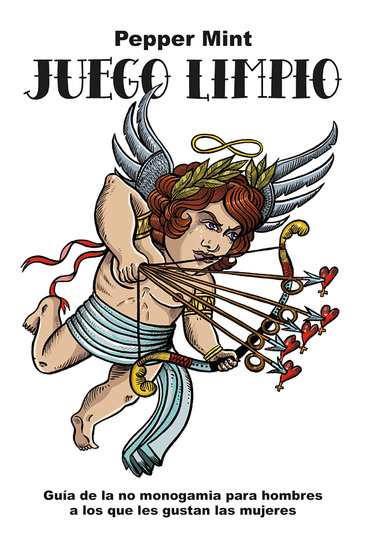
Juego limpio - Guía de la no monogamia para hombres a los que le gustan las mujeres - cover

Juego limpio - Guía de la no monogamia para hombres a los que le gustan las mujeres

Pepper Mint

Editorial: Melusina

  • 0
  • 0
  • 0

Sinopsis

La comunidad no monógama necesitaba este libro y ni siquiera lo sabía: Pepper Mint da consejos amables y directos a hombres que tienen relaciones con mujeres sobre cómo afrontar éticamente sus relaciones. Juego limpio compensa la poca atención que en general se presta a los hombres en términos de conciencia de sí mismos, empatía y comunicación, guía al lector a través del trabajo emocional que requiere el poliamor y detalla las oportunidades para construir empatía (sin olvidar los consejos para un sexo mutuamente satisfactorio).
De obligada lectura si eres hombre hetero o bisexual y estás valorando embarcarte en la aventura del poliamor, o simplemente buscas ampliar tu conciencia de las estructuras de poder románticas.
Disponible desde: 19/12/2025.
Longitud de impresión: 144 páginas.

Otros libros que te pueden interesar

  • The Most Bizarre Cult Ever - The Strange Beliefs and Practices of the Pythagorean Cult - cover

    The Most Bizarre Cult Ever - The...

    John Harpoon

    • 0
    • 0
    • 0
    The Pythagorean Cult, founded by the ancient Greek philosopher and mathematician Pythagoras, stands as one of the most mysterious and intriguing movements in history. Emerging in the 6th century BCE, it blended religious, philosophical, and scientific ideals into a unique and complex system that shaped the intellectual landscape of ancient Greece. At the heart of the cult was the figure of Pythagoras, revered as a divine being by his followers. His teachings, rooted in the belief that numbers and mathematics governed the universe, attracted a dedicated group of adherents who sought enlightenment and understanding of the natural and spiritual world. 
    Pythagoras’s teachings extended far beyond the realms of geometry and mathematics. His philosophy emphasized harmony, proportion, and balance, both in the cosmos and within the individual. The Pythagoreans viewed numbers not only as abstract symbols but as the very essence of reality. Everything, from the movements of the stars to the music of the spheres, was thought to be governed by mathematical principles. This belief in the fundamental nature of numbers formed the cornerstone of the cult's worldview, setting them apart from other philosophical schools of thought at the time. 
    In addition to their intellectual pursuits, the Pythagoreans practiced a strict code of conduct that demanded both physical and spiritual discipline. Their lifestyle was based on a set of moral and ethical principles, which included dietary restrictions, meditation, and an unwavering commitment to silence and contemplation. This approach aimed at achieving spiritual purity, with the ultimate goal of transcending the limitations of the physical body and achieving union with the divine. Pythagoras himself was seen as both a teacher and a spiritual guide, and his followers believed he possessed an almost supernatural understanding of the world.
    Ver libro
  • A Communal Cure - How to Heal Our EDUCATIONAL SYSTEM’S Sickness Vol 1 - cover

    A Communal Cure - How to Heal...

    Professor Ouele

    • 0
    • 0
    • 0
    A Communal Cure: How to Heal Our Educational System’s Sickness, Volume 1 is a nonfiction book of 11 chapters, organized in two parts. In the first part, the author makes a diagnosis of the problems that undermine the educational system worldwide. These problems include the shortage of teachers, the teaching method, violence in schools, how students with disabilities and gifted and talented students are taught, poverty, the growing mental issues among students, teachers, and parents, and the impact on education of the COVID-19 pandemic, to name a few. The second part of this book provides suggestions for the problems identified.
    Ver libro
  • The Seven Years’ War - History of the 18th-Century War between France and Great Britain - cover

    The Seven Years’ War - History...

    Kelly Mass

    • 0
    • 0
    • 0
    The Seven Years' War (1756–1763) marked a global struggle for supremacy between two major powers of the time: Great Britain and France. This conflict unfolded across continents and influenced various colonial and European theaters, laying the groundwork for modern geopolitics. In Europe, tensions stemmed from unresolved disputes left over from the War of the Austrian Succession (1740–1748), with Prussia and Austria both vying for dominance in the region. At the heart of the European conflict was Prussia's ambition to expand its territories, particularly in Silesia, a region it had claimed during the previous war but which Austria hoped to reclaim. This struggle for control in Central Europe was entangled with the broader power plays of Britain, France, and Spain, who were clashing both on land and at sea in the Americas, the Caribbean, and beyond. 
    This era saw an unusual shift in traditional alliances, known as the Diplomatic Revolution of 1756, which realigned European powers in surprising ways. Britain, traditionally at odds with Prussia, now found itself allied with its former rival, forming a coalition that included the German region of Hanover, which was united with Britain through the British royal family. Austria, in turn, formed a new alliance with France, its former adversary, bringing along Saxony, Sweden, and Russia in a united front against Prussian and British expansion. This shift altered the balance of power and further complicated the war’s dynamics, as each nation was not only defending its territories but also striving to outmaneuver and contain its rivals.
    Ver libro
  • Dark Feminine Energy: Free Your Integrated Femme Fatale With Authentic Shadow Work & Healing Your Inner Child To Embrace Your Femininity Sexuality Charm & Diva Allure - cover

    Dark Feminine Energy: Free Your...

    Abigail M. Brooks

    • 0
    • 0
    • 0
    If you've always wanted to embrace your true femininity, unleash your inner femme fatale, and radiate confidence and allure but struggle with self-doubt and past wounds, then keep reading… 
    Are you sick and tired of not feeling fully empowered in your femininity? 
    Have you tried endless self-help books and techniques but nothing seems to work for more than a few weeks? 
    Do you finally want to say goodbye to suppressing your true self and discover something that truly works for you? 
    If so, then you've come to the right place. 
    You see, reclaiming your feminine power and embracing your inner diva doesn't have to be difficult. 
    Even if you've struggled with shadow work or healing your inner child in the past, Dark Feminine Energy can help you unlock your full potential. 
    In fact, it's easier than you think. 
    Here's just a tiny fraction of what you'll discover in Dark Feminine Energy:The 4 transformative steps to integrate your shadow self and unleash your inner femme fataleWhy trying to "play nice" all the time is actually holding you back – and what to do insteadHow to heal your inner child and break free from past wounds that keep you stuck5 harmful myths about femininity that are keeping you from embracing your true powerThe 3 best practices to maintain your newfound confidence and keep your energy balanced 
    …and much, much more! 
    Take a second to imagine how you'll feel once you've fully embraced your dark feminine energy, and how those around you will react to your magnetic presence and unshakeable confidence. 
    So even if you're someone who has struggled with self-doubt or feels disconnected from your femininity, you can reclaim your power with the insights and strategies in this book.
    Ver libro
  • Fall of Rome and Constantinople The: The History of the Attacks that Destroyed the Western Roman Empire and Byzantine Empire - cover

    Fall of Rome and Constantinople...

    Charles River Editors

    • 0
    • 0
    • 0
    For the people of the ancient Mediterranean and beyond, the city of Rome had been a symbol of power for centuries, and entering the early 5th century CE, the Eternal City hadn’t been taken by an enemy force since the Gauls had done it about 800 years earlier, an unheard of period of tranquility in a world wracked with almost constant warfare. 
    	Thus, when the Visigoths, whom the Romans considered uncultured and inferior, took the city of Rome and sacked it in 410, the world was stunned. It made theologians of the newly Christianized empire question God’s plan on Earth, and it encouraged many leading Romans to look east to Constantinople for their future. Indeed, the Western Roman Empire would completely collapse in the late 5th century, less than 70 years after the Visigoths sacked Rome, and just how it went from being a superpower to a poorly led, weak, and vulnerable shadow of its former self has preoccupied historians for centuries.  
    To this day, it remains difficult to trace just when the decline began, but it’s fair to say that the sack of Rome was the result of a number of factors that had been coalescing for many years. 	In the end, the fall of the Roman Empire was not a tale of cataclysmic events that shattered the sprawling power, but the culmination of centuries of internal dissent and decay, combined with growing external threats that led to gradual decline and eventually to the empire’s final destruction.  
    	In terms of geopolitics, perhaps the most seminal event of the Middle Ages was the successful Ottoman siege of Constantinople in 1453. The city had been an imperial capital as far back as the 4th century, when Constantine the Great shifted the power center of the Roman Empire there, effectively establishing two almost equally powerful halves of antiquity’s greatest empire. Constantinople would continue to serve as the capital of the Byzantine Empire even after the Western half of the Roman Empire collapsed.
    Ver libro
  • Binaural Beats for ADHD Relief - Calm & Focus Your Mind with Brain Entrainment to Reduce Inattention Hyperactivity and Impulsivity - cover

    Binaural Beats for ADHD Relief -...

    Micah Vale

    • 0
    • 0
    • 0
    Find stillness, focus, and clarity—one tone at a time. 
    This specially designed audio program uses binaural beats to help manage symptoms of ADHD by guiding the brain into more balanced and attentive states. Through gentle brainwave entrainment, these sessions support improved focus, emotional regulation, and mental calm without the need for stimulation or screens. 
    Each track targets specific challenges commonly associated with ADHD:Reduce mental restlessness and impulsivityImprove attention span and sustained concentrationCalm racing thoughts and emotional overwhelmSupport mindfulness, presence, and nervous system regulation 
    Includes sessions of alpha and beta waves, backed with soothing, ambient music. 
    Backed by emerging neuroscience, binaural beats offer a non-invasive, sound-based tool to support mental clarity and inner balance—whether used as part of a daily routine, during study sessions, or simply to reset the mind. 
    *to experience the binaural beats headphones are required*
    Ver libro