¡Acompáñanos a viajar por el mundo de los libros!
Añadir este libro a la estantería
Grey
Escribe un nuevo comentario Default profile 50px
Grey
Suscríbete para leer el libro completo o lee las primeras páginas gratis.
All characters reduced
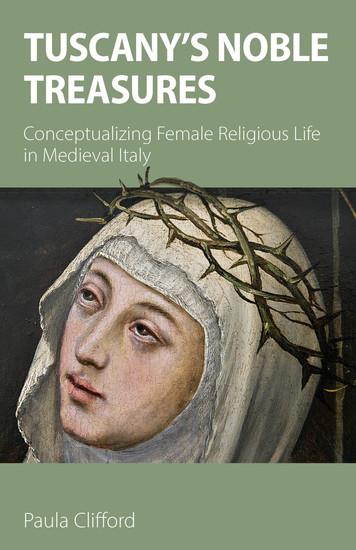
Tuscany's Noble Treasures - Conceptualizing Female Religious Life in Medieval Italy - cover

Tuscany's Noble Treasures - Conceptualizing Female Religious Life in Medieval Italy

Paula Clifford

Editorial: Sacristy Press

  • 0
  • 0
  • 0

Sinopsis

In the Middle Ages, the region of Tuscany and its surrounding area was, for around 150 years, home to a surprising number of holy women, from the birth of Margaret of Cortona in 1247 to the death of Catherine of Siena in 1380, with the fourteenth century seeing the greatest of them. While Catherine of Siena has received worldwide recognition, women like Agnes of Montepulciano and Angela of Foligno have received little attention outside their homeland. Yet they and others are important figures in what is a largely unrecognised movement of Tuscan mystics. Their individual stories are enhanced by the efforts of artists and writers which all help to create a recognisable type of religious woman.


This study looks first at the underlying influences on Tuscan mysticism, from the legend of St Katherine of Alexandria through to the celebration of women in the secular literature of the High Middle Ages and the effect of the emerging monastic orders. It examines the life and work of Tuscan holy women and focuses in particular on how they were perceived in their largely patriarchal contexts and by the artists, biographers and "men of God" who brought their own cultural assumptions to bear on the telling of their story. In consequence, the power that stemmed from their godly lives was to varying degrees undermined by some of the people closest to them and eroded by the church itself.

 
This story of women alternately constrained and encouraged by their social contexts is one of individual struggles and collective achievement. Although the movement in Italy began to fade away after the death of Catherine of Siena, the mystic tradition would live on in other parts of Europe, where the experiences of holy women such as Margery Kempe or, later, Teresa of Ávila will have much in common with their Tuscan predecessors.
Disponible desde: 15/12/2021.

Otros libros que te pueden interesar

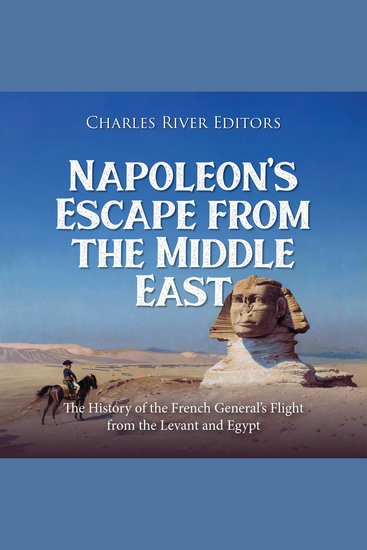
  • Napoleon’s Escape from the Middle East: The History of the French General’s Flight from the Levant and Egypt - cover

    Napoleon’s Escape from the...

    Editors Charles River

    • 0
    • 0
    • 0
    In addition to being unable to be reinforced or supplied by sea, Napoleon's ambitions to establish a permanent presence in Egypt were further frustrated by a number of uprisings. Early in 1799, Napoleon advanced against France’s erstwhile enemy, the Ottoman Empire, invading modern Syria (then the province of Damascus) and conquering the cities of Gaza, Jaffa, Arish and Haifa. However, with the plague running rampant through his army and his lines of supply from Egypt stretched dangerously thin, Napoleon was unable to destroy the fortified city of Acre and was forced to retreat. The retreat cost him almost all of his wounded as, harassed by enemy forces, he was forced to abandon most of his casualties to the Ottomans’ mercy, or lack thereof. Most of the wounded were tortured and beheaded. 
    	Napoleon harbored all kinds of delusions about his time in Egypt that were not based in reality, but he definitely left a lasting legacy in the region, one he would never live to see or appreciate. By shifting the theater of operations to Africa and the Middle East, Napoleon inadvertently ensured the Europeans would fight there in the future, and the French occupation impressed upon the locals the necessity of catching up to the modern world in terms of technology. Ancient tactics could not prevail against a modern army, no matter the numbers, but while that was a lesson Napoleon consistently taught his enemies in Egypt and the Levant to their detriment, the French also sped up the occupied populations’ technological advances as well. Perhaps more importantly, the Egyptian Scientific Institute introduced numerous modern innovations, perhaps most importantly the printing press, which in turn encouraged literacy. This brought about the emergence of nationalism and liberalism, leading eventually to the establishment of Egyptian independence and modernization under the rule of Muhammad Ali Pasha in the first half of the 19th century.
    Ver libro
  • The Age of the British Empire – How It Ruled the World - The Rise Power and Legacy of the Largest Empire in History - cover

    The Age of the British Empire –...

    Lucas Scott

    • 0
    • 0
    • 0
    For over 400 years, the British Empire reshaped the world. At its height, it controlled over a quarter of the planet, influencing global trade, politics, and culture. But how did it rise to such power, and why did it ultimately decline? 
    This audiobook takes you deep into the story of the British Empire, uncovering its greatest achievements and most controversial moments. Discover: 
    ✅ How Britain became the world’s dominant naval and economic power 
    ✅ The role of the Industrial Revolution in expanding the empire 
    ✅ The impact of British rule on India, Africa, and beyond 
    ✅ Why the empire fell—and how it still shapes global politics today 
    The Age of the British Empire – How It Ruled the World is a must-listen for history lovers, empire enthusiasts, and anyone fascinated by the rise and fall of global superpowers.
    Ver libro
  • Mountain Commandos in the Falklands - The Royal Marines Mountain and Arctic Warfare Cadre in Action during the 1982 Conflict - cover

    Mountain Commandos in the...

    Rod Boswell

    • 0
    • 0
    • 0
    Sunset, 8 June 1982, East Falkland. Eight specially trained Royal Marines infiltrate Goat Ridge, a long rocky hilltop between Mount Harriet and Two Sisters which are occupied by a battalion of 600 Argentine infantry. Their daring mission was to hide out in hostile territory, reconnoiter the Argentine position and then report back. From their hiding place just metres away from the enemy, they note and sketch the Argentine positions, then withdraw as stealthily as they had come. Their daring patrol provides essential intelligence that guided the British assault which overwhelmed the Argentine defences two days later.This was just one example of the missions undertaken by the Royal Marines Mountain and Arctic Warfare Cadre during the Falklands War, all of which are described in graphic detail in Rod Boswell's eyewitness account. Using his own recollections and those of his comrades, he describes their operations in the Falklands - the observation posts set up in the no man's land between San Carlos and Port Stanley, their role in the raid at Top Malo House, and the reconnaissance patrols they carried out close to the Argentine lines during the conflict.This celebrated first-hand account gives a fascinating insight into the operational skills of a small, specially trained unit and shows the important contribution it made to the success of the British advance. It also records the entire experience of the Falklands War from their point of view - the long voyage south through the Atlantic, the landings, the advance and the liberation of Stanley.For fans of Goose Green, Fighting for Queen and Country and First into Action.
    Ver libro
  • Driving to Treblinka - cover

    Driving to Treblinka

    Diana Wichtel

    • 0
    • 0
    • 0
    As a young child Diana Wichtel lives in Vancouver, Canada. Her mother is a Catholic New Zealander, her father a Polish Jew who miraculously survived the Holocaust by jumping through the window of a train bound for the Treblinka death camp. When Diana' s thirteen, her life changes dramatically: her mother whisks her and her two siblings to New Zealand to live. Their father is to follow. She never sees him again. Many years later she sets out to discover what happened to him. The search becomes an obsession as she painstakingly uncovers information about his large Warsaw family and their fate at the hands of the Nazis, scours archives across the world for clues to her father' s disappearance, and visits the places he lived. This unforgettable narrative is also a deep reflection on the meaning of family, the trauma of loss, and the insistence of memory. It asks the question: Is it better to know, or more bearable not to?
    Ver libro
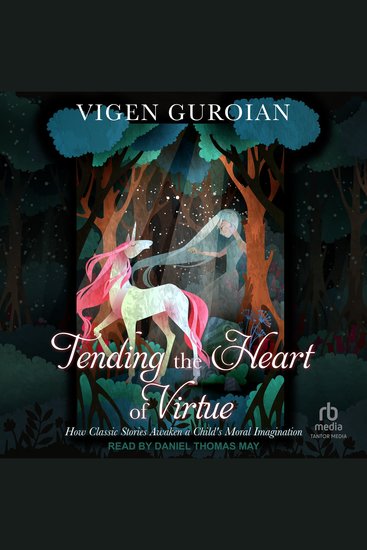
  • Tending the Heart of Virtue - How Classic Stories Awaken a Child's Moral Imagination 2nd edition - cover

    Tending the Heart of Virtue -...

    Vigen Guroian

    • 0
    • 0
    • 0
    In Tending the Heart of Virtue, Vigen Guroian illuminates the power of classic tales and their impact on the moral imagination. He demonstrates how these stories teach the virtues through vivid depictions of the struggle between good and evil, while he also unveils components of the good, the true, and the beautiful in plot and character. With clarity and elegance, Guroian reads deeply into the classic stories. He demonstrates how these stories challenge and enliven the moral imaginations of children. And he shows the listener how to get "inside" of classic stories and communicate their lessons to the child. 


    For more than two decades Tending the Heart of Virtue has been embraced by parents, guardians, and teachers for whom the stories it discusses are not only beloved classics but repositories of moral wisdom. This revised and expanded second edition includes three new chapters in which Guroian inteprets such stories as Hans Christian Andersen's The Ugly Duckling, the Grimms' Cinderella, and John Ruskin's The King of the Golden River.
    Ver libro
  • Kindness - The Gentle Touch - Healing through Compassion - cover

    Kindness - The Gentle Touch -...

    Esther Jameson

    • 0
    • 0
    • 0
    Kindness is often seen as a simple and basic concept, yet it holds immense power in transforming lives. At its core, kindness is the act of being considerate and generous without expecting anything in return. However, its effects extend far beyond the immediate gesture. Research has shown that kindness has a direct influence on mental and physical well-being, not only for the giver but also for the receiver. When we show kindness, whether through small acts like offering a smile or through more profound actions like supporting a loved one in need, we are engaging in a form of healing. The energy we radiate through kindness has the ability to uplift others, create positive connections, and promote emotional growth. 
    The power of kindness is rooted in its ability to create a ripple effect. When someone experiences an act of kindness, it often inspires them to pass it on to others. This chain reaction can spread far and wide, creating a compassionate network that has the potential to change communities and even societies. Kindness has the unique ability to bridge divides and bring people together, creating a sense of unity and understanding. 
    Moreover, studies have shown that kindness has tangible benefits for our own well-being. Acts of kindness activate the brain’s reward system, releasing endorphins, which are known as “feel-good” hormones. This not only boosts mood but also reduces stress, anxiety, and depression. Additionally, when we engage in acts of kindness, we experience a sense of purpose and fulfillment, contributing to a more meaningful life. This emotional uplift can even improve our physical health, as acts of kindness lower blood pressure and enhance heart health by reducing stress levels.
    Ver libro