¡Acompáñanos a viajar por el mundo de los libros!
Añadir este libro a la estantería
Grey
Escribe un nuevo comentario Default profile 50px
Grey
Suscríbete para leer el libro completo o lee las primeras páginas gratis.
All characters reduced
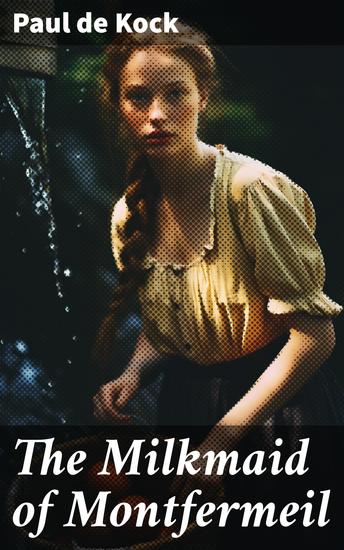
The Milkmaid of Montfermeil - Love Class Struggle and Village Life in 19th-Century France - cover

The Milkmaid of Montfermeil - Love Class Struggle and Village Life in 19th-Century France

Paul de Kock

Editorial: Good Press

  • 0
  • 0
  • 0

Sinopsis

In "The Milkmaid of Montfermeil," Paul de Kock weaves a vibrant tapestry of rural life in 19th-century France, capturing the essence of pastoral charm and societal norms through a rich narrative style characterized by its humor and emotional depth. Set in the idyllic village of Montfermeil, the novel features a captivating protagonist, a milkmaid whose simple yet profound journey illustrates themes of love, class struggles, and the quest for personal happiness amidst societal expectations. De Kock's use of vivid descriptions and relatable characters evokes the tranquil yet tumultuous dynamics of village life, reflecting the social context of post-Napoleonic France where the idealization of peasant life contrasted with the harsh realities of urbanization and industrialization. Paul de Kock, a prominent figure in the 19th-century French literary scene, was known for his keen observation of everyday life and his ability to blend comedy with romance. His background as a Parisian and extensive travels across rural France deeply influenced his portrayal of pastoral life, leading him to write this endearing tale that resonates with authenticity. De Kock's literary prowess and his interest in the lives of ordinary people provide a rich backdrop that enhances the narrative of "The Milkmaid of Montfermeil." This enchanting novel is highly recommended for readers who appreciate insights into rural society and romantic escapades, as well as those who enjoy literary works that capture the intricate balance between personal aspiration and societal obligation. De Kock's delightful storytelling invites readers into a world where love flourishes amidst the simplicity of daily life, making it a timeless exploration of human connections.
Disponible desde: 18/09/2023.
Longitud de impresión: 321 páginas.
Otros libros que te pueden interesar

  • Object Lessons (Unabridged) - cover

    Object Lessons (Unabridged)

    Booker T. Washington

    • 0
    • 0
    • 0
    Booker Taliaferro Washington (April 5, 1856 - November 14, 1915) was an American educator, author, orator, and adviser to several presidents of the United States. Between 1890 and 1915, Washington was the dominant leader in the African American community and of the contemporary black elite. Washington was from the last generation of black American leaders born into slavery and became the leading voice of the former slaves and their descendants. They were newly oppressed in the South by disenfranchisement and the Jim Crow discriminatory laws enacted in the post-Reconstruction Southern states in the late 19th and early 20th centuries.
    OBJECT LESSONS: Not long ago an old coloured man living in this State said to me: "I's done quit libin' in de ashes. I's got my second freedom." That remark meant, in this case, that that old man by economy, hard work and proper guidance, after twenty years of struggle, had freed himself from debt, had paid for fifty acres of land, had built a comfortable house, and was a tax-payer.
    Ver libro
  • Dracula – Chapter 4: Jonathan Harker’s Journal (continued) - A Chapter-by-Chapter Reading of Bram Stoker’s Classic - cover

    Dracula – Chapter 4: Jonathan...

    Bram Stoker

    • 0
    • 0
    • 0
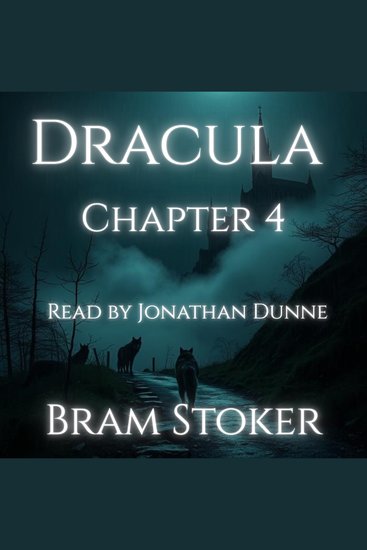
    As Jonathan Harker’s ordeal within Count Dracula’s castle continues, the young solicitor becomes increasingly aware that he is no longer a guest, but a prisoner. Every corridor feels like a trap, every locked door a warning. Terrifying discoveries—glimpses of the Count’s unnatural abilities, the disturbing behavior of the castle’s inhabitants, and the mounting evidence of dark intentions—begin to erode Jonathan’s sanity. 
    In this chapter, the façade of hospitality collapses entirely, revealing the chilling truth of Dracula’s power. Jonathan’s struggle shifts from curiosity to survival as he grasps the full horror of his situation. 
    This is Chapter 4 of Bram Stoker’s Dracula, narrated by Amazon bestselling horror author Jonathan Dunne — part of a full chapter-by-chapter audiobook series that brings the classic Gothic nightmare to life with gripping tension and atmospheric dread. 
    Experience the escalating terror, the claustrophobic isolation, and the dawning realization that escape may be impossible in this enduring masterpiece of Gothic horror. 
    📖 Public domain text. Original publication: 1897.
    Ver libro
  • Kashtanka - cover

    Kashtanka

    Anton Chekhov

    • 0
    • 0
    • 0
    "Kashtanka" — Anton Chekov's short story about a dog with two masters — is a fable about the conundrum of the creative life.
    The dog Kashtanka belongs to a drunken carpenter who takes her out one day, but on the way home loses her in the confusion of a military parade. The story is told by an omniscient narrator who privileges Kashtanka's point of view, so we follow the dog's subsequent adventures largely from her eyes.
    Ver libro
  • A Successful Rehearsal - From their pens to your ears genius in every story - cover

    A Successful Rehearsal - From...

    Anthony Hope

    • 0
    • 0
    • 0
    Sir Anthony Hope Hawkins was born on 9th February 1863 in Clapton, London.  
    He was educated at St John's School, Leatherhead, Marlborough College and Balliol College, Oxford.  Hope trained as a lawyer and barrister and was called to the Bar by the Middle Temple in 1887. Despite what was thought to be a promising legal career he had literary ambitions and wrote in his spare time. 
    His early works appeared in various periodicals of the day but for his first book ‘A Man of Mark’ (1890), with no publisher interested, he published with his own resources.  
    More novels and short stories followed, including the mildly successful ‘Mr Witt's Widow’ in 1892. Hope even found time to run as the Liberal candidate for Wycombe in the election that same year but was unsuccessful. 
    His first major literary success came with ‘The Dolly Dialogues’, a collection of previously published magazine pieces followed very quickly by his instant classic, ‘The Prisoner of Zenda’. He now gave up the vestiges of his legal career to pursue writing full-time. 
    Despite never again reaching the same pinnacle of success he was popular and wrote prolifically across novels, plays and of course, short stories though his writing output rapidly diminished after the war. 
    In 1918 he was knighted for his contribution to propaganda efforts during World War I.  
    His short stories are delicate, mannered and often surprising with their wit, humour and interplay of characters who say one thing and usually mean another.  He was very definitely a writer of escapist rather than serious fare but they are no less enjoyable for that. 
    Anthony Hope died of throat cancer on 8th July 1933 at his country home, Heath Farm at Walton-on-the-Hill in Surrey. He was 70.
    Ver libro
  • A Desertion - cover

    A Desertion

    Stephen Crane

    • 0
    • 0
    • 0
    "A Desertion" is a short story published in 1900 about a young woman who is suspected by others in the neighborhood of indiscretion that might trouble her father.
    Ver libro
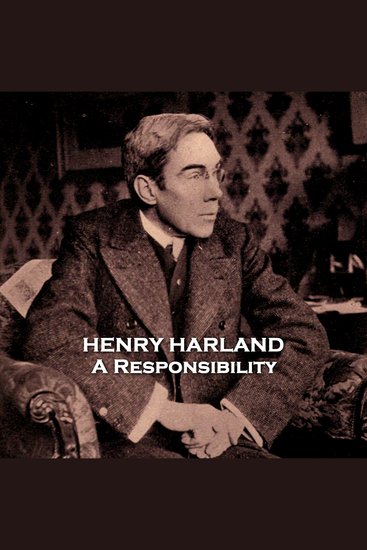
  • A Responsibility - From their pens to your ears genius in every story - cover

    A Responsibility - From their...

    Henry Harland

    • 0
    • 0
    • 0
    The bookshelves of American literature are incredible collections that have gathered together centuries of very talented authors.  From this continent their fame spread and whilst among their number many are now forgotten or neglected their talents endure.  Among them is Henry Harland.
    Ver libro