Join us on a literary world trip!
Add this book to bookshelf
Grey
Write a new comment Default profile 50px
Grey
Subscribe to read the full book or read the first pages for free!
All characters reduced
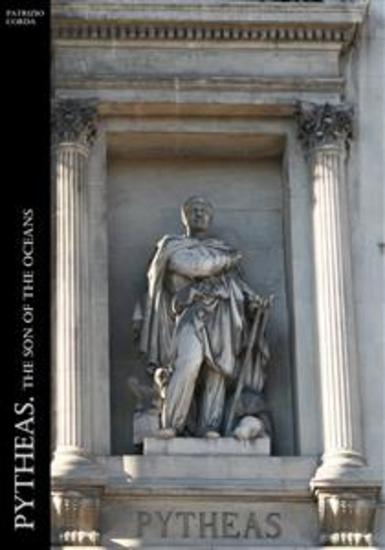
Pytheas The Son Of The Oceans - cover

Pytheas The Son Of The Oceans

Patrizio Corda

Publisher: Patrizio Corda

  • 0
  • 0
  • 0

Summary

327 BC. - Pytheas of Marseille returns to Gaul after completing the exploration of Northern Europe, an achievement that will be remembered as one of the most incredible in all of ancient history.
An esteemed navigator and geographist, he sets out to undertake an immense work of divulgation in order to
uplift his people and guarantee them a better future through the new and invaluable knowledge he
acquired. Meanwhile in Rome, in the midst of the second war against the Samnites, one man is alone in power.
But he will have to defend himself against dark and fearsome powers bent on ousting him to take his place.
It will be fate that brings them together, resulting in a new and incredible journey to the ends of the known
as known, in a desperate search for a better future for both of them.
Following a route of which only Pythias, among the greatest explorers who ever lived, is aware.
Available since: 11/01/2024.

Other books that might interest you

  • Hidden History of Texas 1830-1836 - Years of Revolution in Texas - cover

    Hidden History of Texas...

    Hank Wilson

    • 0
    • 0
    • 0
    Take a trip back in time and listen to what really happened in Texas in the years 1830-1836. The 13 chapters cover the years that not only led up to the revolution, but also some of the more unnoticed events that took place.  
     
    These are not your stern lectures we all endured in school, these are told in a relaxed and informative way by your host Hank Wilson, each chapter of the book is delivered in a way that is easy to follow and makes logical sense. 
     
    All chapters are based on Hank’s successful podcast The Hidden History of Texas are a part of his collection of Texas History.  
     
    Tracks 
    Introduction – 1:24 
    Chapter 1 – 1830 – Slavery becomes an issue – 7:30 
    Chapter 2 – Law of 1830 – Anahuac Disturbances – 12:47 
    Chapter 3 – Conventions of 1832 – 1833 – 7:42 
    Chapter 4 –Santa Anna Takes Over in Mexico – 7:05 
    Chapter 5 – The Battle of Gonzales and the Siege of Bexar – 11:06 
    Chapter 6 – Matamoros Expedition – Texas Leaders Confused -10:35 
    Chapter 7 – Two Declarations of Independence -7:07 
    Chapter 8 – Battle of Goliad (La Bahia) – 10:47 
    Chapter 9 – The Siege of Bexar – 7:52 
    Chapter 10 – Los Tejanos – 11:56 
    Chapter 11 - The Battle of the Alamo – 19:05 
    Chapter 12 – The Goliad Massacre -13:37 
    Chapter 13 – The Runaway Scrape – Battle of San Jacinto 12:01 
    Conclusion – 0:46
    Show book
  • William Faulkner: A short biography - 5 Minutes: Short on time - long on info! - cover

    William Faulkner: A short...

    5 Minutes, 5 Minute Biographies,...

    • 0
    • 0
    • 0
    William Faulkner, novelist and nobel prize laureate: Life and works in a short biography! Everything you need to know, brief and concise. Infotainment, education and entertainment at its best!
    Show book
  • The Age of Empires - Conquest and Colonization - cover

    The Age of Empires - Conquest...

    Nova Ashford

    • 0
    • 0
    • 0
    The Age of Empires, a period marked by conquest and colonization, spans several centuries and had a profound impact on global history. From the late 15th century through the early 20th century, European powers embarked on ambitious campaigns of territorial expansion, driven by the pursuit of wealth, resources, and political dominance. This era saw the rise and fall of vast empires, each of which left an indelible mark on the world. The motivations behind empire-building were multifaceted, rooted in the quest for economic gain, military supremacy, and the spread of cultural, religious, and political ideologies. 
    The Age of Empires can trace its origins to the Renaissance, a period of intellectual and cultural awakening in Europe. The revival of classical learning, coupled with advancements in navigation, shipbuilding, and cartography, laid the groundwork for the age of exploration. This era saw European nations eager to find new trade routes and territories, driven by the promise of wealth from spices, silks, and other exotic goods. The expansion of European power also coincided with a period of intense competition among European states, each vying to claim territories and secure dominance over lucrative trade routes. 
    In 1492, Christopher Columbus’ famous voyage to the New World marked the beginning of a new era in exploration and conquest. Columbus’ journey, sponsored by Spain, led to the discovery of the Americas, setting off a wave of Spanish, Portuguese, British, French, and Dutch exploration and colonization. Spain and Portugal were the earliest and most successful empires in this period, establishing colonies in the Americas, Africa, and Asia. The Spanish empire, in particular, amassed incredible wealth through the exploitation of native populations and the vast resources found in the Americas, including precious metals like gold and silver.
    Show book
  • US Citizenship Test Study Guide - A Complete Study Guide with Official USCIS Questions & Answers for Naturalization Test - cover

    US Citizenship Test Study Guide...

    Andrew Pendleton

    • 0
    • 0
    • 0
    Are you ready to take the next step towards becoming a proud US citizen? Look no further than our comprehensive "US Citizenship Test Study Guide"! Packed with official USCIS questions and answers, this guide is your ultimate companion to ace the naturalization test with confidence. 
    Do you struggle with understanding crucial documents? 
    Our guide breaks down essential documents, making them easy to comprehend and ensuring you're fully prepared for the citizenship process. 
    Are you worried about what to expect from the language and civics exams? 
    We provide detailed insights into what to expect from both the language and civics exams, helping you navigate the test with ease. 
    Do you make common mistakes during practice tests? 
    Learn from common mistakes highlighted in our guide, empowering you to avoid pitfalls and excel in your citizenship journey. 
    Not sure if you qualify for exemptions? 
    Fear not! Our guide clarifies exemptions and eligibility criteria in a fun and engaging way, ensuring you have all the information you need. 
    Key Benefits of Our Guide: 
    •	Access to 100 practice questions and answers meticulously curated to reflect the actual citizenship test. 
    •	Detailed explanations for each question, helping you understand concepts thoroughly. 
    •	Tips and strategies to boost your confidence and improve your test-taking skills. 
    •	Insights into common mistakes and how to avoid them, ensuring a smoother test experience. 
    •	Comprehensive coverage of crucial documents, language exam expectations, and civics exam insights. 
    Did you know? Our guide has helped thousands of aspiring citizens achieve their dream of US citizenship. 
    Our content is regularly updated to reflect the latest USCIS guidelines and requirements. 
    Don't wait any longer to embark on your citizenship journey.  
    Buy the "US Citizenship Test Study Guide" today and take the first step towards realizing your American dream!
    Show book
  • Voices of Victory - Powerful eye-witness accounts of the battle to take Germany Feb 1945 to VE Day - cover

    Voices of Victory - Powerful...

    Geraint Jones

    • 0
    • 0
    • 0
    This audiobook includes archived recordings from interviews taken with Second World War soldiers, as well as an Introduction and Epilogue read by the author.'Enthralling and enlightening . . . A wonderful look into the personal experiences, that heart and soul, of the fighting soldier towards the end of the Second World War' John Nichol, Sunday Times bestselling author of The Unknown WarriorFrom the bestselling author of D-Day: The Unheard Tapes comes a revealing new history of the final bloody battles against Nazi Germany. Published for the 80th anniversary of VE Day and based on audio interviews with those who fought their way to victory, this is a compelling and immersive account of a crucial period in the Second World War.February, 1945. Eight months have passed since the D-Day landings, when the Allies gained their foothold in North-West Europe. Since then the British Army has fought near continuously against the German military. Now, they stand ready for their final test: the battle for the German homeland.Drawing on the sound archive of the Imperial War Museums and other personal acounts, military historian Geraint Jones brings this this often-overlooked period of the war vividly to life in the words of British soldiers who were there, from war-weary men who have survived many months of combat to new recruits facing Hitler's fanatics for the first time.In Voices of Victory we join the soldiers battling to break through the Siegfried Line and clear the Reichswald forest, where fighting was from one tree to the next. At the crossing of the Rhine we go into action with the commandos, and jump behind enemy lines with the Paras. We are taken into the horror of Belsen when the concentration camp is liberated, hear from the witnesses of the forgotten battles of April, and end the war deep in Germany, with victory in Europe.
    Show book
  • Italian History - An Overview of Cities Venetians and Historic Sites - cover

    Italian History - An Overview of...

    Kelly Mass

    • 0
    • 0
    • 0
    This is a 2-book combo, which contains these books: 
    1: Naples (or, in Italian, Napoli) is the local capital of Campania and Italy's third-largest city, after Rome and Milan, with a population of 967,069 people living within the city's administrative limits since 2017. With a population of 3,115,320 people, its province-level town is Italy's third-most inhabited urbane city, and its city periods for around twenty miles outside the city walls. 
    Naples, established by Greeks in the first millennium BC, is just one of the world's oldest constantly occupied cities. 
    On the isle of Megaride, a district, referred to as Parthenope, was established in the ninth century BC. It was re-founded as Neápolis in the sixth century BC. 
    Naples has a long history, all the way dating back to Roman times, the outbreak of the Vesuvius, and much more. Let’s learn more about this fascinating city’s history. 
    2: When we think of Venice, we think of masks, canals, murals and frescoes, and little “gondoliers” with picturesque boats. Venice, indeed, has an impressive artistic history. But did you know that Venice was also, for a while, a considerably-sized empire? 
      
    Although no enduring historic records associate with the creation of Venice, the Republic of Venice's history is typically said to start at 12 a.m. on Friday, March 25th, AD 421, when authorities from Padua established the city to develop a trading center in that area of northern Italy. 
    The creation of the Venetian republic is said to have accompanied the starting of the church of St. James at the exact same time. Still, the church (which is believed to be that of Saint Giacomo di Rialto) dates no earlier than the l lth century, and no after the mid-twelfth century.
    Show book