¡Acompáñanos a viajar por el mundo de los libros!
Añadir este libro a la estantería
Grey
Escribe un nuevo comentario Default profile 50px
Grey
Suscríbete para leer el libro completo o lee las primeras páginas gratis.
All characters reduced
Aubrey Beardsley - cover

Aubrey Beardsley

Patrick Baude

Editorial: Parkstone International

  • 0
  • 0
  • 0

Sinopsis

Born in 1872, Aubrey Beardsley was, along with Oscar Wilde, an emblematic figure of the decadence that marked the end of Queen Victoria's reign. Largely self-taught, Beardsley's drawings initially show the influence of the Pre-Raphaelites, such as Burne-Jones and Rossetti. Later, he adopted a more radical and innovative style, illustrating Sir Thomas Malory's Le Morte d'Arthur and participating in the creation of The Yellow Book magazine.
But it was through his dark and erotic drawings, notably for Oscar Wilde's Salome, that he best evoked the troubled atmosphere of the time. Stricken with tuberculosis, Beardsley died prematurely at the age of 25. He left behind numerous illustrations, which had a great influence on the artists of Art Nouveau.
The Author: With an original layout, Patrick Bade explores the equivocal universe of Beardsley, the "fin de siècle" artist par excellence. Through illustrations that shocked his contemporaries, the draughtsman boldly defied Victorian morality to become a privileged witness of his time.
Disponible desde: 01/03/2023.
Longitud de impresión: 45 páginas.
Otros libros que te pueden interesar

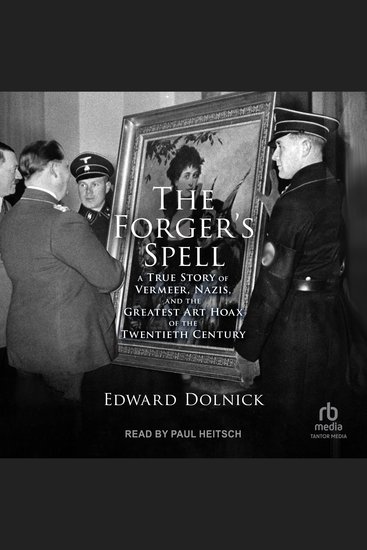
  • The Forger’s Spell - A True Story of Vermeer Nazis and the Greatest Art Hoax of the Twentieth Century - cover

    The Forger’s Spell - A True...

    Edward Dolnick

    • 0
    • 0
    • 0
    As riveting as a World War II thriller, The Forger's Spell is the true story of Johannes Vermeer and the small-time Dutch painter who dared to impersonate him centuries later. For seven years a no-account painter named Han van Meegeren managed to pass off his paintings as those of one of the most beloved and admired artists who ever lived. As Edward Dolnick reveals, his true genius lay in psychological manipulation, and he came within inches of fooling the world. Instead, he landed in an Amsterdam court on trial for his life. The Forger's Spell is the gripping, true tale of this almost perfect crime.
    Ver libro
  • Spare Me - cover

    Spare Me

    Anthony Cumia, Johnny Russo

    • 0
    • 0
    • 0
    You won't want to miss the explosive insights and unfiltered perspective in legendary broadcaster Anthony Cumia’s latest book.In his much-anticipated second book, Spare Me, radio personality and podcaster Anthony Cumia returns, unleashing a scorching and unapologetic commentary that spans the spectrum from politics to entertainment, while sparing no particular individual deserving of his legendary wrath.
    Ver libro
  • BasketBall To Dentist - cover

    BasketBall To Dentist

    Robert carpenter, Charlie Spell

    • 0
    • 0
    • 0
    The life journey of Dr. Spell from taking up basketball as a hobby to following his passion to become a dentist. Dr. spell has overcome every life obstacle with ease. We've got a lot to learn from his journey. His journey teaches us everything that is possible in life if we are willing to do everything that it takes.
    Ver libro
  • Little Women & Fashion Of The 19th Century - cover

    Little Women & Fashion Of The...

    Niina Niskanen

    • 0
    • 0
    • 0
    Step into the enchanting world of Little Women as we explore the lively and adventurous chapter "Camp Lawrence." This segment captures the essence of camaraderie, youthful joy, and the unique social dynamics of the March sisters and their friends during a summer gathering. As the boys and girls enjoy outdoor games, storytelling, and a glimpse of 19th-century leisure, we delve deeper into the historical context behind their attire, etiquette, and everyday fashion choices. 
    Special Guest: Tiffany Gayle 
     Joining us for this special episode is Tiffany Gayle, a renowned creator of historical costumes, who brings her expertise on 19th-century fashion to life. Together, we uncover how clothing in Little Women reflects class distinctions, personal identity, and societal expectations. From Jo’s practical attire to Amy’s aspirations for elegance, we discuss how Louisa May Alcott’s descriptions of fashion provide insight into the era’s culture and customs. 
    🌿 What You'll Discover: 
     ✅ The historical accuracy of Little Women's fashion depictions 
     ✅ How 19th-century outdoor attire differed for men and women 
     ✅ The significance of summer gatherings and leisure activities in the Victorian era 
     ✅ Tiffany Gayle’s behind-the-scenes look at recreating period costumes for film, theater, and historical reenactments 
    Immerse yourself in literature, history, and fashion as we bring Little Women to life through storytelling and expert analysis. A must-listen for fans of classic literature, costume history, and those who love diving into the world of the March sisters!
    Ver libro
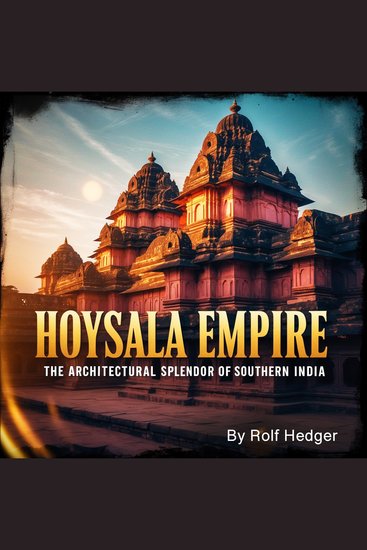
  • Hoysala Empire - The Architectural Splendor of Southern India - cover

    Hoysala Empire - The...

    Rolf Hedger

    • 0
    • 0
    • 0
    The Hoysala Empire was one of the most influential dynasties in South Indian history, known for its patronage of art, culture, and architecture. Flourishing between the 10th and 14th centuries, the empire left an indelible mark on the Deccan region, particularly in present-day Karnataka. The Hoysalas emerged as a powerful force after the decline of the Western Chalukyas, establishing their capital first at Belur and later at Halebidu. Their rule was characterized by military conquests, administrative efficiency, and an enduring legacy of architectural splendor that continues to captivate historians and art enthusiasts. 
    The origins of the Hoysala dynasty are traced to a chieftain named Sala, who, according to legend, was instructed by a Jain monk to kill a tiger that was attacking them. This act of bravery led to the adoption of the royal emblem depicting a warrior slaying a tiger, symbolizing the valor of the Hoysala rulers. Over the centuries, the dynasty expanded its influence through strategic alliances and military campaigns, gaining control over vast territories in the Deccan. Prominent rulers such as Vishnuvardhana and Veera Ballala II played a crucial role in consolidating the empire and fostering a rich cultural heritage. 
    A significant aspect of Hoysala rule was its deep connection with religious and artistic traditions. The dynasty was known for its support of Hinduism, Jainism, and, to some extent, Buddhism, leading to the construction of numerous temples and religious institutions. These temples were not just places of worship but also centers of learning and artistic expression. The Hoysalas employed skilled artisans and sculptors who developed a distinctive architectural style, characterized by intricate carvings, star-shaped temple layouts, and finely detailed sculptures depicting gods, celestial beings, and mythological narratives.
    Ver libro
  • Family Romance - John Singer Sargent and the Wertheimers - cover

    Family Romance - John Singer...

    Jean Strouse

    • 0
    • 0
    • 0
    Jean Strouse's Family Romance: John Singer Sargent and the Wertheimers looks at twelve portraits of one English family painted by the expatriate American artist at the height of his career—and at the intersections of all these lives with the sparkle and strife of the Edwardian age. 


    In commissioning this grand series of paintings, Asher Wertheimer, an eminent London art dealer of German-Jewish descent, became Sargent's greatest private patron and close friend. The Wertheimers worked with Rothschilds and royals, plutocrats and dukes—as did Sargent. Asher left most of his Sargent portraits to the National Gallery in London, a gift that elicited censure as well as praise: it was a new thing for a family of Jews to appear alongside the Anglo-Saxon aristocrats and dignitaries painted by earlier masters. 


    Strouse's account, set primarily in England around the turn of the twentieth century, takes in the declining fortunes of the British aristocracy and the dramatic rise of new power and wealth on both sides of the Atlantic. It travels back through hundreds of years to the Habsburg court in Vienna and forward to fascist Italy in the 1930s. Its depictions of Sargent, his sitters, their friendships and circles, and the portraits themselves light up a period that saw tumultuous social change and the birth of the modern art market.
    Ver libro