Junte-se a nós em uma viagem ao mundo dos livros!
Adicionar este livro à prateleira
Grey
Deixe um novo comentário Default profile 50px
Grey
Assine para ler o livro completo ou leia as primeiras páginas de graça!
All characters reduced
Unraveling Translation - Ethics Culture and Power - cover
LER

Unraveling Translation - Ethics Culture and Power

Pasquale De Marco

Editora: Publishdrive

  • 0
  • 0
  • 0

Sinopse

In a world interconnected yet divided by linguistic barriers, translation emerges as a powerful force shaping our cultural landscapes and global interactions. "Unraveling Translation: Ethics, Culture, and Power" delves into the hidden controversies, ethical dilemmas, and cultural challenges that surround the art of translation.

This book unveils the stigmatization and marginalization of translation, exposing the forces that seek to silence and diminish its significance. It explores the complex power dynamics inherent in translation, where translators mediate cultural exchanges and navigate the politics of identity and dominance. Ethical considerations come to the forefront as translators grapple with the tension between accuracy and interpretation, the responsibility of preserving cultural integrity, and the challenges of translating sacred texts and marginalized languages.

The digital age brings new possibilities and complexities to the world of translation. The rise of machine translation and the impact of technology challenge traditional practices and raise questions about the role of human translators in a technology-driven world. The book examines the ethics of machine translation and envisions the future of translation in a rapidly evolving digital landscape.

Translation's vital role in business and commerce is explored, highlighting its significance in international trade and the facilitation of communication across cultural boundaries. The challenges of translating legal, financial, and technical documents are examined, emphasizing the intricate relationship between language, culture, and economics. Translation emerges as a strategic tool for businesses seeking to navigate the complexities of global markets.

As we look to the future of translation, this book considers the evolving role of translators in a globalized world. It examines the challenges and opportunities of translation in the 21st century, exploring the impact of globalization, migration, and the rise of multilingual societies on the practice of translation. The book envisions a future where translation is recognized and valued as a vital force for building bridges between cultures, promoting intercultural dialogue, and creating a more inclusive and interconnected world.

"Unraveling Translation" is an essential resource for translators, scholars, and anyone interested in the intricate world of translation. It provides a comprehensive exploration of the controversies, challenges, and ethical considerations that shape this vital art, offering a deeper understanding of its role in shaping our cultural and global interactions.


If you like this book, write a review!
Disponível desde: 02/06/2025.
Comprimento de impressão: 166 páginas.

Outros livros que poderiam interessá-lo

  • 10 Ancient Roman Concepts That Explain the Modern World - cover

    10 Ancient Roman Concepts That...

    D. S. Yvon

    • 0
    • 0
    • 0
    These ancient concepts come from an assortment of wisdom found in the time of the Roman Empire include: 
    The Tacitus Razor: “If you want to know who controls you, see who you’re not allowed to criticize.” This is how comedians accidently reveal a society's hierarchy—they call everyone naked, and soon discover who the king is. 
    The Slavery Syndrome. Roman historian Sallust: “Few men desire liberty; most men wish only for a just master.” Genuine liberty means making decisions 24/7; parsing right from wrong; solving pesky dilemmas using nothing but one’s own mind.  
    The Polybius Warning: 2nd century B.C. historian Polybius warned that a falling birthrate precedes civilizational collapse. Fewer births mean men and women have checked out. Polybius believed the Greek civilization fell due to its “low birth rate…” 
    The Pliny Principle: “It is wonderful how the mind is stirred and quickened into activity by brisk bodily exercise.”  
    The Uses of Folly. Roman historian Herodotus: “If a man insisted always on being serious, and never allowed himself a bit of fun and relaxation, he would go mad.”  
    6. The Vitruvius Rule: Modern architects love asymmetrical structures, but Ancient Roman architect Vitruvius said a building out of proportions is like a deformed body. Nature herself “composed the human body” and the rest of creation using “due proportions.” The Vitruvius Rule: No symmetry? Off to cemetery. 
    And more!
    Ver livro
  • The Sociology of Crime - Understanding the Roots and Impacts of Criminal Behavior - cover

    The Sociology of Crime -...

    Fred Grandsen

    • 0
    • 0
    • 0
    Crime is not merely a legal category but a social construct shaped by historical, cultural, and political forces. What is considered criminal behavior varies across societies and time periods, reflecting changing moral values, power structures, and social interests. Understanding crime as a social construct allows us to analyze how laws are created, enforced, and challenged within different social contexts. 
    One of the key aspects of the social construction of crime is that laws are not neutral or universal. Instead, they are established by those in positions of power who determine what behaviors should be criminalized. For example, certain acts such as drug use, gambling, or even political protests have been criminalized in some societies while being tolerated or even encouraged in others. The legal system often reflects the interests of dominant groups, leading to selective enforcement of laws. Historically, vagrancy laws targeted the poor, while modern drug laws have disproportionately affected marginalized communities. 
    Crime is also shaped by cultural perceptions and media representations. The way crime is reported in the news and depicted in television shows or films influences public perceptions of who is considered criminal. For instance, street crime is often sensationalized, while corporate or white-collar crimes receive comparatively little attention, despite their significant social and economic impact. This selective framing reinforces stereotypes and can lead to policies that prioritize punishment for certain groups while overlooking more systemic forms of harm.
    Ver livro
  • Diary of a Secret Drug Addict: Addiction dependence and recovery An ex-user’s guide to breaking free - cover

    Diary of a Secret Drug Addict:...

    Secret Drug Addict

    • 0
    • 0
    • 0
    What is an addict?  
    Why do some people become one?  
    How can I recover from addiction?  
    Growing up in a fractious and dysfunctional family, life wasn’t easy for the Secret Drug Addict. By the time he was 29, the chronic and intensive drug abuse threatened to not only end his career but also his life. 
    After finally entering rehabilitation and various therapy programmes, he managed to find his way out of addiction and began to live with sobriety, in recovery, one day at a time. 
    This is his story, and this book is for anyone who is struggling with addiction or thinks they might have a problem. It is a book for family and friends who live with the real-life consequences of addiction and want to know more about the illness and where and how to get help. 
    nan
    Ver livro
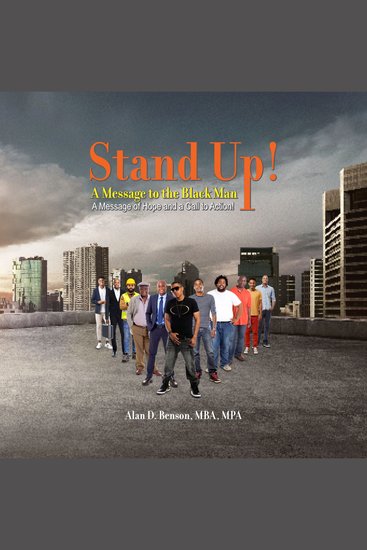
  • Stand Up! A Message to the Black Man - A Message of Hope and a Call to Action! - cover

    Stand Up! A Message to the Black...

    Alan D. Benson

    • 0
    • 0
    • 0
    Stand Up! A Message to the Black Man" is a powerful and inspiring book by Alan D. Benson that serves as "A Message of Hope and a Call to Action" for Black men. Benson, who holds an MBA and MPA, draws upon his own life experiences and extensive research to address the unique challenges and opportunities Black men face in America. 
    Key themes and insights in "Stand Up! A Message to the Black Man" include: 
    ●      Manifesting Purpose and Action Planning: Benson introduces his "PLOT" system (Purpose, Limitations, Opportunities, and Traps) as a self-reflection tool to help individuals align with their purpose and develop actionable strategies for success in various aspects of life, including education, career, finance, and health. 
    ●      Building Economic Foundation: A significant portion of the book is dedicated to the critical need for Black men to create their own economic foundation through investing in stocks, assets, and businesses, highlighting historical Black entrepreneurs and discussing wealth-creating strategies. 
    ●      Resilience and Forward Movement: The book consistently emphasizes faith, perseverance, and the importance of learning from setbacks, urging readers to "Keep Going Forward at All Costs". It highlights successful Black figures who have overcome significant adversity as an inspiration. 
    "Stand Up! A Message to the Black Man" is an urgent and empowering message for Black men to take control of their narratives, build strong foundations for themselves and their communities, and strive for their God-given potential in a constantly evolving society.
    Ver livro
  • Discover Your Inner Strength: Unlocking Genuine Resilience - Discover your inner strength! Access audio lessons that unlock resilience and boost test performance effortlessly - cover

    Discover Your Inner Strength:...

    Galen Haverford

    • 0
    • 0
    • 0
    Discover Your Inner Strength: Unlocking Genuine Resilience 
    ⭐⭐ Simplified Guide & Explanations Included ⭐⭐ 
    Are you eager to advance in your personal or professional life by embracing your inner strength and resilience? 
    Looking for a comprehensive guide that covers all aspects of developing genuine resilience? 
    Your search ends here! 
    This guide serves as your ultimate companion for deepening your understanding, applying your skills, and engaging in practical exercises. With this, you're prepared for success. 
    Updated with the latest insights and strategies for developing resilience. 
    Key features of this enriched guide: 
    - In-depth insights about fostering genuine resilience 
    - Detailed explanations on discovering and harnessing your inner strength 
    - Effective strategies for resilience-building and personal development 
    Our guide stands out through its thorough coverage, essential for your personal growth. Concepts aren't just touched upon; they are explored with precision. 
    Please note that this guide is purely an independent resource created for your benefit. 
    Designed with a clear structure and easy-to-understand language, our resilience guide ensures smooth transitions between topics. Say goodbye to dense jargon and welcome clear, precise, and technically accurate content. 
    So, why wait? Click the BUY NOW button, secure your guide, and begin your journey to unlocking genuine resilience!
    Ver livro
  • In the Skin of a Beast - Sovereignty and Animality in Medieval France - cover

    In the Skin of a Beast -...

    Peggy McCracken

    • 0
    • 0
    • 0
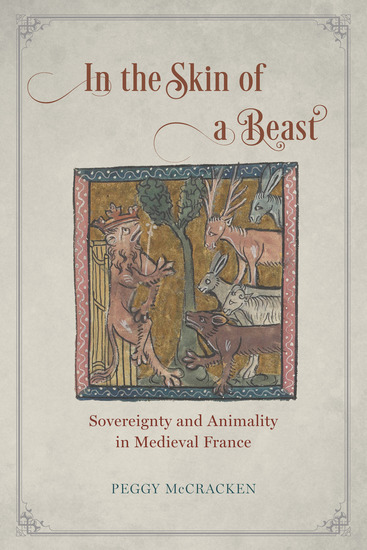
    In medieval literature, when humans and animals meet—whether as friends or foes—issues of mastery and submission are often at stake. In the Skin of a Beast shows how the concept of sovereignty comes to the fore in such narratives, reflecting larger concerns about relations of authority and dominion at play in both human-animal and human-human interactions. Peggy McCracken discusses a range of literary texts and images from medieval France, including romances in which animal skins appear in symbolic displays of power, fictional explorations of the wolf’s desire for human domestication, and tales of women and snakes converging in a representation of territorial claims and noble status. These works reveal that the qualities traditionally used to define sovereignty—lineage and gender among them—are in fact mobile and contingent. In medieval literary texts, as McCracken demonstrates, human dominion over animals is a disputed model for sovereign relations among people: it justifies exploitation even as it mandates protection and care, and it depends on reiterations of human-animal difference that paradoxically expose the tenuous nature of human exceptionalism.
    Ver livro