¡Acompáñanos a viajar por el mundo de los libros!
Añadir este libro a la estantería
Grey
Escribe un nuevo comentario Default profile 50px
Grey
Suscríbete para leer el libro completo o lee las primeras páginas gratis.
All characters reduced
Underworking Wheels - cover

Underworking Wheels

Pasquale De Marco

Editorial: Publishdrive

  • 0
  • 0
  • 0

Sinopsis

In the heart of 19th century America, the fictional town of Wicksbridge witnessed the rise of an industrial marvel—the Wicksbridge mill. This captivating book takes readers on a journey through the intricate workings of the mill, unveiling the stories of the people who shaped its destiny.

From its humble beginnings as a mere concept in the minds of visionary entrepreneurs to its transformation into a thriving hub of industry, the Wicksbridge mill stands as a testament to human ingenuity and unwavering determination. Within its walls, skilled workers toiled tirelessly, operating intricate machinery that transformed raw materials into finished goods. The mill's products found their way far and wide, leaving an indelible mark on the community and beyond.

But this book is more than just a chronicle of industrial progress. It delves into the lives of the men and women who worked within the mill's walls, shedding light on their challenges, sacrifices, and dreams. Through their personal stories, readers will gain a deeper understanding of the human toll of industrialization and the resilience of the human spirit.

Beyond its economic impact, the Wicksbridge mill also played a pivotal role in shaping the social fabric of the community. It brought together people from diverse backgrounds, fostering a sense of unity and purpose. The mill became a symbol of progress and opportunity, attracting newcomers seeking a better life.

As the decades passed, the mill faced numerous challenges, from economic downturns to technological advancements. Yet, through it all, the mill endured, adapting and evolving to meet the changing demands of the times. Its legacy continues to live on, not only in the physical structures that remain but also in the enduring spirit of innovation and perseverance it embodied.

This book is an ode to the indomitable spirit of American industry, a testament to the ingenuity and perseverance of those who built America's industrial legacy. It is a story of ambition, innovation, and the transformative power of human endeavor, capturing the essence of an era that forever changed the course of history.


If you like this book, write a review!
Disponible desde: 02/06/2025.
Longitud de impresión: 159 páginas.


Otros libros que te pueden interesar

  • Why People Die by Suicide - cover

    Why People Die by Suicide

    Thomas Joiner

    • 0
    • 0
    • 0
    In the wake of a suicide, the most troubling questions are the most difficult to answer: How could we have known? What could we have done? And always: Why? Written by a clinical psychologist whose own life has been touched by suicide, this book offers the clearest account ever given of why some people choose to die. 


    Drawing on clinical and epidemiological evidence, as well as personal experience, Thomas Joiner brings a comprehensive understanding to seemingly incomprehensible behavior. Among the many people who have considered, attempted, or died by suicide, he finds three factors that mark those most at risk of death: the feeling of being a burden on loved ones; the sense of isolation; and, chillingly, the learned ability to hurt oneself. Joiner tests his theory against diverse facts taken from clinical anecdotes, history, literature, popular culture, anthropology, epidemiology, genetics, and neurobiology—facts about suicide rates among men and women; white and African-American men; anorexics, athletes, prostitutes, and physicians; members of cults, sports fans, and citizens of nations in crisis. The result is the most coherent and persuasive explanation ever given of why and how people overcome life's strongest instinct, self-preservation. Joiner's is a work that makes sense of the bewildering array of statistics and stories surrounding suicidal behavior.
    Ver libro
  • The Paradox of a Smart Atomic Bomb - A Deep Dive Into Consequences of Merging AI And Nuclear Weapons - cover

    The Paradox of a Smart Atomic...

    Davis Truman

    • 0
    • 0
    • 0
    The risk of nuclear conflict today is at its highest point in decades. Geopolitical tensions are on the rise, and we are witnessing an unsettling increase in reckless nuclear threats and the use of nuclear blackmail. This has made the long-standing taboo against the use of nuclear weapons appear more fragile than ever before. In 2022, the famous Doomsday Clock was set to a chilling 90 seconds to midnight, marking the closest it has ever been since its inception in 1947. This unsettling moment in history underscores just how vulnerable the world has become to the catastrophic consequences of nuclear war. 
    In this fragile and precarious situation, it becomes even more crucial for the global community to fully grasp the profound humanitarian impact that any use of nuclear weapons would have. Whether in the case of a limited strike or a full-scale nuclear conflict, the consequences would be devastating not just for the immediate areas affected but for all of humanity and the environment. The environmental destruction, the loss of life, and the lasting psychological and societal trauma would ripple across borders, affecting every nation. 
    Greater awareness and a deeper understanding of these consequences are vital for mobilizing the global community to take decisive, collective action. Only through a heightened sense of urgency and responsibility can we work together to prevent the use of nuclear weapons. This awareness is also the key to advancing the cause of nuclear disarmament. Moving away from a security model based on the dangerous idea of mutually assured destruction and toward one focused on cooperation, diplomacy, and peace is not just desirable—it’s essential for ensuring the survival of humanity and the planet for future generations. 
     
    Ver libro
  • The 7 Deadly Sins - Understanding and Repenting from the 7 Worst Vices - cover

    The 7 Deadly Sins -...

    Christian Vandergroot

    • 0
    • 0
    • 0
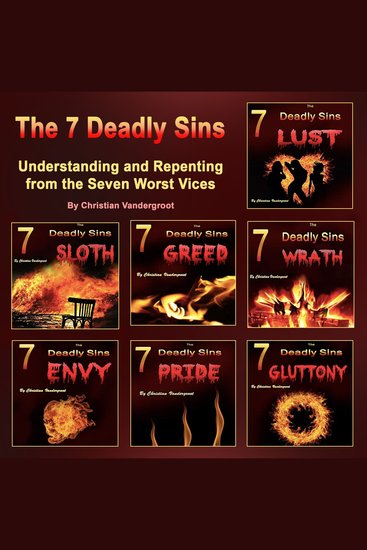
    Seven titles in one book. All the seven deadly sins explained and analyzed. 
    Book 1: Envy 
    Envy is often something we point out in others, but if we face the facts and admit to being imperfect, finding it in ourselves can actually improve our lives, our attitude, and our happiness. When we figure out where our feelings are wrong, we can take action and change our mindset. So many people think of envy as a sin against others, but actually, we are doing this to ourselves. We create our own misery by looking at others and comparing ourselves to them. 
    Book 2: Gluttony 
    Gluttony has been mistaken for many things in the past. Some people judge others for being fat. Some are confused as to how far to go when indulging themselves in delicious foods. And others wonder if self-discipline in general is the underlying commandment that is related to the sin of gluttony. Understanding the sin, and the essence of it, can be life changing. It can mean the difference between a constant nagging feeling or urge to have more, and on the other hand, a divine feeling of contentment and a smile on your face. 
    Book 3: Greed 
    We’ve heard it before: The love of money is the root of all evil. Greed, or avarice, has caused many to “err from the faith” according to Paul, who wrote to Timothy. “Flee these things,” he said, urging him—and all of us—to concentrate on Christlike qualities instead of worldly possessions, and on treasures in heaven, not on earth. Greed is everywhere. It is almost unavoidable. If we let go of the possessions that so easily possess us, we can focus more on God and His purposes. 
      
    Other vices include lust, sloth, wrath, and pride. Listen to this eye-opening audiobook now! 
     
    Ver libro
  • How to Become a Podiatrist Career Professional Development Planning Audio Book - With Job Interview Preparation & Coaching Guide for Men Women Teens & Young Adults - cover

    How to Become a Podiatrist...

    Brian Mahoney

    • 0
    • 0
    • 0
    End Money Worries! 
    How to Become a Podiatrist Career Professional Development Planning Audio Book 
    With Job Interview Preparation & Coaching Guide for Men, Women, Teens & Young Adults 
    by Brian Mahoney 
           Discover... 
    * What a Podiatrist does 
         * How to Become a Podiatrist 
          * What is the salary of a Podiatrist 
             * What is the Podiatrist Work Environment like 
                 * What is the future Job outlook for a Podiatrist 
             * how long does it take to become a Podiatrist 
          * How to Prepare for Your Job Interview 
       * Tips the pros use to Ace their Job Interview 
    * You'll be confident with the best answers for the toughest job interview questions 
    The knowledge and ability to change your life all for less than the cost of 1 movie ticket! 
     If you are ready to get started & want the knowledge, help & motivation to change your life now!... 
    Then this Book is for you!!! 
                         So Don't wait. You'll wait your life away...
    Ver libro
  • A Rare Recording of US Senator Frank Church Chairman of the Church Committee - cover

    A Rare Recording of US Senator...

    Senator Frank Church

    • 0
    • 0
    • 0
    Frank Forrester Church III (July 25, 1924 to April 7, 1984) was an American Democrat politician and lawyer. Church served as a U.S. Senator from Idaho from 1957 to 1981, and gained national prominence as chairman of the U.S. Senate Select Committee to Study Governmental Operations with Respect to Intelligence Activities, from 1975 through 1976, commonly known as the Church Committee, which conducted extensive hearings investigating extra-legal FBI and CIA intelligence-gathering and covert operations. The following recording is from a speech Church gave to the Women's Democratic League in 1975.
    Ver libro
  • History of Colombia - An Overview of Its Politics Corruption and Culture - cover

    History of Colombia - An...

    Kelly Mass

    • 0
    • 0
    • 0
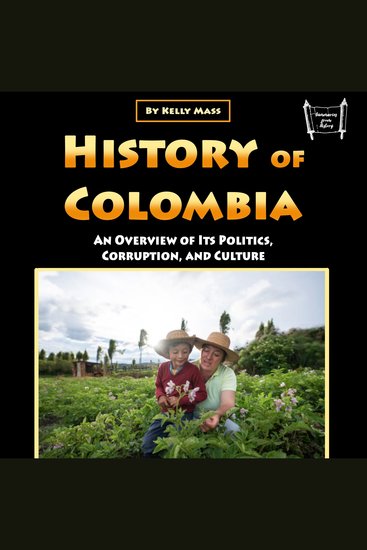
    Colombia’s history is marked by a rich tapestry of indigenous cultures and societies, which laid the foundations for the diverse nation that exists today. Long before the Spanish arrived in 1492, the region was home to advanced civilizations such as the Muisca Confederation, the Quimbaya Civilization, and the Tairona Chiefdoms. These indigenous groups thrived in Colombia's varied geography, establishing complex societies with sophisticated agricultural practices, intricate trade networks, and elaborate spiritual beliefs. 
    The Spanish conquest of the Americas brought significant change to the region. Following Christopher Columbus's arrival in the Caribbean, Spanish explorers began their colonization efforts. In 1538, the Spanish established Bogotá, which became the capital of the Viceroyalty of New Granada. This vast colonial territory included what is now Colombia, Ecuador, Panama, and Venezuela. The Spanish imposed their rule over the indigenous peoples, exploiting both the land and the labor of native communities, which would profoundly shape the future of the region.
    Ver libro