¡Acompáñanos a viajar por el mundo de los libros!
Añadir este libro a la estantería
Grey
Escribe un nuevo comentario Default profile 50px
Grey
Suscríbete para leer el libro completo o lee las primeras páginas gratis.
All characters reduced
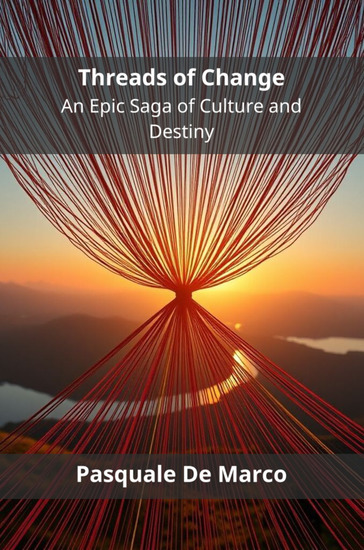
Threads of Change - An Epic Saga of Culture and Destiny - cover

Threads of Change - An Epic Saga of Culture and Destiny

Pasquale De Marco

Editorial: Publishdrive

  • 0
  • 0
  • 0

Sinopsis

In the tapestry of human history, the threads of culture and destiny intertwine, shaping the fate of nations and the lives of individuals. This book weaves a captivating narrative that explores the intricate relationship between culture and destiny, taking readers on a journey through the Americas, where the convergence of diverse cultures has created a vibrant and ever-changing landscape.

From the arrival of European explorers to the rise of industrialism, the Americas have been a crucible of change, where cultures have clashed, converged, and evolved. The book delves into the pivotal moments that have shaped the region, from the struggles of indigenous peoples to the birth of new nations.

Through its rich historical tapestry, this book sheds light on the complex relationship between culture and destiny. It explores how cultural traditions, beliefs, and values have influenced the course of history, shaping the political, economic, and social landscapes of the Americas.

Yet, the book also recognizes the darker aspects of history, acknowledging the violence, oppression, and exploitation that have often accompanied the clash of cultures. It examines the lasting legacies of colonialism and the ongoing struggle for equality and justice.

Despite the challenges, the book celebrates the resilience and creativity of the human spirit. It highlights the ways in which cultures have adapted and evolved, finding new ways to express their identity and traditions in a changing world.

"Threads of Change" is a thought-provoking and insightful exploration of the Americas, a region where the threads of culture and destiny have intertwined to create a rich and diverse tapestry of human experience. This book is a must-read for anyone interested in history, culture, and the human condition.


If you like this book, write a review!
Disponible desde: 02/06/2025.
Longitud de impresión: 162 páginas.

Otros libros que te pueden interesar

  • Blue Tansy Nature's Soothing Capability - Unlocking the Healing Secrets - cover

    Blue Tansy Nature's Soothing...

    R.W.

    • 0
    • 0
    • 0
    Get ready to dive into the remarkable world of Blue Tansy (Tanacetum annuum)! This compelling ebook presents the extraordinary journey of Blue Tansy, also known as "The Plant of Many Faces." With its potent essential oil and impressive skincare properties, this Moroccan botanical powerhouse is set to captivate you. 
    Discover how Blue Tansy’s striking blue essential oil can revolutionize your skincare routine, effectively addressing concerns like acne and dryness. We will confidently break down the science of antioxidants and free radicals in an enjoyable and relatable way, making it easy for you to understand the skincare benefits. Prepare to explore, learn, and fully embrace the transformative power of Blue Tansy!
    Ver libro
  • "Are You Calling Me a Racist?" - Why We Need to Stop Talking about Race and Start Making Real Antiracist Change - cover

    "Are You Calling Me a Racist?" -...

    Sarita Srivastava

    • 0
    • 0
    • 0
    Despite decades of anti-racism workshops and diversity policies in corporations, schools, and nonprofit organizations, racial conflict has only increased in recent years. "Are You Calling Me a Racist?" reveals why these efforts have failed to effectively challenge racism and offers a new way forward. 


    Drawing from her own experience, as well as extensive interviews and analyses of contemporary events, Sarita Srivastava shows that racial encounters among well-meaning people are ironically hindered by the emotional investment they have in being seen as good people. Diversity workshops devote energy to defending, recuperating, educating, and inwardly reflecting, with limited results, and often make things worse. These "Feel-Good politics of race," Srivastava explains, train our focus on the therapeutic and educational, rather than on concrete practices that could move us towards true racial equity. In this type of approach to diversity training, people are more concerned about being called a racist than they are about changing racist behavior. 


    "Are You Calling Me a Racist?" is a much-needed challenge to the status quo of diversity training, and will serve as a valuable resource for anyone dedicated to dismantling racism in their communities, educational institutions, public or private organizations, and social movements.
    Ver libro
  • The White Album - Essays - cover

    The White Album - Essays

    Joan Didion

    • 0
    • 0
    • 0
    "First appearing in print in 1979, this remarkable and intimate audiobook chronicles the implosion of the 1960s and reports on the people, mores, and trends that defined that turbulent time."—AudioFileFirst published in 1979, Joan Didion's The White Album records indelibly the upheavals and aftermaths of the 1960s. Examining key events, figures, and trends of the era—including Charles Manson, the Black Panthers, and the shopping mall—through the lens of her own spiritual confusion, Joan Didion helped to define mass culture as we now understand it. Written with a commanding sureness of tone and linguistic precision, The White Album is a central text of American reportage and a classic of American autobiography.
    Ver libro
  • Innovating Victory - Naval Technology in Three Wars - cover

    Innovating Victory - Naval...

    Leonard R. Heinz, Vincent P. O'Hara

    • 0
    • 0
    • 0
    Innovating Victory studies how the world's navies incorporated new technologies into their ships, their practices, and their doctrine. It does this by examining six core technologies fundamental to twentieth-century naval warfare including new platforms, new weapons, and new tools. Each chapter considers the state of a subject technology when it was first used in war and what navies expected of it. It then looks at the way navies discovered and developed the technology's best use, in many cases overcoming disappointed expectations. It considers how a new technology threatened its opponents, not to mention its users, and how those threats were managed. Innovating Victory shows that the use of technology is more than introducing and mastering a new weapon or system. Differences in national resources, force mixtures, priorities, perceptions, and missions forced nations to approach the problems presented by new technologies in different ways. Navies that specialized in specific technologies often held advantages over enemies in some areas but found themselves disadvantaged in others. Vincent P. O'Hara and Leonard R. Heinz present new perspectives and explore the process of technological introduction and innovation in a way that is relevant to today's navies, which face challenges and questions even greater than those of 1904, 1914, and 1939.
    Ver libro
  • Who Needs College Anymore? - Imagining a Future Where Degrees Won't Matter - cover

    Who Needs College Anymore? -...

    Kathleen deLaski, Robert B....

    • 0
    • 0
    • 0
    With keen insight, Kathleen deLaski reimagines what higher education might offer and whom it should serve in Who Needs College Anymore? In the wake of declining US university enrollment and widespread crises of confidence in the value of a college degree, deLaski urges a mindset shift regarding the learning routes and credentials that best prepare students for success after high school. 


    The work draws on a decade of design-thinking research from the nonprofit Education Design Lab as well as 150 interviews of educational experts, college and career counselors, teachers, employers, and learners. DeLaski applies human-centered design to higher education reform, engaging the perspective of end users to search for better solutions. She highlights ten top principles based on user feedback and considers how well they are currently being enacted by colleges. 


    In particular, she urges institutions to better attend to the needs of new-majority learners, often described as nontraditional students, including people from low-income backgrounds, people of color, first-generation students, veterans, single mothers, rural students, part-time attendees, and neurodivergent students. She finds ample opportunity for colleges to support learners via alternative pathways to marketable knowledge. This work suggests innovation as a means of evolution.
    Ver libro
  • Coercion - Forcing Someone to Act in a Certain Way through Pressure - cover

    Coercion - Forcing Someone to...

    Cito Harder

    • 0
    • 0
    • 0
    Coercion is a fundamental aspect of human interaction, shaping behaviors, relationships, and power dynamics across societies. It is the act of compelling someone to act against their will through force, threats, or pressure. Unlike persuasion, which relies on voluntary agreement, coercion removes choice, leaving individuals with little alternative but to comply. It exists in various forms, from physical force and legal mandates to psychological and social pressures. While coercion is often viewed negatively, it is also a tool that governments, organizations, and individuals use to maintain order, enforce rules, and achieve strategic goals. Understanding the nature of coercion requires exploring its mechanisms, ethical dilemmas, and long-term effects. 
    At its core, coercion operates through a power imbalance. The coercer holds leverage over the coerced, whether through control of resources, authority, or the ability to inflict harm. This power can be direct, as in military force or legal penalties, or indirect, such as emotional manipulation or financial dependency. In many cases, coercion is subtle, embedded within societal norms and expectations. A person may comply not because they are explicitly threatened but because the consequences of refusal—ostracization, loss of opportunities, or economic hardship—are too great to bear. This makes coercion a pervasive force, influencing decisions in ways that may not always be immediately apparent.
    Ver libro