¡Acompáñanos a viajar por el mundo de los libros!
Añadir este libro a la estantería
Grey
Escribe un nuevo comentario Default profile 50px
Grey
Suscríbete para leer el libro completo o lee las primeras páginas gratis.
All characters reduced
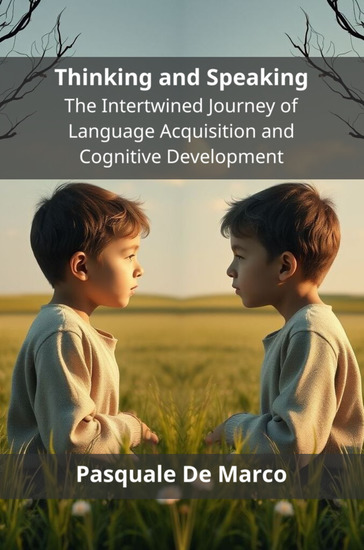
Thinking and Speaking - The Intertwined Journey of Language Acquisition and Cognitive Development - cover

Thinking and Speaking - The Intertwined Journey of Language Acquisition and Cognitive Development

Pasquale De Marco

Editorial: Publishdrive

  • 0
  • 0
  • 0

Sinopsis

In the realm of human cognition, language stands as a beacon, illuminating the pathways of our thoughts and shaping the contours of our understanding. This book embarks on an enlightening journey into the intricate relationship between language acquisition and cognitive development, unveiling the profound impact they have on each other and on the human experience.

From the moment we utter our first words as infants to the complex conversations we engage in as adults, language is an ever-present force in our lives. It is the medium through which we communicate our thoughts, express our emotions, and connect with others. But language is not merely a tool for communication; it is also a powerful shaper of our cognition.

As we acquire language, we simultaneously develop the cognitive skills that allow us to make sense of the world around us. We learn to categorize objects, to understand relationships, and to solve problems. Language provides us with the concepts and categories that we use to organize our thoughts and experiences, influencing the way we perceive, remember, and reason.

This interplay between language and cognition is a dynamic and reciprocal one. Language shapes our cognition, and cognition, in turn, shapes language. The words we choose, the way we structure our sentences, and the stories we tell all reflect the cognitive processes that are taking place in our minds. As our cognition develops, so too does our language, becoming more sophisticated and nuanced.

The relationship between language and cognition is not only essential for our individual development but also for our social and cultural interactions. Language allows us to communicate with others, to share our thoughts and ideas, and to build relationships. It is the foundation of our social fabric, enabling us to cooperate, collaborate, and learn from one another. It is also the repository of our cultural heritage, passed down from generation togeneration through stories, songs, and traditions.

This book delves into the fascinating world of language and cognitive development, exploring the intricate ways in which these two fundamental aspects of human nature interact and influence each other. Through a comprehensive examination of research and case studies, it sheds light on the complex relationship between language and cognition and provides a deeper understanding of the human mind.

Whether you are a parent, an educator, a researcher, or simply someone curious about the nature of human intelligence, this book offers a wealth of insights into the dynamic relationship between language and cognition. It is an essential read for anyone who seeks to understand the mysteries of the human mind and to gain a deeper appreciation for the power of language.


If you like this book, write a review!
Disponible desde: 02/06/2025.
Longitud de impresión: 173 páginas.

Otros libros que te pueden interesar

  • CULTIVATING LEADERSHIP MASTERY - The Art of Leadership Development and the Threat of Being Left Behind - cover

    CULTIVATING LEADERSHIP MASTERY -...

    Hans Fleurimont

    • 0
    • 0
    • 0
    Leadership is the one thing that’s most critical in every industry, market and government in the world. There are people in positions of power who called themselves leaders, but they’re not. Yes, they may be the boss and in-charge but they don’t operate in the true spirit of leadership and righteousness. 
    When you are in charge, do you force and manipulate people to do what you want them to do? Do you inspire them to willingly listen to you out of love and respect? Do you gaslight someone into getting what you want? Do you reason with them with their best interest in mind? Or have you ever been on the receiving end of all of these things? 
    The Purpose of this course is to explore the dynamic sides of leadership and authority to understand how to increase your value and influence as a true leader. You will learn to use a formula that will help you understand what true leadership looks like and how to apply it to your personal and professional life. 
    In this course, you will learn to master Seven Key Fundamental Leadership Pillars that drive success for every authentic leader. Without embracing these, your leadership outcomes will fall short. 
    You will also learn:An effective strategy to reprogram your mindset and help you achieve success in leadership by taking action.How to create a non-toxic working environment for yourself and your organization.Establish better working relationships with colleagues, direct reports, and diverse groups of people.How to develop the confidence you need to become a transformational leader throughout your career and personal life.
    Ver libro
  • Buddha Socrates and Us - Ethical Living in Uncertain Times - cover

    Buddha Socrates and Us - Ethical...

    Stephen Batchelor

    • 0
    • 0
    • 0
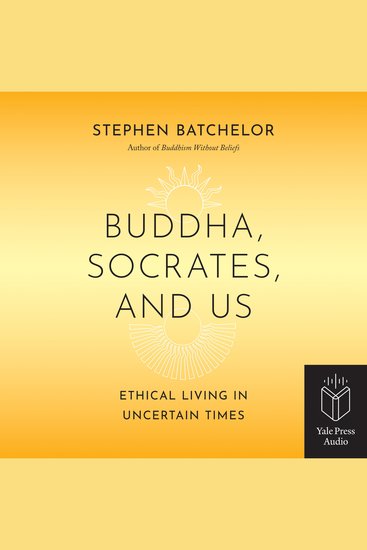
    A renowned Buddhist teacher turns to two of the most influential figures in history for guidance on how to face the ethical challenges of our time The Buddha’s revolutionary teachings transformed Asia, and his contemporary Socrates laid the foundations of Western philosophy. Although they never met, Socrates and the Buddha each addressed in a radically new and surprisingly similar way the core questions of how to lead a good, just, and dignified life amid turbulence and violence. Common to their teachings was an ethics of uncertainty: both refused to make truth claims about the ultimate nature of reality, insisting on the primacy of critical self‑evaluation as the basis of an ethical life. In this illuminating book, best-selling author Stephen Batchelor explores the philosophical, social, and political worlds of the Buddha and Socrates, showing how their teachings continue to provide lessons in how to lead a flourishing and engaged life. Keenly aware of the fickle and conflicted nature of the human mind, Gotama and Socrates inspired their followers to act with humility and courage, risk and resolve, doubt and confidence. Drawing on their insights, and those of their followers, Batchelor uncovers a middle way between Buddhist dharma and Greek philosophy that can serve as a starting point for a “secular faith” that addresses the most pressing spiritual and planetary issues of our age.
    Ver libro
  • Celtic and Norse Sagas - Warriors Tricksters and Legendary Tales (3 in 1) - cover

    Celtic and Norse Sagas -...

    Odessa Nightshade

    • 0
    • 0
    • 0
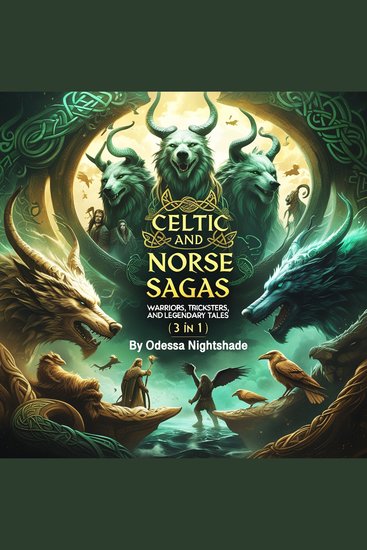
    Unleash the power of myth with this 3-in-1 journey into the wild and ancient world of Celtic and Norse legends. From thunderous battles to shape-shifting deities, these tales are filled with magic, mystery, and raw heroism that shaped the beliefs of early Europe. 
    Begin with the ancient druids and mystical beings in Celtic Gods and Goddesses, where nature spirits and warrior queens ruled the land. Then step into the poetic might of The Norse Eddas, a collection of mythic texts that bring to life giants, gods, and the fiery fate of Ragnarök. Finally, explore The Tales of Odin, tracing the Allfather’s quest for wisdom, his trials, and his role in the end times. 
    Whether you're drawn to the wisdom of druids or the thunder of Thor, this book delivers timeless tales of courage, fate, and the divine—perfect for mythology lovers, fantasy fans, and anyone captivated by epic sagas.
    Ver libro
  • Medieval History of Montenegro The: The History of the Region’s Rulers and Culture Before the Modern Era - cover

    Medieval History of Montenegro...

    Editors Charles River

    • 0
    • 0
    • 0
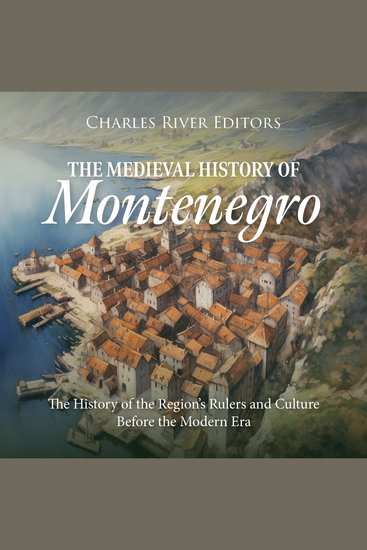
    Much has been written about Western intervention during the breakup of Yugoslavia, and whether it made matters worse, prevented worse atrocities, or was simply ineffective. In early 1992, however, what was clear was that Europe was hopelessly divided over the best course of action to take towards Yugoslavia, and after several years of fighting, the Bosnian War was one of the most violent conflagrations in Europe since the end of World War II.  
    	That war had been the byproduct of centuries of tensions in the Balkans, and an attempt in the wake of World War I to redraw the political boundaries of Europe and the Middle East. That included forming the Kingdom of Yugoslavia, initially known as the Kingdom of Serbs, Croats and Slovenes, a particularly fragile enterprise, and there was almost constant tension between the majority Serbs and the other Yugoslav nationalities, especially the Croats. As a result, the Kingdom was a land of political assassinations, underground terrorist organizations, and ethnic animosities. In 1929, King Alexander I suspended democracy and ruled as a dictator until he himself was assassinated in 1934.  
    	Depending on the source, many authors have focused on different catalysts for Yugoslavia’s demise, but Vesna Drapac may have succinctly summed the situation up when he wrote that by the end, the state “lacked a reason to exist.” There is certainly something in this sentiment, but the disintegration came at an enormous cost. 
    	Given what happened in Yugoslavia, it should be little surprise the area that eventually became the modern nation of Montenegro has had a turbulent history for millennia, with shifting borders, different degrees of autonomy, and various conflicts occurring within it.  
    	  
      
    Ver libro
  • Eastern Han Dynasty The: A History of China - cover

    Eastern Han Dynasty The: A...

    Hui Wang

    • 0
    • 0
    • 0
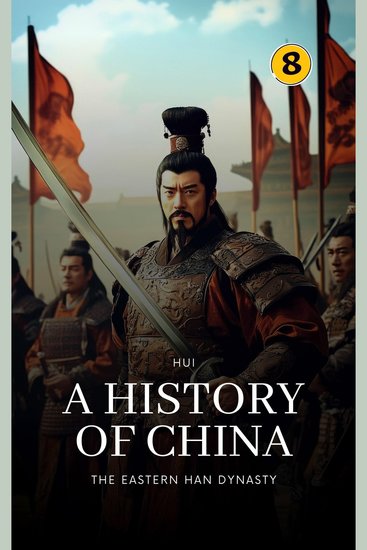
    The Eastern Han Dynasty: A History of China, PART ONE takes you on an unforgettable journey through one of China's most transformative eras. Once fractured by war, the Han Empire finds hope in Liu Xiu—a noble who rises through chaos to become Emperor Guangwu of Han. But claiming the throne is only the beginning. To rebuild an empire torn apart, he must outmaneuver rivals, crush rebellions, and restore order. 
    From the fall of the Chimei Army to the eruption of the Three Rebellions, Liu Xiu's reign is marked by endless trials. Allies become threats, and loyalty is tested—especially for Wei Xiao, a trusted officer with dangerous ambitions. Meanwhile, the empire expands into Longyou and sets its sights on resource-rich Shu, where political intrigue runs deep. 
    Military legends like General Ma Yuan rise, shaping China's future with brilliant campaigns. As peace returns, loyal ministers help rebuild the government. But power shifts within the court, and when the crown prince unexpectedly steps down, the influential Yin Family begins to dominate the throne's inner circle. 
    A new era begins with Emperor Ming, who faces his own battles—reforms, alliances, and unrest. Yet Han is no longer limited by borders. Ban Chao’s bold expeditions to the Western Regions spark a wave of imperial ambition, paving the way for the rise of a new conqueror who will take Han’s influence farther than ever before. 
    This is not just a chronicle of events—it's a sweeping epic of ambition, war, strategy, and legacy. If you’re drawn to tales of empire-building, battlefield brilliance, and court intrigue, The Eastern Han Dynasty: Part One is a journey you won’t want to miss.
    Ver libro
  • Toxic Tweets - Hate Speech in Election Campaigns And The Trump Case on Social Networks - cover

    Toxic Tweets - Hate Speech in...

    Davis Truman

    • 0
    • 0
    • 0
    In an era where social media dominates political discourse, "Toxic Tweets: Hate Speech in Election Campaigns and the Trump Case on Social Networks" dives deep into the dark side of digital communication. This compelling examination reveals how hate speech has become a strategic tool in modern election campaigns, with a particular focus on Donald Trump's controversial use of rhetoric. 
    This insightful book explores:The Rise of Hate Speech: How social media platforms, initially designed for open dialogue, have been weaponized to spread divisive and harmful rhetoric.The Trump Phenomenon: Analyzing Donald Trump's provocative language and unique expressions to challenge opponents, influence public opinion, and mobilize his base. From "fake news" to "Chinese Virus," discover how Trump's tweets have reshaped the political landscape.Impact on Society: The real-world consequences of online hate speech, including increased violence, racism, and societal division. Learn about the reactions of various communities and the measures taken to combat the spread of harmful content.Policy and Regulation: A look at the efforts by governments and platforms to curb hate speech and the challenges faced in balancing free expression with protection against harmful content. 
    Drawing on extensive research and case studies, "Toxic Tweets" critically analyzes the intersection between social media and political strategy. It is an essential read for anyone interested in understanding the implications of online rhetoric on democracy and society.
    Ver libro