¡Acompáñanos a viajar por el mundo de los libros!
Añadir este libro a la estantería
Grey
Escribe un nuevo comentario Default profile 50px
Grey
Suscríbete para leer el libro completo o lee las primeras páginas gratis.
All characters reduced
The Whimsical Hourglass - cover

The Whimsical Hourglass

Pasquale De Marco

Editorial: Publishdrive

  • 0
  • 0
  • 0

Sinopsis

In the vast expanse of human experience, time stands as an enigma, a captivating mystery that has perplexed and fascinated minds for millennia. "The Whimsical Hourglass" embarks on an introspective journey, delving into the depths of time's multifaceted relationship with humanity.

Through the evocative imagery of the hourglass, we embark on a voyage of self-discovery, exploring the profound significance of time in shaping our perceptions, dictating our actions, and leaving an indelible mark on our collective consciousness. The hourglass, with its graceful descent of sand, serves as a poignant reminder of time's fleeting nature, inviting us to savor each precious moment with heightened awareness and gratitude.

As we journey through the chapters of this book, we unravel the tapestry of time, examining its philosophical paradoxes and existential quandaries. We ponder the nature of time's arrow, questioning its linearity and immutability. We explore the origins of time, delving into the mysteries of cosmic beginnings and the vastness of eternity.

We investigate the intricate interplay between time and human nature, uncovering how our perception of time shapes our behaviors, decisions, and aspirations. We examine the psychological and emotional impact of time's passage, exploring themes of nostalgia, regret, and the relentless pursuit of fulfillment.

Art, in its myriad forms, becomes a canvas upon which time's essence is captured and immortalized. We traverse the realms of music, literature, and visual arts, uncovering the ways in which artists have harnessed their creative powers to transcend the boundaries of time.

Finally, we embark on a spiritual odyssey, exploring the sacredness of time and its profound connection to the divine. We contemplate the cyclical nature of life and death, seeking solace and understanding in the face of time's relentless march. We delve into ancient wisdom traditions and spiritual practices that offer insights into the nature of time and eternity.

"The Whimsical Hourglass" is an invitation to ponder the enigmas of time, to embrace its fleeting beauty, and to harness its transformative power. Through this exploration, we gain a deeper appreciation for the gift of existence, recognizing that each grain of sand, each tick of the clock, holds infinite potential for growth, connection, and the creation of enduring legacies that transcend the boundaries of time.


If you like this book, write a review!
Disponible desde: 02/06/2025.
Longitud de impresión: 162 páginas.


Otros libros que te pueden interesar

  • The Holy Grail Legend - cover

    The Holy Grail Legend

    Raphael Terra

    • 0
    • 0
    • 0
    This audiobook has been recorded using Text to speech (TTS). 
     
    A cup. A chalice. A dish or platter. Even a lance or bloodline. The Holy Grail has become so many things to so many people. Over a vast period of time its story has evolved, changed, morphed, merged and even been manipulated. It has become a corner stone of Royal power or a secret so devilishly powerful that it could bring down a religion followed by over a billion people. 
     
    We are told it originated with the man called Jesus Christ. That it was the chalice which caught his blood as he died upon the cross. And yet, it already existed in-order to do so. It was already held sacred and dear to those with esoteric knowledge. This is why it was used to collect the holy blood of the most holy man. 
     
    Marketing and propaganda, books and movies have all become the source of the confusing idea that now surrounds the Grail. Is it a cup or is it really the truth about the bloodline of Gods only son? Are the children of Jesus and Mary now walking amongst us? No. The answer is simple. This is a blindside, a distraction, created to divert us from the real powerful truth of the Holy Grail. The real truth is much more interesting. Much more powerful. The real truth will give us all eternal life. The Legend of the Grail is one of everlasting life. It is nothing less than the quest for immortality.
    Ver libro
  • Burnout Recovery Blueprint - End Exhaustion & Reclaim Your Energy - cover

    Burnout Recovery Blueprint - End...

    Dale Mclaughlin

    • 0
    • 0
    • 0
    This audiobook is narrated by an AI Voice.   
    If rest never feels like enough, your body isn’t weak—it’s burned out. 
    Burnout Recovery Blueprint is your practical guide to ending exhaustion, calming your nervous system, and rebuilding sustainable energy—without quitting your responsibilities. 
    In under ninety minutes you’ll learn how to: 
    • Understand the biology of chronic stress and adrenal fatigue. 
    • Reset daily rhythms that restore real recovery, not just rest. 
    • Rebalance hormones and focus through better sleep, nutrition & movement. 
    • Create emotional boundaries that protect your time and energy. 
    Blending neuroscience, psychology, and modern wellness research, this audiobook gives you a 30-day plan to lower cortisol, regain motivation, and prevent relapse. 
    If you’re tired, wired, and ready to heal, this reset will help you restore balance—body, mind, and soul.
    Ver libro
  • Karamat - cover

    Karamat

    Kartar Singh Duggal

    • 0
    • 0
    • 0
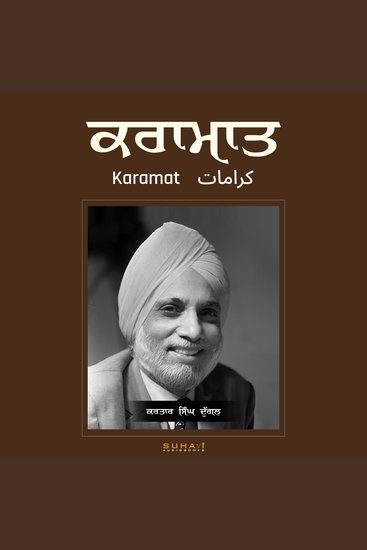
    This is the Punjabi literary work “Karamat” by the renowned writer Kartar Singh Duggal, which includes twenty-five stories, each with its own unique style. The author has beautifully presented the events happening around us. He says that he writes with his thick blood and tears. According to him, if one wishes to understand the mysteries of life, the music of a child’s laughter, or the first glimpse of beauty, one must accept pain, sleeplessness, and hardship. The words of Kartar Singh Duggal in this book are truly remarkable.
    Ver libro
  • Brave Dames and Wimpettes - What Women Are Really Doing on Page and Screen - cover

    Brave Dames and Wimpettes - What...

    Susan Isaacs

    • 0
    • 0
    • 0
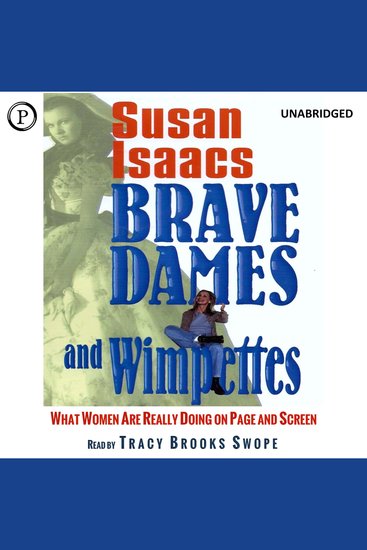
    What makes Buffy the Vampire Slayer a "brave dame" but Ally McBeal a "wimpette"? In this witty, incisive look at the role of women on screen and page, Susan Isaacs argues that assertive, ethical women characters are losing ground to wounded, shallow sisters who are driven by what she calls, "the articles of wimpette philosophy." Although female roles have included lawyers like Ally McBeal, they are wimpettes nonetheless. A brave dame, on the other hand, is a dignified, three-dimensional hero who may care about men, home, and hearth, but also cares—and acts—passionately about something in the world beyond. Brave dames' stories range from mundane (Mary Richards in The Mary Tyler Moore Show) to romantic (Francesca in The Horse Whisperer) to fantastic (Xena: Warrior Princess), but whatever they do, they care about justice and carry themselves with self-respect and decency.
    Ver libro
  • South Africa: The History and Legacy of the Nation from European Colonization to the End of the Apartheid Era - cover

    South Africa: The History and...

    Charles River Editors

    • 0
    • 0
    • 0
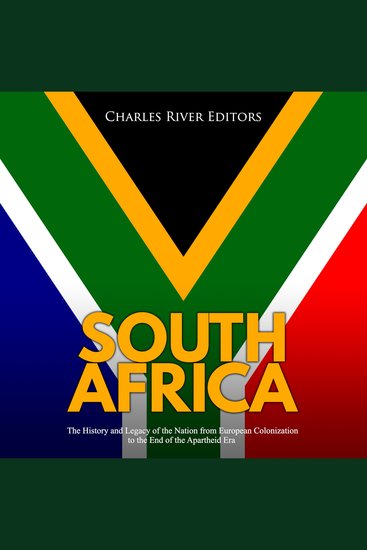
    The Boer War was the defining conflict of South African history and one of the most important conflicts in the history of the British Empire. Naturally, complicated geopolitics underscored it, going back centuries. In fact, the European history of South Africa began with the 1652 arrival of a small Dutch flotilla in Table Bay, at the southern extremity of the African continent, which made landfall with a view to establishing a victualing station to service passing Dutch East India Company (Vereenigde Oost-Indische Compagnie) ships. The Dutch at that point largely dominated the East Indian Trade, and it was their establishment of the settlement of Kaapstad, or Cape Town, that set in motion the lengthy and often turbulent history of South Africa. 
    	The Napoleonic Wars radically altered the old, established European power dynamics, and in 1795, the British, now emerging as the globe’s naval superpower, assumed control of the Cape as part of the spoils of war. In doing so, they recognized the enormous strategic value of the Cape as global shipping routes were developing and expanding. Possession passed back and forth once or twice, but more or less from that point onwards, the British established their presence at the Cape, which they held until the unification of South Africa in 1910. However, it would only come after several rounds of conflicts.  
    	On June 1, 1948, Daniel Malan arrived in Pretoria by train to take office, and there he was met by a huge crowd of cheering whites. He told the audience, “In the past, we felt like strangers in our own country, but today, South Africa belongs to us once more. For the first time since Union, South Africa is our own. May God grant that it always remain our own.” Back in Johannesburg, the leadership of the ANC, including the young attorney Nelson Mandela, listened to these celebratory prognostications in a grim mood. As strangers in their own country, they all understood that the South African liberation struggle would not be won overnight. In fact, the era of apartheid was only just about to formally start.  
    	Although apartheid is typically dated from the late 1940s until its dismantling decades later, segregationist policies had been the norm in South Africa from nearly the moment European explorers sailed to the region and began settling there. Whether it was displacing and fighting indigenous groups like the Khoi and San, or fighting other whites like the Boer, separation between ethnicities was the norm in South Africa for centuries before the election of Malan signaled the true rise of the Afrikaner far right.  
    	The man most associated with dismantling apartheid, of course, is Nelson Mandela. With the official policy of apartheid instituted in 1948 by an all-white government, Mandela was tried for treason between the years of 1956-61 before being acquitted. He participated in the Defiance Campaign of 1952, and oversaw the 1955 Congress of the People, but when the African National Congress was banned in 1960, he proposed a military wing, despite his initial reluctance toward violent resistance, a reluctance which had its roots in original nonviolent protests through the South African Communist Party. The ANC did not openly discourage such an idea, and the Umkhonto we Sizwe was established. Mandela was again arrested in 1962 and tried for attempts to overthrow the government by violence. The sentence was five years of hard labor, but this was increased to a life sentence in 1964, a sentence handed down to seven of his closest colleagues as well. 
    Ver libro
  • The Man Born to be King - Wade Annotated Edition - cover

    The Man Born to be King - Wade...

    Dorothy L. Sayers

    • 0
    • 0
    • 0
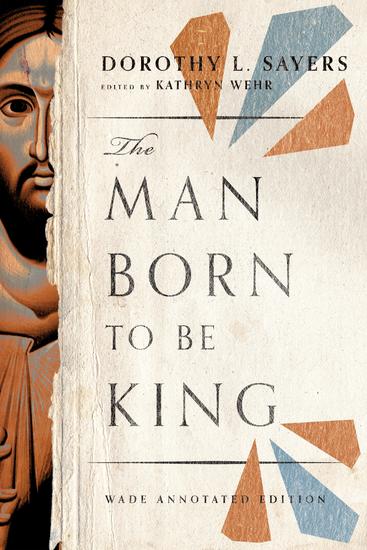
    From December 1941 until October 1942, the BBC broadcast a series of radio dramas written by Dorothy L. Sayers. Against the backdrop of World War II, the plays presented twelve episodes in the life and ministry of Jesus, from the visit of the magi to his death and resurrection, collectively affirming the kingship of Christ.
    Noted for their use of colloquial English as part of Sayers's effort to bring the Gospels to life in a new way for listeners, the plays were both controversial and incredibly successful, bolstering the morale of the country during the war. They were subsequently published in 1943, and they stand among Sayers's most beloved works to this day.
    In this new critical and annotated edition, scholar Kathryn Wehr brings fresh insights to the plays, their background, Sayers's creative process, and the ongoing significance of the life of Christ today. Listen again, or for the first time, to the story of the man who was born to be—and still is—king.
    Ver libro