¡Acompáñanos a viajar por el mundo de los libros!
Añadir este libro a la estantería
Grey
Escribe un nuevo comentario Default profile 50px
Grey
Suscríbete para leer el libro completo o lee las primeras páginas gratis.
All characters reduced
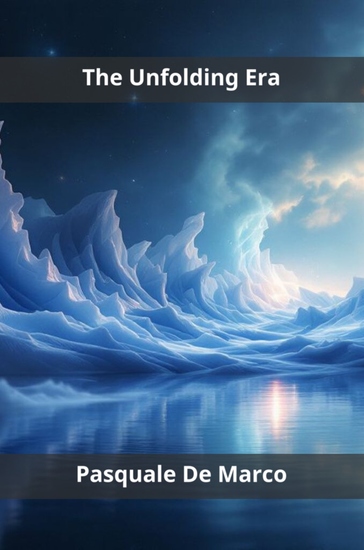
The Unfolding Era - cover

The Unfolding Era

Pasquale De Marco

Editorial: Publishdrive

  • 0
  • 0
  • 0

Sinopsis

Journey through the transformative era that has shaped our world, from the cataclysmic events of the 20th century to the rapidly evolving landscape of the 21st. This captivating book offers a comprehensive exploration of the defining moments, key players, and enduring legacies that have molded the modern world.

With its in-depth analysis and engaging narrative, this book delves into the major economic, political, social, and cultural shifts that have occurred over the past century. From the ashes of world wars and economic crises, new paradigms emerged, challenging our understanding of society, politics, and technology.

You'll traverse the tumultuous decades of the 20th century, witnessing the rise and fall of empires, the clash of ideologies, and the indomitable spirit of those who dared to dream of a better future. You'll explore the intricate web of global economics, tracing the evolution of markets, the rise of multinational corporations, and the challenges posed by globalization.

Through the lens of history, you'll gain a deeper understanding of the forces that have shaped our present and illuminate the path towards a more just, sustainable, and prosperous future. This book is an invitation to embark on an intellectual odyssey, to explore the complexities of our interconnected world, and to grapple with the challenges and opportunities that lie ahead.

As we navigate the uncharted waters of the 21st century, this book serves as a guide, offering insights into the past and inspiration for the future. It is a testament to the resilience of the human spirit, our capacity for innovation, and our unwavering pursuit of progress.


If you like this book, write a review!
Disponible desde: 02/06/2025.
Longitud de impresión: 160 páginas.


Otros libros que te pueden interesar

  • Jewish Language and Literature - The Impact of Yiddish Hebrew and Other Languages - cover

    Jewish Language and Literature -...

    Joseph Arston

    • 0
    • 0
    • 0
    The origins of Jewish language and literature are deeply intertwined with the history of the Jewish people, shaped by centuries of cultural exchange, migration, and adaptation. At the heart of Jewish literary tradition lies the Hebrew language, whose roots stretch back to the ancient world. Hebrew, as the language of the Bible, forms the foundation of Jewish thought, identity, and religious practice. The earliest examples of Hebrew literature can be found in the sacred texts of the Torah, where the stories, laws, and teachings of the Jewish people are recorded. These texts, passed down through generations, have remained central to Jewish life and continue to be a source of literary and theological inspiration. 
    In addition to Hebrew, other languages played an important role in the development of Jewish language and literature. Aramaic, a Semitic language closely related to Hebrew, became widespread during the Babylonian exile and remained influential for centuries. Aramaic is the language of significant portions of the Talmud and other rabbinic writings, shaping Jewish legal and philosophical thought. Over time, Jewish communities across the globe adopted the languages of the regions they inhabited, which further contributed to the diversity of Jewish literary expression. 
    The emergence of Yiddish, a language born in the Jewish communities of Eastern Europe, marked a significant shift in Jewish linguistic and literary culture. Yiddish, a Germanic language enriched with Hebrew, Aramaic, and Slavic elements, became the vernacular of millions of Ashkenazi Jews. It allowed for the creation of a vibrant body of literature, including plays, novels, and poetry, that expressed the daily lives, struggles, and aspirations of Jewish communities. Yiddish literature flourished in the 19th and early 20th centuries, with writers such as Sholem Aleichem, Isaac Bashevis Singer, and I.L. Peretz capturing the complexities of Jewish life through their works.
    Ver libro
  • The Comeback of Industrial Policy - The Next Geopolitical Great Game - cover

    The Comeback of Industrial...

    Alessandro Gili, Davide Tentori

    • 0
    • 0
    • 0
    Industrial policies are the key element underlying today's geopolitical scramble and a pillar of national security.
    Reacting to Western weaknesses and bottlenecks in the global supply chains, highlighted by multiple shocks such as the pandemic, the war in Ukraine, and the recent Israel-Hamas war, the US in first place and the EU later have started to introduce new industrial legislation aimed at making up for lost ground with respect to other industrial
    powerhouses, such as China. Besides being policy tools to accelerate the green and digital transitions, however, the US Inflation Reduction Act and the Net Zero Industry Act, as well as the US and the EU Chips Acts, entail subsidies, local content requirements and export controls targeted at strengthening the domestic industrial base for critical technologies, fostering strategic autonomy and de-risking from excessive foreign dependencies.
    This race poses risks for the weaponisation of industrial policies and fragmentation of international trade and also potentially jeopardises technological development. How can we strike a balance between economic security and efficiency? Which sectors are the most critical and which ones are the leading global powers pursuing? What will the consequences be for global value chains and international trade? Is it possible to reach an agreement on rules for a new level playing field to prevent economic competition turning into economic warfare?
    Ver libro
  • Who Pays for Diversity? - Why Programs Fail at Racial Equity and What to Do about It - cover

    Who Pays for Diversity? - Why...

    Oneya Fennell Okuwobi

    • 0
    • 0
    • 0
    How diversity initiatives harm employees of color by turning them into workplace commodities. 
      
    Diversity programs are under attack. Should those interested in racial justice fight to keep them, or might there be another way forward? Who Pays for Diversity? reveals the costs that employees of color pay under current programs by having their racial identities commodified to benefit white people and institutions. Oneya Fennell Okuwobi proposes fresh and thoughtful ways to reorient these initiatives, move beyond tokenism, and authentically center marginalized employees. 
      
    Drawing on accounts of employees from across the workplace spectrum, from corporations to churches to universities, Who Pays for Diversity? details how the optics of diversity programs undermine employees' competence while diminishing their well-being and workplace productivity. Okuwobi argues that diversity programs have been a costly detour on the path to racial justice, and getting back on track requires solutions that provide equity, dignity, and agency to all employees, instead of defending the status quo.  
      
    "Oneya Fennell Okuwobi brilliantly uncovers the hidden costs of diversity initiatives, challenging the superficiality of such programs and the burdens they place on people of color within so-called 'diverse' environments with a powerful, evidence-backed critique. This book is an essential read for anyone committed to creating genuine racial equity in workplaces and institutions."—Mary Murphy, Herman B. Wells Endowed Professor, Indiana University
    Ver libro
  • History of Wyoming: A Captivating Guide to Historical Events and Facts You Should Know About the Cowboy State - cover

    History of Wyoming: A...

    Captivating History

    • 0
    • 0
    • 0
    If you want to discover the captivating history of Wyoming, its vast landscapes, and its role in shaping the nation, then keep reading... 
    Wyoming, a state often overshadowed by its majestic neighbors, holds secrets and stories that have remained untold for too long. But why, despite its significant role in the fabric of America, has Wyoming’s intricate history been left in the shadows? 
    Unraveling the tales of this state requires a dive into its rich past, from the footsteps of Native Americans to the booming industries of the 21st century. And now, in this comprehensive history audiobook, you will journey through the heart of Wyoming and uncover the stories that have shaped its identity. 
    Dive into this exploration and discover:The untold tales of the first explorers who set foot in Wyoming and what they unearthedThe battles and alliances formed over Wyoming’s rich land and resourcesSurprising insights into the state’s economic shifts and its dance between conservation and developmentWyoming’s commitment to preserving its natural beauty and how this determination clashed and melded with economic pursuitsThe stories of the everyday people who called Wyoming home and how they navigated challenges, from the frontier days to modern timesThe rise and influence of Wyoming’s iconic national parks and why they beckon millions each yearGroundbreaking moments in Wyoming’s history and how they echo into the presentAnd so much more! 
    Venture into the heart of Wyoming and uncover the tales that have woven the fabric of this resilient state. 
    Scroll up and click the “add to cart” button to embark on this fascinating journey through Wyoming’s history!
    Ver libro
  • The Noble Eightfold Path - Way to the End of Suffering - cover

    The Noble Eightfold Path - Way...

    Bhikkhu Bodhi

    • 0
    • 0
    • 0
    The Buddha's teachings center around two basic principles. One is the Four Noble Truths, in which the Buddha diagnoses the problem of suffering and indicates the treatment necessary to remedy this problem. The other is the Noble Eightfold Path, the practical discipline he prescribes to uproot and eliminate the deep underlying causes of suffering.
     
    This book offers a concise and thorough explanation of the Eightfold Path. Bhikkhu Bodhi examines each factor of the path to determine what it implies in the way of practical training. In the concluding chapter, he shows how all factors of the path function in unison to bring about the realization of the goal of liberation.
     
    From the preface by the author:
     
    "The essence of the Buddha's teaching can be summed up in two principles: the Four Noble Truths and the Noble Eightfold Path. The first covers the side of doctrine, and the primary response its elicits is understanding; the second covers the side of discipline, in the broadest sense of that word, and the primary response it calls for is practice."
    Ver libro
  • Our Lady of the World's Fair - Bringing Michelangelo's "Pieta" to Queens in 1964 - cover

    Our Lady of the World's Fair -...

    Ruth D. Nelson

    • 0
    • 0
    • 0
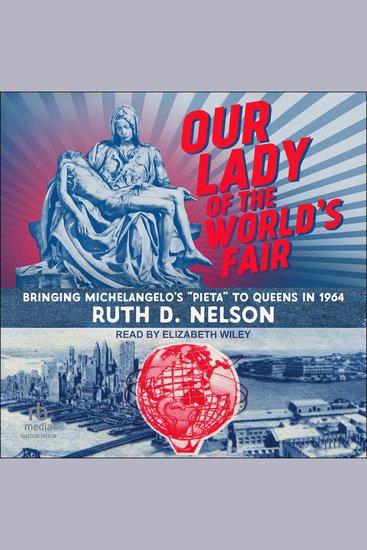
    Driven by different motives, Robert Moses and Francis Cardinal Spellman had the same vision: to display Michelangelo's masterpiece, the Pietà, in the Vatican's pavilion at the 1964 World's Fair in New York City. 


    As Ruth D. Nelson gracefully showcases, Moses believed this blockbuster would guarantee the fair's financial success. At the same time, Spellman, Archbishop of New York and the spiritual leader of Cold War America's Catholic community, hoped that at a time of domestic strife and global conflict, the Pietà's presence would have a positive spiritual impact on the nation. Although the fair did not turn out to be the financial bonanza that Moses expected, the Pietà drew record crowds of the faithful, art lovers, and the curious. 


    Nelson's fascinating uncovering of the intensive planning that went into designing the pavilion, transporting the art piece across the Atlantic, and coordinating Pope Paul VI's visit to New York in 1965—the first papal visit to the Western Hemisphere—demonstrates the sheer scale and opportunity of the two men's endeavors. Our Lady of the World's Fair depicts the skepticism and fierce criticism that faced the two New York power brokers. Rather than letting the negative weigh them down, they united and called on every resource at their disposal to make this unlikely cultural coup possible.
    Ver libro