Junte-se a nós em uma viagem ao mundo dos livros!
Adicionar este livro à prateleira
Grey
Deixe um novo comentário Default profile 50px
Grey
Assine para ler o livro completo ou leia as primeiras páginas de graça!
All characters reduced
The Power Paradigm - cover
LER

The Power Paradigm

Pasquale De Marco

Editora: Publishdrive

  • 0
  • 0
  • 0

Sinopse

In a world driven by power, understanding its dynamics is crucial. This book delves into the intricate nature of power, exploring its diverse forms, the means by which it is acquired and wielded, and the profound impact it has on our lives.

Through a comprehensive examination of history, politics, culture, and technology, this book unravels the complex relationship between power and international relations, domestic politics, and individual lives. It investigates how power shapes our societies, economies, and environments, and how it influences our interactions with each other.

With insightful analysis and engaging narratives, this book provides a deeper understanding of power's role in shaping the world we live in. It explores the ways in which power can be used for good or for ill, and the challenges we face in creating a more just and equitable distribution of power.

Whether you are a student of politics, a business leader, or simply someone who wants to understand the forces that shape our world, this book is an essential guide to the nature of power. It offers a thought-provoking exploration of one of the most fundamental aspects of human existence.

The book is written in an accessible and engaging style, making it suitable for a wide audience. It is a must-read for anyone who wants to understand the complex world we live in and the role that power plays in shaping it.


If you like this book, write a review!
Disponível desde: 02/06/2025.
Comprimento de impressão: 159 páginas.


Outros livros que poderiam interessá-lo

  • Medieval Knights - Historical Details of the Military in the Middle Ages - cover

    Medieval Knights - Historical...

    Kelly Mass

    • 0
    • 0
    • 0
    A knight is a person who has been granted the honorary title of knighthood by a head of state, including a monarch or the Pope, in recognition of their service to the ruler, the church, or the nation, often in a military capacity. The origins of knighthood can be traced back to classical antiquity, where similar figures existed in ancient Greece and Rome, such as the Greek hippeis and hoplite, as well as the Roman eques and centurion. 
    Knighthood first emerged among mounted soldiers in Europe during the Early Middle Ages. At this time, it was typically associated with those who fought in battles on horseback, a hallmark of the knightly class. During the High Middle Ages, the concept of knighthood evolved, and it became increasingly seen as a position held by lesser aristocrats. It was no longer just about military service but also connected with ideals of chivalry, a code of conduct that governed the behavior of Christian warriors, particularly those involved in courtly matters. By the Late Middle Ages, a knight had come to represent the archetypal courtly Christian warrior, combining military prowess with a sense of honor and duty. 
    Knights were often vassals to powerful lords, serving as elite combatants, bodyguards, or even commanders of military forces in exchange for land or other forms of patronage. They had a special relationship with their lords, who relied on their skills, particularly in mounted combat, to protect their interests and defend their territories. This connection between knights and horseback riding is reflected in many words associated with knighthood, such as "chivalry," "cavalier," and other related terms. In this context, the knightly status in Christendom parallels the military class known as the furusiyya in the Islamic world.
    Ver livro
  • Sex and Repression in Savage Society - cover

    Sex and Repression in Savage...

    Bronisław Malinowski

    • 0
    • 0
    • 0
    Bronislaw Malinowski's seminal work, "Sex and Repression in Savage Society," delves into the intricate dynamics of sexuality and societal control within primitive cultures. Published in 1927, this ethnographic study challenges prevailing Victorian notions of sexuality and sheds light on the nuanced ways in which indigenous societies navigate and regulate sexual behaviors. Malinowski's immersive fieldwork in the Trobriand Islands enables him to provide a rich anthropological account, exploring the role of rituals, customs, and taboos in shaping sexual practices. By examining the interplay between individual desires and communal norms, the author contributes to a deeper understanding of the complex relationship between sex and repression in societies that existed outside the purview of Western moral frameworks. Malinowski's groundbreaking insights continue to influence the fields of anthropology and cultural studies, prompting ongoing discussions about the universality of sexual behaviors and the impact of cultural context on human expression.
    Ver livro
  • Nice is Not Enough - Inequality and the Limits of Kindness at American High - cover

    Nice is Not Enough - Inequality...

    C.J. Pascoe

    • 0
    • 0
    • 0
    This provocative story of contemporary high school argues that a shallow culture of kindness can do more lasting harm than good. 


    Based on two years of research, Nice Is Not Enough shares striking dispatches from one high school's "regime of kindness" to underline how the culture operates as a Band-Aid on persistent inequalities. Through incisive storytelling and thoughtful engagement with students, this brilliant study by C. J. Pascoe exposes uncomfortable truths about American politics and our reliance on individual solutions instead of profound systemic change. 


    Nice Is Not Enough brings listeners into American High, a middle- and working-class high school characterized by acceptance, connection, and kindness—a place where, a prominent sign states, "there is no room for hate." Here, inequality is narrowly understood as a problem of individual merit, meanness, effort, or emotion rather than a structural issue requiring deeper intervention. Surface-level sensitivity allows American High to avoid "political" topics related to social inequality based on race, sex, gender, or class. Being nice to each other, Pascoe reveals, does not serve these students or solve the broader issues we face; however, a true politics of care just might.
    Ver livro
  • Murder and Mayhem in Houston - cover

    Murder and Mayhem in Houston

    John Nova Lomax, Mike Vance

    • 0
    • 0
    • 0
    Houston, we have a problem. The largest city in Texas has a wild west past filled with dodgy criminals and murderous madmen. 


    When the Allen brothers sold Houston's first lots, the city became a magnet for enterprising tycoons and opportunistic crooks alike. As the young city grew, a scourge of crime and vice accompanied the success of oil and real estate. The Bayou City's seedy side—flashing Bowie knives, privileged bad boys, hardened prostitutes, and unchecked serial killers—established its hold. From a young Clyde Barrow to the Man Who Killed Halloween, Houston's past is filled with bloody tales, heartbreaking loss, and despicable deeds. Authors Mike Vance and John Nova Lomax shine a light on these dark days.
    Ver livro
  • Peak of the Devil: 100 Questions About Peak Oil Answered - cover

    Peak of the Devil: 100 Questions...

    Chip Haynes

    • 0
    • 0
    • 0
    What’s that peak oil thing you keep jabbering on about? 
    “Peak oil” is the phrase used to describe the point where the world’s oil supply, well, peaks. A fairly easy concept there. It’s the best we can do, and the best we will ever do, when it comes to pumping conventional crude oil out of the ground. After peak oil, it’s all downhill, production-wise. 
    Too many people think that peak oil means that the oil is going to run out, and that’s not quite right. The oil will not run out. Not ever. It will, over time, get increasingly rare and probably expensive (before it’s worthless), but there will always be at least a little bit of oil for us to use. Well, for someone to use. Probably not you and me, unless I sell a whole shipload of books. No pressure.
    Ver livro
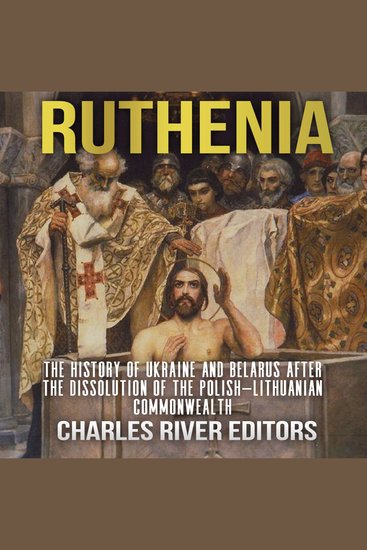
  • Ruthenia: The History of Ukraine and Belarus after the Dissolution of the Polish–Lithuanian Commonwealth - cover

    Ruthenia: The History of Ukraine...

    Editors Charles River

    • 0
    • 0
    • 0
    The history of Ukraine is a fascinating story of how cultures, political systems, religions, and power have met, intersected, morphed, and expanded. The region was relatively sparsely populated for much of ancient history, a wilderness of rivers, forests, and steppes, but that does not detract from the rich historical development of the region. A huge area, Ukraine is wedged between the continents of Asia and Europe, and its position as a crossroads ensured there was fierce competition for influence there. Historians have called the formation of Ukraine the “establishment of a unity among three zones…the ports of Crimea and the coast, the rich steppe heartland, and the forests,” based around the themes of “geography, ecology and culture.”  
    	Today’s Ukraine is a huge country, incorporating an area over 600,000 square kilometers and home to 42 million people. It stretches from the Crimean Peninsula on the Black Sea in the south to Belarus in the north, Russia to the east, and Poland, Slovakia, and Hungary to the west. The Dnieper River is the region’s key waterway, running into the Black Sea, while the Danube Delta also forms its border with modern-day Romania to the southwest. A steppe exists in the middle of the country while the Carpathian Mountains feature in the west. This geographical formation has influenced some of the country’s key historical developments, as well as the location of its major settlements. Kiev (known today as Kyiv) is, of course, the longstanding capital of the country, located on the Dnieper River in the central northern part of modern Ukraine. Lviv is another large city, located in the northwest near the border with Poland. Odessa is a seaside city on the Black Sea in Ukraine’s southwest, while Kharkiv, Luhansk, and Donetsk are major cities in the country’s east, close to the Russian border.
    Ver livro