¡Acompáñanos a viajar por el mundo de los libros!
Añadir este libro a la estantería
Grey
Escribe un nuevo comentario Default profile 50px
Grey
Suscríbete para leer el libro completo o lee las primeras páginas gratis.
All characters reduced
The Language Barrier - cover

The Language Barrier

Pasquale De Marco

Editorial: Publishdrive

  • 0
  • 0
  • 0

Sinopsis

Language is one of the most important and fascinating aspects of human existence. It is the medium through which we communicate, learn, and express ourselves. It shapes our thoughts, our culture, and our interactions with the world around us.

In this thought-provoking book, we take a deep dive into the world of language, exploring its nature, its acquisition, its use, and its challenges. We also consider the future of language in a rapidly changing world.

One of the most important questions about language is what it is. What are the essential features that distinguish language from other forms of communication? Linguists have proposed various definitions of language, but there is no single definition that is universally accepted. However, most definitions agree that language is a system of symbols that is used to convey meaning.

Another key question about language is how it is acquired. How do children learn to speak and understand their native language? This is a complex process that begins in infancy and continues throughout childhood. Children learn language by interacting with the people around them. They hear words and phrases spoken, and they gradually begin to understand their meaning. They also learn to produce words and phrases themselves.

Once children have acquired language, they use it in a variety of ways. They use language to communicate with others, to learn new things, and to express themselves creatively. Language is also a powerful tool that can be used to influence others and to achieve our goals.

However, language can also pose challenges. People can use language to deceive, to manipulate, and to harm others. Language can also be a source of conflict and misunderstanding.

In this book, we explore all of these aspects of language. We examine the nature of language, how it is acquired and used, the challenges that language can pose, and the future of language in a rapidly changing world.

This book is essential reading for anyone who is interested in language, communication, or the human condition. It is a comprehensive and thought-provoking exploration of one of the most important aspects of our lives.


If you like this book, write a review!
Disponible desde: 02/06/2025.
Longitud de impresión: 162 páginas.

Otros libros que te pueden interesar

  • A History of Greece to the Death of Alexander the Great Vol I - cover

    A History of Greece to the Death...

    John Bagnell Bury

    • 0
    • 0
    • 0
    J.B. Bury wrote his “History of Greece” before World War I, but it was such a good overview of classical Greek history that the third edition was still being used as a college textbook in the late 1960's. In the newer editions, a co-author rewrote the material dealing with the early centuries where there have been new archeological developments, but the later chapters and Bury’s framework were retained essentially unchanged. Bury writes in a lucid, easily understood style that entertains as it educates. The book covers artistic and literary development, as well as politics and war, and its field of view includes western Asia Minor, the Agean archipelago, and “Greater Greece” (Sicily and Southern Italy). (Summary by Karen Merline)  
    LibriVox Recording of A History of Greece to the Death of Alexander the Great Vol II
    Ver libro
  • On the Shortness of Life - cover

    On the Shortness of Life

    Seneca

    • 0
    • 0
    • 0
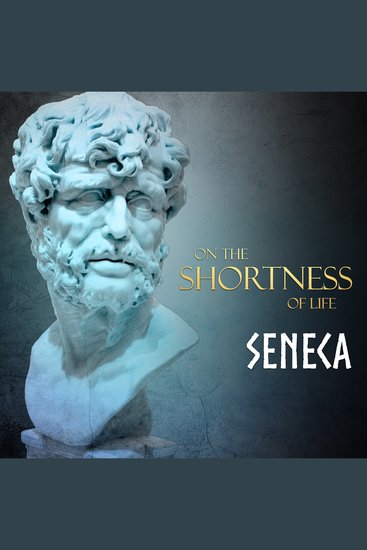
    Embark on a transformative journey through the profound wisdom of Seneca's timeless masterpiece, "On the Shortness of Life." In this audiobook, the esteemed Stoic philosopher offers an unparalleled exploration of the brevity of our existence, inviting listeners to reassess their relationship with time, purpose, and fulfillment. 
    With unparalleled eloquence and insight, Seneca delves into the fleeting nature of life, challenging conventional notions of success and urging us to embrace each moment with mindfulness and intentionality. Drawing from his own experiences and those of others, he shares powerful anecdotes and thought-provoking reflections that resonate across centuries, illuminating the path towards a life of genuine fulfillment and meaning. 
    Whether you're seeking personal growth, philosophical enlightenment, or simply a deeper understanding of the human condition, "On the Shortness of Life" offers a profound and enlightening listening experience. Through Seneca's timeless wisdom, you'll discover invaluable lessons on resilience, gratitude, and the art of living well. 
    Narrated with clarity and passion, this audiobook is more than an intellectual exploration—it's a transformative journey that will inspire you to live each day with purpose and wisdom. Don't miss the opportunity to enrich your life and uncover the true essence of existence with "On the Shortness of Life" by Seneca.
    Ver libro
  • The Uses of Delusion - Why It's Not Always Rational to Be Rational - cover

    The Uses of Delusion - Why It's...

    Stuart Vyse

    • 0
    • 0
    • 0
    Although reason and rationality are our friends in almost all contexts, in some cases people are better off putting reason aside. In a number of very important situations, we benefit by not seeing the world as it is, and by not behaving like logic-driven machines. 


    The Uses of Delusion is about aspects of human nature that are not altogether rational but, nonetheless, help us achieve our social and personal goals. Psychologist Stuart Vyse presents a lively, accessible exploration of the psychological concepts behind "useful delusions," fleshing out how delusional thinking may play a role in love and relationships, illness and loss, and personality and behavior. Along the way Vyse draws on the work of William James, Daniel Kahneman, and Joan Didion—who wrote about her compelling belief that her husband, though deceased, would soon return to her. 


    Throughout, Vyse strives to answer the question: why would some of our most illogical beliefs be as helpful as they are? The concluding chapter offers an explanation grounded in natural selection—the ability to fool ourselves, Vyse argues, has actually helped us to survive. In the last section of The Uses of Delusion, Vyse offers suggestions for determining when reason should rule and when intuition and emotion should be allowed to take over.
    Ver libro
  • Elizabeth Van Lew: The Life of the Richmond Woman Who Ran a Union Spy Ring in the Confederate Capital - cover

    Elizabeth Van Lew: The Life of...

    Charles River Editors

    • 0
    • 0
    • 0
    Though espionage is a hallmark of every major war, spies are often depicted in countless works of fiction as discovering secrets on which the fate of nations hang in the balance. Reality is generally rather more mundane, as spies often gather low-level intelligence that only makes sense when it is examined by analysts and compared to information from other sources. Espionage provides clues to what the enemy is planning, but on its own, it rarely changes the course of a war. Moreover, real spies are generally anonymous, not the bold, swashbuckling action heroes depicted in fiction. Spies must hide in plain sight, and that is best achieved by being as innocuous as possible.  
    The most effective Union spy of the war was a Richmond spinster named Elizabeth Van Lew, who ran one of the most successful espionage networks from a mansion on Church Hill in the heart of the Confederate capital. She communicated directly with Ulysses Grant, and she smuggled intelligence out of Libby Prison using methods so varied and inventive that the Confederate authorities who suspected her never fully figured out how she was accomplishing it. She recruited a woman she had freed from enslavement to serve as a domestic servant in Jefferson Davis' own household, placing an observer at the nerve center of Confederate executive decision-making. She maintained these operations for four years under constant suspicion, in a city that had come to despise her, without ever being successfully indicted for the treason that every Confederate official in Richmond assumed she was committing. 
    Van Lew’s story does not fit neatly into the categories that popular histories of Civil War espionage tend to favor. She simply started the war as a middle-aged woman who had inherited considerable wealth and unshakable convictions when it came to the necessity of abolishing slavery, and before the war had even started, she had made the conscious decision to do everything within her power to defeat the Confederacy.
    Ver libro
  • Quakers and the Amish The: The History and Legacy of the Two Unique Religious Communities - cover

    Quakers and the Amish The: The...

    Editors Charles River

    • 0
    • 0
    • 0
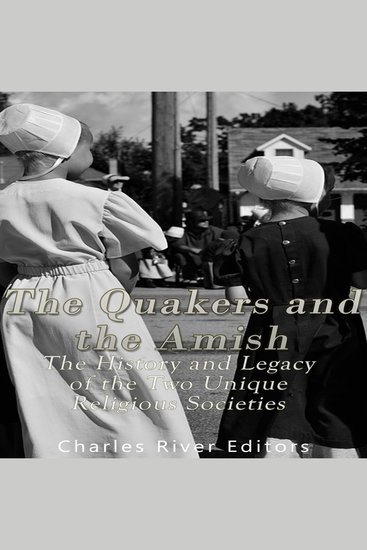
    Few today know much about the Quakers. Whenever the subject of Quakerism slips into conversation, most picture a rosy-cheeked fellow in a simple black overcoat, and a wide brim hat atop his thick, cloud-white hair, inspired by the famous logo of the Quaker Oats company. In spite of the stereotype, Quakers today come in all colors, shapes, and sizes, with the more liberal folk sporting trendy haircuts, tattoos, and various piercings. They call themselves “Friends,” a starkly different but very devout following of God. They strive for a world empowered by peace and acceptance, an ambitious mission fueled by diversity, blind to race, gender, or creed. 
    Buggies, straw hats, long and plain dresses in shades of blue and black, charming log cabins reminiscent of the Little House on the Prairie – this is often the mental image that comes to mind when one thinks of the Amish. Nowadays, many have become accustomed to being within a 10 foot radius of at least 3 pieces of technology every hour of the day. World news and current events has never been more readily available, accessible by just a touch of a fingertip. Yet there exists a collection of cultures worldwide that steer clear of contemporary society for a range of reasons. 
    Americans have heard of the Amish, but most know little about them. They are often seen as unconventional and strictly religious, but quiet, calm folk who keep to themselves. Those who have heard of them know of their rejection of electricity and most, if not all modern aspects of life. Those who have taken a gander at the dozens of “reality shows” that have sprung up over recent years may have even heard of the ever-so-famous – but often inaccurately depicted – Rumspringa. But beyond the buggies and prayer bonnets lies an intriguing culture that has remained strictly loyal to its roots.
    Ver libro
  • Unchained Minds - Frederick Douglass And The Fight For African American Education - cover

    Unchained Minds - Frederick...

    Davis Truman

    • 0
    • 0
    • 0
    This audiobook is narrated by an AI Voice.  
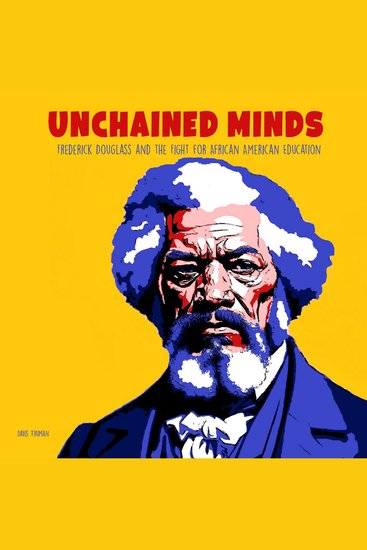
    *Unchained Minds: Frederick Douglass and the Fight for African American Education* delves into the extraordinary life of Frederick Douglass, a man who defied the shackles of slavery through the transformative power of literacy. Born into bondage, Douglass dared to learn what was forbidden: the ability to read and write. This audacious act set him on a path to freedom and made him one of his time's most influential African American voices. 
    This book examines Douglass's relentless pursuit of education as a means of liberation, not just for himself, but for all African Americans. It examines how Douglass's passion for learning fueled his activism and unyielding belief that education was the key to overcoming the horrors of slavery and achieving true equality. 
    *Unchained Minds* is a biography and a powerful testament to the enduring belief that education is the cornerstone of freedom. This compelling account of Frederick Douglass's life and his fight for educational equality will inspire readers to reflect on the transformative power of knowledge and the ongoing fight for justice.
    Ver libro