¡Acompáñanos a viajar por el mundo de los libros!
Añadir este libro a la estantería
Grey
Escribe un nuevo comentario Default profile 50px
Grey
Suscríbete para leer el libro completo o lee las primeras páginas gratis.
All characters reduced
The Financial Warfare - cover

The Financial Warfare

Pasquale De Marco

Editorial: Publishdrive

  • 0
  • 0
  • 0

Sinopsis

In the annals of American history, few conflicts have been as dramatic and consequential as the Bank War. This epic struggle between President Andrew Jackson and the Second Bank of the United States raged for years, leaving an indelible mark on the nation's politics, economy, and society.

At the heart of the conflict was Jackson's deep-seated distrust of the Bank. He viewed it as a symbol of elitism and corruption, an institution that wielded undue influence over the lives of ordinary Americans. The Bank, on the other hand, was a powerful institution with a strong base of support among wealthy merchants, bankers, and industrialists. Its defenders argued that it was essential for maintaining a stable financial system and promoting economic growth.

The clash between Jackson and the Bank came to a head in 1832, when the Bank's charter came up for renewal. Jackson vetoed the renewal bill, setting the stage for a showdown with the Bank's supporters in Congress. The Bank's president, Nicholas Biddle, launched a massive campaign to pressure Jackson into changing his mind. He contracted the Bank's loans, causing a financial panic. He also mobilized the Bank's allies in Congress to pass a resolution censuring Jackson.

Jackson responded with defiance. He ordered the removal of federal deposits from the Bank and placed them in state banks. He also used his veto power to block legislation that would have helped the Bank. The Bank War raged on for several more years, eventually leading to the Bank's demise in 1836.

The Bank War was a watershed moment in American history. It marked the end of the era of central banking in the United States and ushered in a period of decentralized banking that would last for decades. It also left a deep scar on American politics, dividing the country along regional and class lines. The legacy of the Bank War continues to be debated today, with some historians arguing that it was a necessary step in the development of American democracy, while others believe that it was a reckless and destructive conflict that had lasting negative consequences for the American economy.

This book tells the story of the Bank War in vivid detail, drawing on a wealth of primary sources to bring this tumultuous period in American history to life. It is a story of power, greed, and political intrigue, a story that offers valuable lessons for understanding the American political system and the challenges it faces today.


If you like this book, write a review!
Disponible desde: 02/06/2025.
Longitud de impresión: 163 páginas.


Otros libros que te pueden interesar

  • Shanghai Gone - Domicide and Defiance in a Chinese Megacity - cover

    Shanghai Gone - Domicide and...

    Qin Shao

    • 0
    • 0
    • 0
    “One of the best accounts of the reality of gentrification and urban development in China . . . grounded with solid historical, ethnographic and legal evidence” (Urban Studies). In recent decades, the centuries-old city of Shanghai has been demolished and rebuilt into a gleaming megacity. With its world famous skyscrapers, it now ranks with New York and London as a hub of global finance. But that transformation has come at a grave human cost. In Shanghai Gone, Qin Shao applies the concept of domicide—the eradication of a home against the will of its dwellers—to the sweeping destruction of neighborhoods, families, and life patterns that made way for the new Shanghai.   Shao gives voice to the holdouts and protesters who resisted domicide and demanded justice. She follows, among others, a reticent kindergarten teacher turned diehard petitioner; a descendant of gangsters and squatters who has become an amateur lawyer for evictees; and a Chinese Muslim who has struggled to recover his ancestral home in Xintiandi, an infamous site of gentrification dominated by a well-connected Hong Kong real estate tycoon.   Highlighting the wrenching changes spawned by China’s reform era, Shao vividly portrays the corrupt and rapacious pursuit of growth and profit, the personal wreckage it has left behind, and the enduring human spirit it has unleashed.
    Ver libro
  • Actor's Guide To Mastering the Indian Accent An - Learn The Hallmarks of Indian Pronunciation for the Stage or Screen - cover

    Actor's Guide To Mastering the...

    Oscar Stanley

    • 0
    • 0
    • 0
    Unlock the power of the Indian accent and bring your characters to life with authenticity and confidence. Whether you're preparing for a specific role or expanding your range as an actor, mastering this accent can set you apart in auditions and on screen. This audio-based training guides you through every step, helping you sound natural, nuanced, and believable — without falling into stereotypes. 
    The course breaks down the unique sound patterns of Indian-accented English, teaching you how to shape vowels, soften consonants, and replicate the musical rhythm that defines the accent. You'll learn how regional languages influence speech, giving your delivery a natural flow that goes beyond surface imitation. With a focus on ear training and vocal drills, you'll fine-tune every sound while developing an instinct for the accent's melody and pacing. 
    This training is designed to help actors create rich, layered performances. You'll understand not only how the accent sounds, but why it sounds that way — from the influence of Indian language structure to the subtle shifts in emphasis and intonation. By connecting the accent to character and context, you'll avoid clichés and build performances that feel grounded and authentic. 
    Every lesson is crafted with actors in mind, combining technical precision with practical exercises. Dialogue practice helps you integrate the accent into performance, preparing you for auditions, rehearsals, and on-camera work. The flexible audio format fits easily into your daily routine, letting you learn at your own pace. 
    With the right training, an accent becomes a powerful tool for storytelling. Mastering the Indian accent will give you the confidence to step into any role and deliver performances that are both compelling and true to life.
    Ver libro
  • Teachers and translators - Enhancing their Reading and Writing Skills - cover

    Teachers and translators -...

    Graciela Bulleraich

    • 0
    • 2
    • 0
    Teachers and Translators: Enhancing their Reading and Writing Skills recommends that language teachers incorporate the reading and writing connection together with the influence of L1 culture as essential elements to achieve textual competence in the target language. The use of challenging magazine and newspaper articles with post-intermediate and advanced language learners has always been a priority in ESP (English for Specific Purposes). The purpose is to activate students' background knowledge, consolidate their critical thinking skills, raise their awareness in relation to varieties of English, figures of speech and coinages and, at the same time, encourage classroom research in such fields as journalese, legal and business English. Expository essay-writing is also incorporated in the course, following such patterns as the Comparison and Contrast essay and the Classification form
    Ver libro
  • A Rare Recording of John E Brown - cover

    A Rare Recording of John E Brown

    John E. Brown

    • 0
    • 0
    • 0
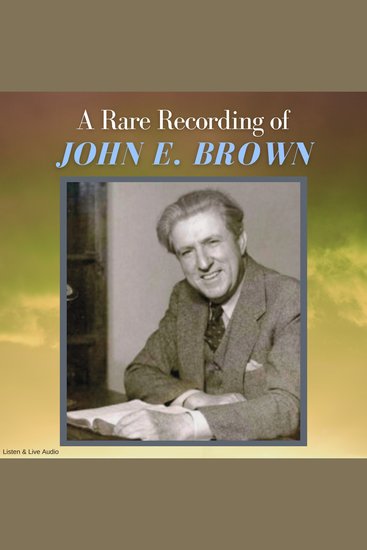
    John E. Brown (April 2, 1879 – February 12, 1957) was a prominent Methodist evangelist, publisher, radio pioneer, and educator in the first half of the twentieth century. In 1919, he established John Brown University, one of Arkansas’ leading private universities to provide an interdenominational, Christian education for needy students. He was also the leading figure in securing passage of a law prohibiting the sale of alcohol in Benton County, a ban that continued into the twenty-first century.
    Ver libro
  • Psychology of Color - cover

    Psychology of Color

    Introbooks Team

    • 0
    • 0
    • 0
    The emergence of color psychology as a subject is considered to be one of the newest branches in psychology. Color Psychology is defined as the science or the study of the effects that colors tend to have over the moods, behaviors or feelings of the people. Color psychology is used in various fields because of the effects that colors tend to have over different determinants of human behavior. Color Psychology is considered to be a part of modern psychology. 
    Colors help in determining the various unclear perceptions. There is no direct relation between the perception and color however they greatly complement each other. Colors help in improvising the effectiveness of the placebos. Color Psychology is widely used in the field of marketing and branding. The big companies and business consider color as an important part of their marketing strategy due to the fact that the colors of their products, goods, and services highly affect the perceptions and emotions of their customers which as a result determines the purchase rates of the products, goods or services. Colors have been used for treating the illnesses of the people which is known as Chromotherapy. Colors also affect the performing ability of an individual. A relation exists between the color and the time.  
    Hence, it can be said that the color psychology is used in diverse fields and constitutes an important part of our lives.
    Ver libro
  • Essays: First Series Friendship - cover

    Essays: First Series Friendship

    Ralph Waldo Emerson

    • 0
    • 0
    • 0
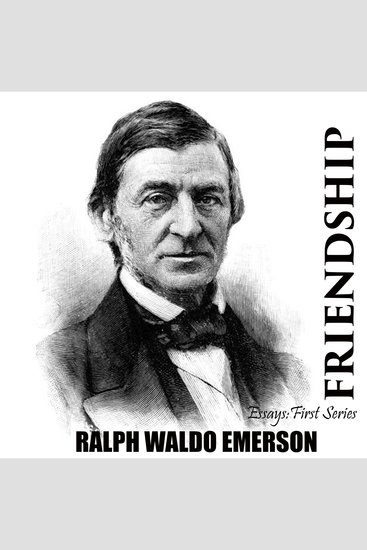
    A true friend is a paradox—both a mirror and a mystery, a presence that steadies yet unsettles. Emerson's Friendship is not a sentimental tribute but an exploration, as sharp as it is reverent. He does not merely celebrate companionship; he dissects it, questioning the forces that draw souls together and the invisible tensions that hold them apart.
    Friendship, in Emerson's vision, is not mere comfort—it is a force, a demand, a test. It requires space as much as closeness, silence as much as words. It thrives not in constant nearness but in the charged air of mutual respect, in the quiet certainty that the bond endures, even when distance stretches between.
    His words do not ask for easy agreement; they provoke. He suggests that the highest friendships are not found but forged, not effortless but exacting. The reader who enters Friendship expecting warmth may find, instead, a bracing clarity—a recognition that true companionship is both a gift and a discipline, an art as much as an affection. Emerson does not offer a guide to making friends; he offers something rarer: an insight into why, despite all risks, we seek them still.
    Ver libro