¡Acompáñanos a viajar por el mundo de los libros!
Añadir este libro a la estantería
Grey
Escribe un nuevo comentario Default profile 50px
Grey
Suscríbete para leer el libro completo o lee las primeras páginas gratis.
All characters reduced
The Era of Autobiographical Politics - cover

The Era of Autobiographical Politics

Pasquale De Marco

Editorial: Publishdrive

  • 0
  • 0
  • 0

Sinopsis

In an era defined by identity politics and the blurring of the personal and the political, this groundbreaking book explores the transformative power of autobiographical writing. Through a series of insightful case studies, the book examines how autobiographical narratives can illuminate the complexities of identity formation, challenge dominant narratives, and create space for new voices to be heard.

Drawing inspiration from feminist cultural studies, the book delves into the ways in which autobiographical writing can be used as a tool for resistance and transformation, particularly in the context of academia. It examines the power dynamics of institutional power structures and the struggles for diversity and inclusion, offering fresh perspectives on the role of identity politics in shaping cultural criticism and the lived experiences of academics.

The book also reflects on the ethics of self-representation, the relationship between truth and fiction in autobiographical writing, and the challenges of writing about oneself in a world where identities are constantly evolving. It explores the possibilities of autobiographical writing in the digital age, the emergence of new autobiographical forms, and the role of autobiographical writing in social justice movements.

With its thought-provoking analysis and compelling case studies, this book offers a timely and essential examination of the personal and the political in the 21st century. It is a must-read for scholars and students in the fields of cultural studies, gender studies, sociology, and autobiography, as well as for a broader audience interested in the intersection of personal experience and social change.

This book is divided into ten chapters, each exploring a different aspect of the relationship between autobiographical writing and identity politics. The chapters cover topics such as the evolving landscape of identity politics, the role of autobiographical writing in shaping identity, the politics of the academy, the personal is political, autobiographical occasions, writing the self, the future of identity politics, reimagining autobiographical writing, and towards a more inclusive academy.


If you like this book, write a review!
Disponible desde: 02/06/2025.
Longitud de impresión: 167 páginas.

Otros libros que te pueden interesar

  • The Slippery Slope Fallacy - Arguing That One Action Will Lead to Extreme Consequences - cover

    The Slippery Slope Fallacy -...

    William Rands

    • 0
    • 0
    • 0
    Fallacies are errors in reasoning that undermine the logical validity of an argument. They often appear persuasive on the surface, yet, when examined closely, they reveal flaws that can mislead individuals or entire groups. In an increasingly complex world, recognizing these logical fallacies is crucial for navigating discussions, making informed decisions, and engaging in rational debate. The ability to identify fallacious reasoning helps individuals critically evaluate arguments and avoid being swayed by flawed logic. 
    Among the various types of fallacies, the Slippery Slope fallacy is one of the most prevalent. It involves the assumption that a particular action will inevitably lead to extreme and undesirable consequences, often without sufficient evidence to support such a claim. This form of argument relies heavily on fear and exaggeration, suggesting that even a small step in a certain direction will set off a chain of events leading to catastrophic results. The Slippery Slope fallacy is commonly used in political, legal, and social debates, where the consequences of a decision or policy are often portrayed as extreme and far-reaching. 
    The importance of understanding fallacies like the Slippery Slope lies in their widespread use in everyday life. From political campaigns to media coverage and even casual conversations, individuals are often presented with arguments that rely on fallacious reasoning. These arguments, though compelling, can lead to faulty conclusions, influencing public opinion and decision-making in harmful ways. By recognizing the Slippery Slope fallacy, we can avoid being manipulated by fear-based rhetoric and instead focus on making decisions grounded in evidence and logical reasoning.
    Ver libro
  • A Rare Recording of President Franklin D Roosevelt's Fourth Inaugural Address - cover

    A Rare Recording of President...

    President Franklin D. Roosevelt

    • 0
    • 0
    • 0
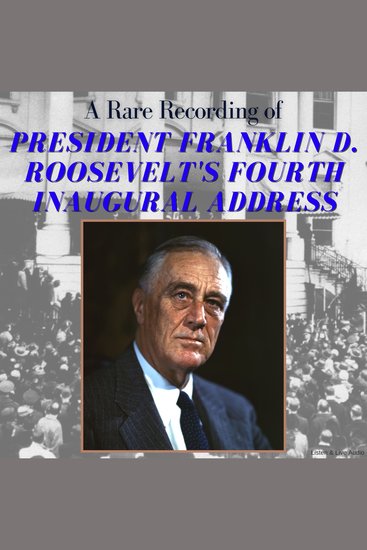
    Franklin Delano Roosevelt (January 30, 1882 - April 12, 1945), also known as FDR, was the 32nd president of the United States, serving from 1933 until his death in 1945. The longest-serving U.S. president, he is the only president to have served more than two terms. His initial two terms were centered on combating the Great Depression, while his third and fourth saw him shift his focus to America's involvement in World War II. The following recording is from his fourth inaugural address delivered on January 20, 1945.
    Ver libro
  • The Perfect Sword - Forging the Dark Ages - cover

    The Perfect Sword - Forging the...

    Edoardo Albert, Paul Gething

    • 0
    • 0
    • 0
    The story of the Bamburgh Sword – one of the finest swords ever forged.
    In 2000, archaeologist Paul Gething rediscovered a sword. An unprepossessing length of rusty metal, it had been left in a suitcase for thirty years. But Paul had a suspicion that the sword had more to tell than appeared, so he sent it for specialist tests. When the results came back, he realised that what he had in his possession was possibly the finest, and certainly the most complex, sword ever made, which had been forged in seventh-century Northumberland by an anonymous swordsmith.
    This is the story of the Bamburgh Sword – of how and why it was made, who made it and what it meant to the warriors and kings who wielded it over three centuries. It is also the remarkable story of the archaeologists and swordsmiths who found, studied and attempted to recreate the weapon using only the materials and technologies available to the original smith. 
    Ver libro
  • Receive Inspiration guidance & support SELF HEALING TOOLS Coaching session & meditations - infinite consciousness ultimate self love rediscover your true self strength hope a balance life - cover

    Receive Inspiration guidance &...

    LoveAndBloom

    • 0
    • 0
    • 0
    No matter how old you are, how your life is happy or chaotic, there are spirit guides always there for you. Your spirit guides are your energetic teams that include angels. They have a higher perspective to give you guidance in your life. All of us can communicate with our spirit guides. It is easier if we do it through meditation and communicate telepathically.  
    Besides connecting to a spirit guide, you can also receive guidance from your own intuition. Your intuition is your compass. You have a gut feeling to do something and go in a certain direction. The only thing we need to build up is a relationship with our intuition. We need to trust ourselves.  
    In this course, we will Opening our intuition Build trust within ourselvesConnect to angels Receive guidance from spirit guides Open our portal to be creative Get insights from within And much more 
    Ver libro
  • The Kurds - History of a Forgotten Ethnic Minority - cover

    The Kurds - History of a...

    Kelly Mass

    • 0
    • 0
    • 0
    The Kurds are a distinct ethnic group native to the Middle East, primarily inhabiting the region known as Kurdistan, which stretches across parts of modern-day Turkey, Syria, Iraq, and Iran. They are an Iranian ethnic group with a history that spans thousands of years. The geographical area traditionally inhabited by the Kurds is marked by hilly terrain, particularly south of Lake Van and Lake Urmia. The majority of Kurds speak dialects of the Kurdish language, with Northern Kurdish (Kurmanji) and Sorani being the most widely spoken. 
    The origins of the Kurdish people are the subject of various speculations, one of the most prominent being that they are descendants of the ancient Carduchoi, a people mentioned in classical antiquity. Over the centuries, the Kurds have maintained a distinct cultural and linguistic identity, despite the multiple empires that have ruled over their lands. Notably, the Kurdish dynasties that governed parts of the region from the 10th to the 12th century—such as the Hasanwayhids, Marwanids, Rawadids, and Shaddadids—serve as the earliest recorded examples of Kurdish political power under Islamic rule. Following these dynasties, the Ayyubid dynasty, founded by the legendary Saladin, further entrenched Kurdish influence in the region, especially in the wider Islamic world.
    Ver libro
  • 48 Laws of Revolutionary Success The: How to Seize Power and Influence the Masses - cover

    48 Laws of Revolutionary Success...

    A.A. Castor

    • 0
    • 0
    • 0
    Power is never given. It is taken. And those who do not understand its rules will always be ruled by those who do. 
    From the tactics of history's greatest revolutionaries to the psychological manipulation techniques of modern leaders, The 48 Laws of Revolutionary Success is the ultimate guide to mass influence, political strategy, and long-term leadership. 
    A.A. Castor reveals the hidden strategies behind every major revolution, corporate takeover, and ideological movement, showing how leaders rise, enemies are eliminated, and power is sustained. This book is not about morality—it is about understanding the game of power and ensuring that you win. 
    Inside This Book, You Will Learn How To: 
    ✔ Seize control of narratives before your opponents do. 
    ✔ Turn public outrage into political capital and weaponize protests. 
    ✔ Use fear and hope in equal measure to ensure loyalty. 
    ✔ Rewrite history to fit your movement's goals. 
    ✔ Control media, technology, and language to shape public perception. 
    ✔ Eliminate rivals and internal threats quietly and effectively. 
    ✔ Make people believe they are free while keeping them under control. 
    ✔ Ensure your revolution never ends—by always keeping an enemy alive. 
    🚨 WARNING: This book is not for the weak. It is a blueprint for those who wish to lead and those who refuse to be ruled.
    Ver libro