¡Acompáñanos a viajar por el mundo de los libros!
Añadir este libro a la estantería
Grey
Escribe un nuevo comentario Default profile 50px
Grey
Suscríbete para leer el libro completo o lee las primeras páginas gratis.
All characters reduced
The Emperor's Folly - cover

The Emperor's Folly

Pasquale De Marco

Editorial: Publishdrive

  • 0
  • 0
  • 0

Sinopsis

In the aftermath of Napoleon Bonaparte's crushing defeat at the Battle of Waterloo, a British army officer named William Siborne embarked on an ambitious project: to create a vast and intricate model depicting the entirety of the battlefield. This extraordinary model, meticulously crafted with 75,000 tin-lead soldiers and spanning over 400 square feet, was intended to serve as a lasting tribute to the fallen soldiers and a valuable tool for studying military strategy and tactics.

However, Siborne's ambitious endeavor soon became embroiled in controversy when the Duke of Wellington, the victorious Allied commander at Waterloo, vehemently criticized the model's accuracy. The ensuing public debate between Siborne and Wellington captivated the nation and threatened to overshadow the legacy of the Battle of Waterloo itself.

This book delves into the fascinating story behind the creation of Siborne's model and the bitter feud that erupted between him and the Duke of Wellington. Through extensive research and captivating storytelling, we uncover the motivations, ambitions, and personalities that fueled this extraordinary conflict. We explore the historical context of the Napoleonic Wars, the significance of the Battle of Waterloo, and the enduring legacy of Siborne's model.

Join us on a journey through time as we unravel the secrets of this extraordinary model and the dramatic events that unfolded around it. Discover the remarkable tale of Siborne, a man driven by an unwavering passion for accuracy and a desire to honor the fallen heroes of Waterloo. Witness the clash of egos between two towering figures of history, as Wellington's formidable reputation and Siborne's unwavering determination collide.

This book is not merely a historical account; it is a testament to the power of human ambition, the complexities of human relationships, and the enduring impact of conflict on the human spirit. Through the lens of Siborne's model, we gain a deeper understanding of the Battle of Waterloo and its profound significance in shaping the world we live in today.


If you like this book, write a review!
Disponible desde: 02/06/2025.
Longitud de impresión: 161 páginas.


Otros libros que te pueden interesar

  • The DBT Workbook for Emotional Relief - Fast-Acting Dialectical Behavior Therapy Skills to Balance Out-of-Control Emotions and Find Calm Right Now - cover

    The DBT Workbook for Emotional...

    MSW Sheri Van Dijk

    • 0
    • 0
    • 0
    Do you have difficulty managing your emotions? If you're like most people, the answer is most likely an emphatic, "Yes!" Dealing with emotions is challenging, and it's easy to misunderstand those feelings—especially in the heat of the moment when it feels like they're ganging up on you from all directions. Getting hijacked by your emotions can leave you feeling helpless—with nowhere to go and nothing or no one to help you. If only you had tools at the ready to extinguish the turmoil before it starts raging. 


    In this breakthrough workbook, renowned dialectical behavior therapy (DBT) expert Sheri Van Dijk delivers fast-acting emotional rescue tools that you can put into practice right now to effectively manage your feelings and prevent meltdowns. You'll learn essential skills for staying calm when things feel overwhelming—including mindfulness, emotion regulation, distress tolerance, and interpersonal effectiveness. Putting these newfound skills into practice will help you take charge of your emotions, reduce pain and suffering, focus more on positive feelings, and improve your overall quality of life. 


    Dealing with emotions is tricky; the good news is you no longer have to go it alone. If you're tired of trying and failing to find balance—and want fast relief from the emotional storm—this workbook has you covered.
    Ver libro
  • Apocalypse Television - How The Day After Helped End the Cold War - cover

    Apocalypse Television - How The...

    David Craig, Robert Iger

    • 0
    • 0
    • 0
    On November 20, 1983, a three-hour made-for-TV movie, The Day After, premiered on ABC. Set in the heartland of Lawrence, Kansas, the film depicted the events before, during, and after a Soviet nuclear attack with vivid scenes of the post-apocalyptic hellscape that would follow. The film was viewed by over 100 million Americans and remains the highest rated TV movie in history. 


    The path to primetime for The Day After proved nearly as treacherous as the film's narrative. Battles ensued behind the scenes at the network, between the network and the filmmakers. But these skirmishes pale in comparison to the culture wars triggered by the film in the press, alongside a growing Nuclear Freeze movement, and from a united, pro-nuclear Right. Once efforts to alter the script failed, the White House conducted a full-throttled propaganda campaign to hijack the film's message. 


    Apocalypse Television features a dramatic insider's account of the making of and backlash against The Day After. No other book has told this story in similar fashion, venturing behind-the-scenes of the programming and news divisions at ABC, the backlash from the conservative movement and Religious Right, the challenges encountered by the film's production team, and the experiences of the citizens of Lawrence, Kansas, where the film was set and shot.
    Ver libro
  • Dropping the Baby and Other Scary Thoughts - Breaking the Cycle of Unwanted Thoughts in Parenthood 2nd Edition - cover

    Dropping the Baby and Other...

    Karen Kleiman, Abby Adler...

    • 0
    • 0
    • 0
    This accessible guide addresses the nature of the intrusive and unwanted thoughts that can be common in new parenthood, and offers practical answers and advice on how to tackle these. 


    With fresh material focusing on how to overcome barriers to disclosure and stigma, and updated treatment approaches and case descriptions, this revised edition explains exactly what these negative thoughts are, why they come about, and what can be done about them. Chapters offer information on the specific nature of perinatal anxiety and related disorders, along with take-home points and evidence-based strategies for symptom relief that clinicians can use effectively with new parents. 


    Written by two leading clinicians in the perinatal community, in collaboration with two promising leaders in this specialized field, Dropping the Baby and Other Scary Thoughts, 2nd edition offers a compassionate approach to breaking the cycle of scary thoughts that is invaluable to new parents and clinicians alike.
    Ver libro
  • How God Thinks - Revealing God's Heart through the Language of Symbolism - cover

    How God Thinks - Revealing God's...

    David Vancelette

    • 0
    • 0
    • 0
    God created us in his image. This places a great burden on each person to not break that image of God within us. God thinks in symbols and so do we. There is always punishment for broken symbolism. Questions considered are, what does God think about: Gender, marriage, sex, the Cross as broken, not fulfilled symbolism? Why did God punish Moses so harshly when he struck the Rock in the wilderness the second time? Why is God allowing seemingly innocent victims to die by random shooters? Why does God see the climate change movement as idolatry? Why did Satan devise homosexuality? Why did God assign the death penalty for male but not female homosexuality? Why is having multiple wives acceptable in the Old Testament, but not having multiple husbands? All these topics, and many others, have to do with symbolism and are explained by How God Thinks.
    Ver libro
  • The Eagle in the Mirror - cover

    The Eagle in the Mirror

    Jesse Fink

    • 0
    • 0
    • 0
    The longest serving spy for the Secret Intelligence Service (MI6), Charles Howard "Dick" Ellis came to New York at the beginning of World War II as deputy to William Stephenson at British Security Coordination (BSC) and helped set up for William Donovan the Office of Strategic Services (OSS), what would eventually evolve into the Central Intelligence Agency (CIA). 


    Ellis allegedly received prior warning of the Japanese attack on Pearl Harbor and, through the conduit of Stephenson, relayed that warning to President Franklin D. Roosevelt. After World War II, Ellis was awarded the Legion of Merit by President Harry S. Truman. 


    But in the 1980s espionage writer Chapman Pincher and retired Security Service (MI5) intelligence officer Peter Wright posthumously accused Ellis of having operated as a "triple agent" for Nazi Germany and the Soviet Union. 


    In 1965, while under interrogation in London, Ellis had allegedly made a confession that he had supplied information to the Nazis prior to the war. However, Pincher's and Wright's accusations against Ellis have never been comprehensively proven. Was Ellis guilty or was an innocent man framed? Did he take the fall for someone else?
    Ver libro
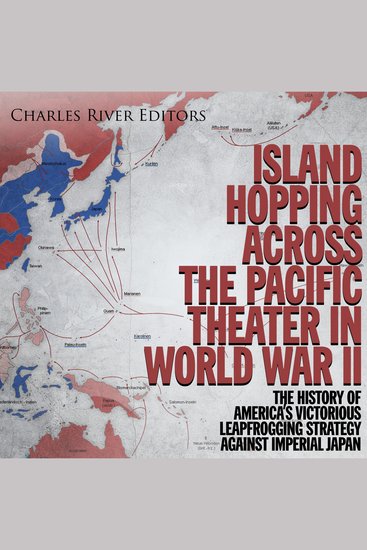
  • Island Hopping across the Pacific Theater in World War II: The History of America’s Victorious Leapfrogging Strategy against Imperial Japan - cover

    Island Hopping across the...

    Editors Charles River

    • 0
    • 0
    • 0
    The waters of the Pacific Ocean – stretching deep blue under the tropical sun, or scourged by typhoons – provided World War II's most far-flung battlefield. Two of the world's premier mid 20th century maritime powers, the United States of American and the Empire of Japan, grappled for supremacy across that vast expanse. 
    By the time the Battle of Midway was over in June 1942, the defeat was so devastating for Japan that it was actually kept secret from all but the highest echelons of the Japanese government. Along with the loss of hundreds of aircraft and over 3,000 men killed, the four Japanese aircraft carriers lost, when compared to America’s one lost carrier, was critical considering America’s huge shipbuilding superiority.  
    By the spring of 1943, American military planners had begun to create a plan to dislodge Japan from east and southeast Asia. To do so, parts of the Philippines were considered main strategic points in the potential Allied attack in the Pacific. The end goal of the Allied plan was an invasion of the Japanese home islands, in which heavy aerial bombardment would precede a ground assault. In order for this to occur, Allied forces would have to occupy areas surrounding Japan, with China adding to Luzon (the largest island in the Philippines) and Formosa (a large island off the coast of China) to create a triangle from which they could launch their bombers. 
    The Allied advance across the Pacific was based on this 1943 plan, with General MacArthur and his forces moving to the north through New Guinea, then Morotai Island, and then to Mindanao, which was the southernmost major island in the Philippines chain. At the same time, Admiral Chester Nimitz sent his fleet through the central Pacific, where they engaged Japanese forces at the Gilbert, Marshall, Marianas and Palau Islands en route to Mindanao.
    Ver libro