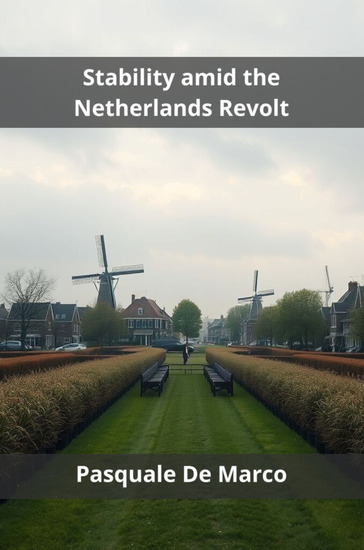
Stability amid the Netherlands Revolt
Pasquale De Marco
Editora: Publishdrive
Sinopse
In the heart of Europe lies Lille, a city that has witnessed centuries of turmoil and transformation. This book delves into the rich tapestry of Lille's history, exploring the forces that have shaped the city and its people over the centuries.

From its strategic location at the crossroads of Europe to its enduring spirit in the face of adversity, Lille's story is one of resilience, adaptation, and transformation. Through a comprehensive examination of primary sources, this book sheds new light on Lille's experience during the tumultuous Dutch revolt and its subsequent journey through the centuries.

Lille's tale begins in the 16th century, a time of religious and political upheaval. Caught in the crossfire of the Dutch revolt, the city's population found itself deeply divided along religious and economic lines. Radical factions emerged, escalating tensions and leading to the outbreak of violence. The subsequent siege of Lille by Spanish forces brought immense suffering and destruction upon the city and its people.

In the aftermath of the siege, Lille entered a new era of stability under Spanish rule. Protestantism was suppressed, and Catholicism was restored as the dominant religion. The city experienced economic and cultural revival, playing a significant role within the Habsburg Empire. However, the 17th century brought fresh challenges, including the rise of France as a major European power.

The French conquest of Lille in the 17th century marked a transformative moment in the city's history. French rule brought about significant economic and social changes, including the growth of new industries and businesses. Lille faced further challenges in the 18th century, including the social and political tensions arising from the Industrial Revolution. The 19th century witnessed Lille's involvement in major historical events, such as the Franco-Prussian War and the rise of socialism and labor movements.

The 20th century brought both triumphs and trials for Lille. The city endured the hardships of World War I and World War II, emerging with resilience and determination. In the postwar period, Lille confronted economic and social challenges, yet it also played a vital role in the European Union. As the city looks towards the future, it faces new opportunities and uncertainties in the 21st century.

This book is a comprehensive exploration of Lille's rich history, offering a unique perspective on the city's resilience and transformation. Through its detailed analysis of primary sources, the book sheds new light on Lille's experience during the Dutch revolt and its subsequent journey through the centuries. It is a must-read for anyone interested in European history, urban development, or the human experience in the face of adversity.


If you like this book, write a review!
Disponível desde: 02/06/2025.
Comprimento de impressão: 160 páginas.