Junte-se a nós em uma viagem ao mundo dos livros!
Adicionar este livro à prateleira
Grey
Deixe um novo comentário Default profile 50px
Grey
Assine para ler o livro completo ou leia as primeiras páginas de graça!
All characters reduced
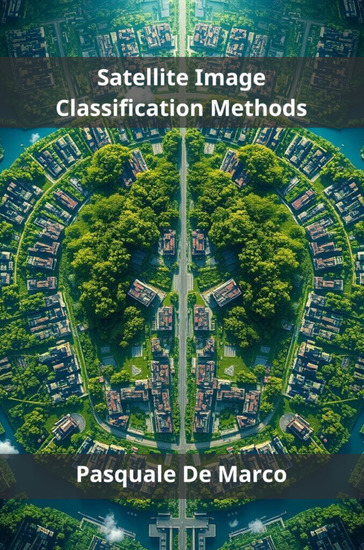
Satellite Image Classification Methods - cover
LER

Satellite Image Classification Methods

Pasquale De Marco

Editora: Publishdrive

  • 0
  • 0
  • 0

Sinopse

Embark on a journey into the realm of satellite image classification with this comprehensive guide, unlocking the secrets of extracting valuable information from vast amounts of Earth observation data. Delve into the fundamental principles and cutting-edge techniques of this transformative technology, empowering yourself to harness the wealth of knowledge hidden within satellite imagery.

Discover the intricacies of spectral, textural, and contextual analysis, and unravel the complexities of machine learning algorithms, object-based image analysis, and hyperspectral image classification. Explore specialized domains such as radar and SAR image classification, gaining insights into their unique characteristics and applications.

Witness the synergistic power of multi-sensor and multi-temporal data integration, unlocking enhanced classification accuracy and temporal analysis capabilities. Delve into the importance of accuracy assessment and validation, ensuring the reliability and trustworthiness of your classification results.

With real-world case studies and illustrative examples, this book brings the concepts and techniques to life, showcasing the practical applications of satellite image classification in diverse domains. From land cover mapping and environmental monitoring to disaster response and urban planning, see how this technology drives informed decision-making and addresses real-world challenges.

Whether you are a student seeking a comprehensive understanding of satellite image classification, a researcher delving into advanced techniques, or a practitioner seeking to harness the power of this technology, this book is your ultimate resource. Its interdisciplinary approach and comprehensive coverage make it an essential guide for anyone seeking to unlock the transformative potential of satellite image classification.

Immerse yourself in the world of satellite image classification and uncover the hidden insights within Earth observation data. This book is your key to unlocking the transformative power of this technology, empowering you to make informed decisions and drive positive change.


If you like this book, write a review!
Disponível desde: 02/06/2025.
Comprimento de impressão: 168 páginas.
Outros livros que poderiam interessá-lo

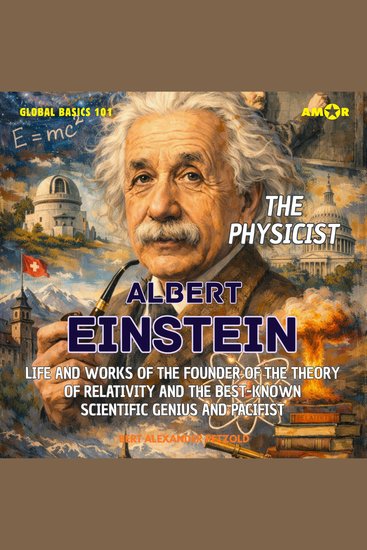
  • Physicist Albert Einstein The - Life and Works of the Founder of the Theory of Relativity and the Best-Known Scientific Genius and Pacifist - Global Basics 101 - Your Series for Modern Knowledge Folge 7 (unabridged) - cover

    Physicist Albert Einstein The -...

    Bert Alexander Petzold

    • 0
    • 0
    • 0
    Anyone who knows Albert Einstein only as a tousle haired face on a poster has seen only the surface. How could a physicist so fundamentally change the Newtonian view of the world that time and space suddenly became mobile and the twentieth century learned a new way of thinking. This non fiction book shows why Einstein, as the originator of the theory of relativity, became the very image of the scientist, the genius and the pacifist, and why his ideas still shape research, technology and everyday life.
    
    You follow a fact rich cultural journey through classroom, patent office, lecture hall and world politics, explained in a way that is accessible, entertaining and clearly structured. The text explains the major terms of theoretical physics without haze, relativity, spacetime, the speed of light, energy and mass, and at the same time introduces Einstein's contributions to quantum physics. In this way, knowledge takes shape that gives you confidence when it comes to placing modern natural science and understanding the impact of scientific revolutions, and it equips you with arguments for any discussion.
    
    Einstein grew up in Germany, sought his own path early on, and found in Switzerland the intellectual freedom he needed. After his studies and first posts, he ended up at the patent office in Bern, a seemingly unremarkable place that gave him time to think. This was the setting for the famous year 1905, in which he published several papers and opened new doors in physics, including on the nature of light, on the motion of the smallest particles, and on the relationship between energy and mass.
    
    In 1905 Einstein published the 'Special Theory of Relativity' and in doing so called the familiar order of time and motion into question. Out of this very radical thinking grew worldwide recognition. At the latest, when observations during a solar eclipse in 1919 made his predictions about the bending of light famous, he became an international icon. He gave lectures and worked within a network of scientists and research institutes that shaped the global scientific world. The book shows how this interconnectedness accelerated research and how Einstein's methods created a new language for physics.
    
    Even beyond the early breakthroughs, Einstein remained a driving force of progress. His contributions to quantum physics were extraordinary, and in 1922 he received the Nobel Prize. At the same time, his public weight grew because he never understood science as an isolated ivory tower, but as part of society, bound up with fears, ambitions and the values people want to stand for. This makes clear why he was not only a researcher, but also a voice of his time.
    
    When the National Socialists came to power in 1933, Einstein had to emigrate and went to the United States. From there, his political and social influence continued to grow. He became a prominent advocate of freedom of expression and peace between nations and vehemently opposed the use of atomic bombs. This non fiction book makes it tangible how a scientist took responsibility without betraying the core of his work, and why Einstein's name still stands for insight and conscience.
    
    The author of the book is Bert Alexander Petzold, and it is ideally suited to preparation for examinations leading to the higher education entrance qualification and for study at university.
    
    Secure this book and discover Albert Einstein as a person and thinker who pushed back the limits of what can be imagined. Anyone who wants not only to have heard of relativity and quantum physics, but to have understood them, will find clarity, context and a perspective that lasts.
    Ver livro
  • On Privacy and Technology - cover

    On Privacy and Technology

    Daniel J. Solove

    • 0
    • 0
    • 0
    Succinct and eloquent, On Privacy and Technology is an essential primer on how to face the threats to privacy in today's age of digital technologies and AI. 
      
    With the rapid rise of new digital technologies and artificial intelligence, is privacy dead? Can anything be done to save us from a dystopian world without privacy? 
      
    In this short and accessible book, internationally renowned privacy expert Daniel J. Solove draws from a range of fields, from law to philosophy to the humanities, to illustrate the profound changes technology is wreaking upon our privacy, why they matter, and what can be done about them. Solove provides incisive examinations of key concepts in the digital sphere, including control, manipulation, harm, automation, reputation, consent, prediction, inference, and many others. 
      
    Compelling and passionate, On Privacy and Technology teems with powerful insights that will transform the way you think about privacy and technology. 
      
    "A deeply insightful look at myriad dimensions of information privacy. Paths a constructive way forward for effective privacy regulation of tech in our digital age."—Paul M. Schwartz, Jefferson E. Peyser Professor of Law, Berkeley Law School
    Ver livro
  • Introduction to Machine Learning - cover

    Introduction to Machine Learning

    Jim D Johnston

    • 0
    • 0
    • 0
    Step into the exciting world of artificial intelligence and discover how computers learn from data to solve problems, recognize patterns, and make intelligent decisions. 
    Introduction to Machine Learning is a beginner-friendly guide that provides a clear and practical foundation in one of the most transformative technologies of the modern era. Designed for students, professionals, and technology enthusiasts, this book explains machine learning concepts in simple terms, making them accessible to readers with little or no prior experience. 
    Through real-world examples and practical applications, readers will gain an understanding of how machine learning powers recommendation systems, predictive analytics, autonomous systems, natural language processing, and countless other innovations that shape our daily lives.
    Ver livro
  • Mastering Data Engineering and Analytics with Databricks - A Hands-on Guide to Build Scalable Pipelines Using Databricks Delta Lake and MLflow - cover

    Mastering Data Engineering and...

    Manoj Kumar

    • 0
    • 0
    • 0
    Master Databricks to Transform Data into Strategic Insights for Tomorrow’s Business Challenges
    Book Description
    In today’s data-driven world, mastering data engineering is crucial for driving innovation and delivering real business impact. Databricks is one of the most powerful platforms which unifies data, analytics and AI requirements of numerous organizations worldwide. 
    Mastering Data Engineering and Analytics with Databricks goes beyond the basics, offering a hands-on, practical approach tailored for professionals eager to excel in the evolving landscape of data engineering and analytics. 
    This book uniquely blends foundational knowledge with advanced applications, equipping readers with the expertise to build, optimize, and scale data pipelines that meet real-world business needs. With a focus on actionable learning, it delves into complex workflows, including real-time data processing, advanced optimization with Delta Lake, and seamless ML integration with MLflow—skills critical for today’s data professionals. 
    Table of Contents
    SECTION 1
    1. Introducing Data Engineering with Databricks
    2. Setting Up a Databricks Environment for Data Engineering
    3. Working with Databricks Utilities and Clusters
    SECTION 2
    4. Extracting and Loading Data Using Databricks
    5. Transforming Data with Databricks
    6. Handling Streaming Data with Databricks
    7. Creating Delta Live Tables
    8. Data Partitioning and Shuffling
    9. Performance Tuning and Best Practices
    10. Workflow Management
    11. Databricks SQL Warehouse
    12. Data Storage and Unity Catalog
    13. Monitoring Databricks Clusters and Jobs
    14. Production Deployment Strategies
    15. Maintaining Data Pipelines in Production
    16. Managing Data Security and Governance
    17. Real-World Data Engineering Use Cases with Databricks
    18. AI and ML Essentials
    19. Integrating Databricks with External Tools   
    Index
    Ver livro
  • User Experience (UX) - A Comprehensive Guide to Designing Delightful Digital Interactions - cover

    User Experience (UX) - A...

    May Sherry

    • 0
    • 0
    • 0
    "User Experience (UX): A Comprehensive Guide to Designing Delightful Digital Interactions" is your essential roadmap to mastering the art and science of UX design. Whether you're a seasoned designer or just starting out, this book provides a thorough exploration of the principles, processes, and practices that create exceptional user experiences. 
    Packed with practical advice, case studies, and real-world examples, this comprehensive guide equips you with the tools and knowledge needed to create delightful digital interactions. Transform your approach to design and deliver exceptional user experiences that resonate and inspire. 
    Ideal for UX professionals, designers, and anyone passionate about creating meaningful digital interactions, this book is your gateway to designing experiences that captivate and delight. 
     
    Ver livro
  • Human-Centered Design - Crafting Meaningful and User-Friendly Experiences - cover

    Human-Centered Design - Crafting...

    Jacob Richardson

    • 0
    • 0
    • 0
    In a world where technology evolves at breakneck speed, creating products and services that truly resonate with users is more important than ever. Human-Centered Design: Crafting Meaningful and User-Friendly Experiences offers a comprehensive guide to understanding and implementing the principles of Human-Centered Design (HCD) to deliver solutions that are not only functional but also deeply satisfying to the people who use them. 
    This book delves into the essence of HCD, emphasizing the importance of empathy, collaboration, and iteration in the design process. Through detailed explanations, real-world case studies, and practical exercises, readers will learn how to:Conduct thorough user research to uncover genuine needs and pain points.Develop insightful user personas and problem statements to guide the design process.Utilize brainstorming and ideation techniques to generate innovative concepts.Create effective prototypes and conduct meaningful usability tests to refine solutions.Leverage the latest tools and technologies in digital design, prototyping, and user feedback. 
    From technology and product design to healthcare and urban planning, this book explores how HCD can be applied across various fields to achieve impactful results. It also addresses the challenges of balancing user needs with business goals and overcoming resistance to change within organizations. 
    Human-Centered Design: Crafting Meaningful and User-Friendly Experiences is an essential resource that will inspire you to put people at the heart of your design process and deliver solutions that make a difference. 
     
    Ver livro