Junte-se a nós em uma viagem ao mundo dos livros!
Adicionar este livro à prateleira
Grey
Deixe um novo comentário Default profile 50px
Grey
Assine para ler o livro completo ou leia as primeiras páginas de graça!
All characters reduced
Sabaki - Unveiling the Linguistic Tapestry of East Africa - cover
LER

Sabaki - Unveiling the Linguistic Tapestry of East Africa

Pasquale De Marco

Editora: Publishdrive

  • 0
  • 0
  • 0

Sinopse

Embark on a captivating linguistic journey into the world of Sabaki, a captivating family of Bantu languages spoken by millions across East Africa. This book unveils the intricate tapestry of Sabaki's linguistic heritage, exploring its rich diversity, historical evolution, and enduring legacy.

Delve into the linguistic intricacies of Sabaki, unraveling the complexities of its grammar, phonology, and vocabulary. Discover the remarkable diversity of Sabaki languages, each with its unique features and characteristics. Explore the fascinating sociolinguistic factors that have influenced Sabaki's evolution, shaping its role in culture, society, and history.

Uncover the relationship between Sabaki and other Bantu languages, tracing the commonalities that unite them and highlighting the unique aspects that set Sabaki apart. Witness the captivating story of Swahili, the most widely spoken Sabaki language and a global lingua franca, as it weaves together the threads of history, culture, and identity in East Africa.

Through engaging narratives and insightful analysis, this book brings the Sabaki languages to life, showcasing their beauty, complexity, and significance. It celebrates the enduring legacy of Sabaki as a vital part of the linguistic heritage of East Africa, highlighting its role in shaping the region's cultural, social, and historical tapestry.

Whether you are a linguist, a scholar, or simply someone fascinated by the diversity of human languages, Sabaki: Unveiling the Linguistic Tapestry of East Africa is an essential resource. It offers a comprehensive exploration of this captivating language family, providing a deeper understanding of its linguistic structure, historical evolution, and sociocultural significance.

Join us on this linguistic adventure as we journey into the heart of Sabaki, where language, culture, and history intertwine to create a mesmerizing tapestry of human expression. Discover the beauty and complexity of Sabaki languages and gain a newfound appreciation for the richness and diversity of the linguistic heritage of East Africa.


If you like this book, write a review!
Disponível desde: 02/06/2025.
Comprimento de impressão: 164 páginas.


Outros livros que poderiam interessá-lo

  • The Worry Trap - How to Free Yourself from Worry & Anxiety using Acceptance and Commitment Therapy - cover

    The Worry Trap - How to Free...

    PhD Chad LeJeune, PhD Steven C....

    • 0
    • 0
    • 0
    Do You Worry All the Time? 


    Have you tried to control your thoughts and get your worrying under control? Did it work? If it didn't, try this simple exercise: Take thirty seconds, right here and now, and don't think about something you recently worried about. Think about anything and everything else, but don't think about that worry. 


    How did you do? Like most of us, you probably could think of little else except whatever it was you worried about, no matter how hard you tried. This is the problem with trying to control your thoughts: Your attempts to stop worrying very often lead you to repeat and refresh the very worries you're trying to dispel. 


    Acceptance and commitment therapy (ACT), a revolutionary new approach to resolving a wide range of psychological problems, can help you break the cycle of chronic worry. ACT stresses letting go of your attempts to avoid, change, and get rid of worry. Instead, it shows you how to accept your feelings as they occur, without judgment. You'll learn to "de-fuse" from your worries, observing and then letting them go. Then you'll explore and commit to acting on your values, thereby creating a rich life for yourself—even with the occasional worry.
    Ver livro
  • Starting a World War: The History of the Events and Battles that Began World War I and World War II - cover

    Starting a World War: The...

    Editors Charles River

    • 0
    • 0
    • 0
    By the 20th century, warfare was nothing new to the European powers, especially when it came to fighting each other. Conflicts had been a mainstay on the European continent for over two millennia. Even after the Napoleonic wars had enveloped Europe in large scale war for nearly 20 years in the 19th century, the Europeans’ imperialism continued unabated. It would take the devastation of World War I to shock Europe and jolt the world’s superpowers out of their imperialistic tendencies.  
    	With Europe anticipating a potential war, all that was missing was a conflagration. That would start in 1908, when Austria-Hungary annexed Bosnia-Herzegovina in the Balkan Peninsula, drawing it into dispute with Russia. Moreover, this upset neighboring Serbia, which was an independent nation. From 1912-1913, a conflict was fought in the Balkans between the Balkan League and the Ottoman Empire, resulting in the weakening of the Ottoman Turks. After the First Balkan War, a second was fought months later between members of the Balkan League itself. The final straw came June 28, 1914, when a Serbian assassinated Archduke Franz Ferdinand, the heir to the throne of Austria-Hungary, in Sarajevo, Bosnia.   
    The Munich Agreement is widely reviled today and is held up as the epitome of appeasement, but historians still debate its effects on the Second World War, as well as Neville Chamberlain's character and motivations. Some believe the attempted appeasement of Nazi Germany hastened, or even caused, the mayhem occupying the next seven years. Others believe that the pact merely failed to alter war's inevitable arrival in either direction.  
    Of course, as most people now know, the invasion of Poland was merely the preface to the Nazi blitzkrieg of most of Western Europe, which would include Denmark, Belgium, and France by the summer of 1940
    Ver livro
  • Jami At-Tirmidhi English Translation Book 5-11 (Volume 2) Hadith number 617-1204 of 3956 - Audio Collection of Authentic Hadith (English Translation) - cover

    Jami At-Tirmidhi English...

    Imam At-Tirmidhi, Translator-Abu...

    • 0
    • 0
    • 0
    Jami` at-Tirmidhi is a collection of hadith compiled by Imam At-Tirmidhi. His collection is unanimously considered to be one of the six canonical collections of hadith (Kutub as-Sittah) of the Sunnah of the Prophet (peace be upon him). It contains roughly 4400 hadith (with repetitions) in 46 books. 
    Volume 2 contains books 5-11 of hadith 617-1204 of 3956: 
    5 The Book on Zakat hadith 617-681 of 3956 English 
    6 The Book on Fasting hadith 682-808 of 3956 English 
    7 The Book on Hajj (pilgrimage) hadith 809-964 of 3956 English 
    8 The Book on Jana''iz (Funerals) hadith 965-1079 of 3956 English 
    9 The Book on Marriage hadith 1080-1145 of 3956 English 
    10 The Book on Suckling hadith 1146-1174 of 3956 English 
    11 The Book on Divorce and Li'an hadith 1175-1204 of 3956 English 
    Contact: For any feedback or correction please feel free to contact at qnsacademy@outlook.com
    Ver livro
  • Sikh Nasalkushi Da Khurakhoj Part-1 - Chashamdeedan ate Sbutaan di Zubani - cover

    Sikh Nasalkushi Da Khurakhoj...

    Gurjant Singh Ball, Sukhjeet...

    • 0
    • 0
    • 0
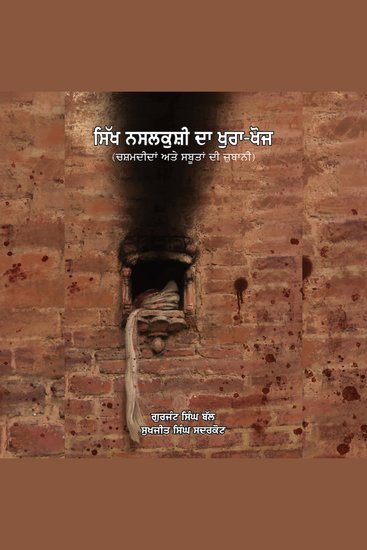
    Sikh Nasalkushi Da Khura Khoj: Authored by Gurjant Singh Ball and Sukhjeet Singh Sadarkot 
    Sikh Genocide da Khura Khoj is a powerful and eye-opening book that uncovers the lesser-known truth about the 1984 anti-Sikh violence. While most people are aware of what happened in Delhi, Kanpur, Bokaro, and Hondh Chillar, this book reveals that the attacks on Sikhs were not limited to just these places. Written by Gurjant Singh Ball, this important book investigates how Sikhs were also targeted in other parts of India with the same cruelty and planning. It focuses on six states — Madhya Pradesh, Chhattisgarh, Odisha, Andhra Pradesh, Telangana, and Tamil Nadu — and shares shocking stories backed by eyewitnesses and real evidence. Sikh Genocide da Khura Khoj is one of the first books to explore these forgotten chapters. It gives a voice to the victims and brings hidden facts to light. A must-read for anyone seeking to understand the full scale of the Sikh genocide beyond what is commonly known. You can order it from Sikh Siyasat and get it delivered anywhere in the world.
    Ver livro
  • The Soul in the Stone - Why the Worldview That Will Save Our Planet Is More Credible Than the One That Is Destroying It - cover

    The Soul in the Stone - Why the...

    Ashley Curtis

    • 0
    • 0
    • 0
    The currently unfolding ecological catastrophe is the result of more than just deforestation, fossil fuel extraction, and factory farming. Behind the immediate causes of the degradation of our environment lies something else: a deeply rooted but ultimately absurd understanding of our place in the universe. 
    
    Through a series of encounters with a striking array of protagonists - from revolutionary physicists and embattled philosophers to subsistence hunters and Himalayan shamans - The Soul in the Stone exposes the incoherence of the barren, human-centered perspective dominant in most societies today. It recommends instead an alternative worldview: one that acknowledges and honors non-human experience and, precisely because it does, is both more logically consistent and more fulfilling. And might just save the planet.
    Ver livro
  • Ancient and Medieval Conspiracy Theories: The History of the World’s Most Persistent Conspiracy Theories - cover

    Ancient and Medieval Conspiracy...

    Editors Charles River

    • 0
    • 0
    • 0
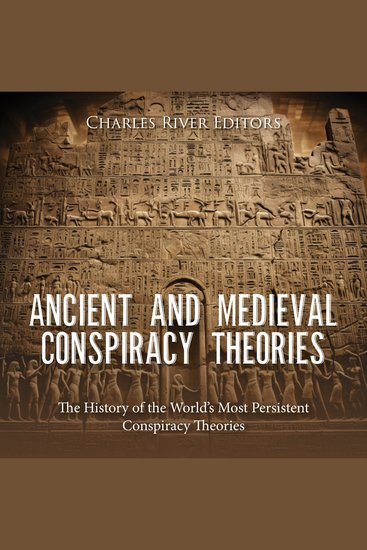
    Perhaps it should also not be surprising that the themes found in contemporary conspiracy theories are often echoed in ancient conspiracy theories. While some people still insist that Lyndon B. Johnson was in on John F. Kennedy’s assassination, it was speculated across the ancient world that the young Macedonian king, Alexander the Great, conspired to have his own father, Philip II of Macedon, assassinated. Likewise, the New Age beliefs that Mesoamerican ruins in Mexico were somehow tied to extraterrestrials find common cause with people who believe the ancient Indus Valley site at Mohenjo-daro was destroyed by a nuclear weapon. And through it all, the lack of surviving documentary evidence about much of antiquity has allowed for all of the unknowns to become highly speculative sources of debate. For example, did Caesar’s men burn the Library of Alexandria in the 1st century B.C., or was it destroyed later, if at all? Some people even suggest that the Library of Alexandria, whose ruins have never been located, never existed at all.  
    	Few eras are easier to let the imagination run wild than the Middle Ages, which have often been coined the Dark Ages based on a perceived lack of progress and information. In some respects, that is not completely unfounded because less is known about that historical period compared to the eras that came after it. In addition, it was a period marked by a great number of deaths caused by plague epidemics, crusades, and inquisitorial persecutions. Often, researchers are not even sure how and why certain events happened, and these mysteries still occupy the attention of historians. 
    	At the same time, some historical mysteries about the era may never be solved, if only because the relevant excavated material has been lost or the archaeological site has been destroyed. Of course, the lack of answers only makes these enigmas more intriguing. 
    Ver livro