¡Acompáñanos a viajar por el mundo de los libros!
Añadir este libro a la estantería
Grey
Escribe un nuevo comentario Default profile 50px
Grey
Suscríbete para leer el libro completo o lee las primeras páginas gratis.
All characters reduced
Music Compendium - A Comprehensive Study of the Elements of Music - cover

Music Compendium - A Comprehensive Study of the Elements of Music

Pasquale De Marco

Editorial: Publishdrive

  • 0
  • 0
  • 0

Sinopsis

In this comprehensive guide to the world of music, readers will embark on a journey to explore the fundamental elements of music, delve into its rich history, and appreciate its profound impact on society.

From the earliest civilizations to the modern era, music has been an integral part of human expression. It has accompanied us through celebrations, consoled us in times of sorrow, and inspired us to reach new heights. Music has the ability to transport us to different realms, allowing us to experience a wide range of emotions and perspectives.

This book provides readers with a comprehensive understanding of music, examining the basic building blocks of music, such as rhythm, melody, and harmony. It also explores the various genres of music, from classical to jazz to rock, and delves into the unique characteristics that define each style.

Readers will also journey through the fascinating history of music, tracing its evolution from ancient chants to the complex compositions of today. They will encounter the great composers and musicians who have shaped the musical landscape, and learn about the cultural and historical context in which their works were created.

Furthermore, the book investigates the science behind music, exploring how sound waves interact with our brains to create the sensations we experience when we listen to music. It also examines the relationship between music and other art forms, such as painting, literature, and dance.

Finally, the book concludes by reflecting on the profound impact that music has on society. It considers the role of music in education, therapy, and social change, and examines the ways in which music can be used to bring people together and promote understanding.

With its engaging writing style and comprehensive coverage, this book is an essential resource for anyone who wants to deepen their understanding of music and appreciate its vielfältige Schönheit (diverse beauty).


If you like this book, write a review!
Disponible desde: 02/06/2025.
Longitud de impresión: 166 páginas.


Otros libros que te pueden interesar

  • Apocalypse Television - How The Day After Helped End the Cold War - cover

    Apocalypse Television - How The...

    David Craig, Robert Iger

    • 0
    • 0
    • 0
    On November 20, 1983, a three-hour made-for-TV movie, The Day After, premiered on ABC. Set in the heartland of Lawrence, Kansas, the film depicted the events before, during, and after a Soviet nuclear attack with vivid scenes of the post-apocalyptic hellscape that would follow. The film was viewed by over 100 million Americans and remains the highest rated TV movie in history. 


    The path to primetime for The Day After proved nearly as treacherous as the film's narrative. Battles ensued behind the scenes at the network, between the network and the filmmakers. But these skirmishes pale in comparison to the culture wars triggered by the film in the press, alongside a growing Nuclear Freeze movement, and from a united, pro-nuclear Right. Once efforts to alter the script failed, the White House conducted a full-throttled propaganda campaign to hijack the film's message. 


    Apocalypse Television features a dramatic insider's account of the making of and backlash against The Day After. No other book has told this story in similar fashion, venturing behind-the-scenes of the programming and news divisions at ABC, the backlash from the conservative movement and Religious Right, the challenges encountered by the film's production team, and the experiences of the citizens of Lawrence, Kansas, where the film was set and shot.
    Ver libro
  • Meditation - Sounds of Thunderstorms (432 Hz Edition) - Schubert Piano Sonata No 18 in G Major D894 - cover

    Meditation - Sounds of...

    Anthony Morse

    • 0
    • 0
    • 0
    Meditation: Sounds of Thunderstorms (432 Hz Edition) - Schubert Piano Sonata No. 18 in G Major, D.894 
     
    Immerse yourself in a tranquil fusion of classical mastery and nature’s serenity. This digital audio experience blends Schubert’s timeless piano composition with the rhythmic ambiance of distant thunderstorms—all tuned to 432 Hz, a frequency associated with deep relaxation and inner balance.


    Key Benefits:
     
    ✅ 432 Hz Frequency – Thought to enhance calmness, mental clarity, and stress relief 
     
    ✅ Nature & Classical Harmony – Thunderstorms provide a grounding atmosphere, complementing Schubert’s expressive melodies 
     
    ✅ Perfect for Meditation & Focus – Ideal for yoga, mindfulness, sleep, or creative inspiration


    Piano Sonata no. 18 in G major, D. 894 - I. Molto moderato e cantabile


    Piano Sonata no. 18 in G major, D. 894 - II. Andante


    Piano Sonata no. 18 in G major, D. 894 - III. Menuetto: Allegro moderato


    Piano Sonata no. 18 in G major, D. 894 - IV. Allegretto
    Ver libro
  • How To Run An Indie Label - cover

    How To Run An Indie Label

    Alan McGee

    • 0
    • 0
    • 0
    A no-holds-barred rampage through gigs, clubs, boardrooms, drugs and booze, mad scenes, brilliant signings, machine gun quotes and a resilient wild spirit. 
     
    Music is like no other business. 
    It's about being at the right place at the right time, following your nose and diving in feet first. It's about being plugged into the mystical electricity and about surfing on the wild energy. It's about how to fuck up and how to survive and be sustained by the holy grail of the high decibel. 
    No-one captures this wild feral spirit better than Alan McGee whose helter-skelter career through music has made him a major force. Wilder than his bands, more out of control than his most lunatic singer, more driven than his contemporaries and closer in spirit to the rock'n'roll star he could never be himself, McGee was always in a rush. Creation would sign people and not just the music. McGee understood that running an indie label is mainly about the charisma, the game changers, the iconography and the story. It's about never being boring. 
    His ability to start a raw power ruckus brought the visceral danger back to a moribund mid-eighties music scene. His nose for danger and his ear for classic guitar rock'n'roll brought us The Jesus and Mary Chain, Primal Scream, My Bloody Valentine, Teenage Fanclub and Ride before topping out in the nineties with the biggest band in the world, Oasis. 
    By no means a conventional instruction manual or business audiobook, How To Run an Indie Label tells you everything you need to know about how to be a creative force.
    Ver libro
  • Christopher Columbus and the Afrikan Holocaust - Slavery and the Rise of European Capitalism - cover

    Christopher Columbus and the...

    John Henrik Clarke

    • 0
    • 0
    • 0
    "Christopher Columbus and the Afrikan Holocaust," by John Henrik Clarke, shatters the hero's-journey narrative surrounding Columbus, exposing him as an architect of exploitation. The book recasts the "discovery" of America as a brutal invasion, paving the way for centuries of Indigenous suffering and laying the groundwork for the African Holocaust – the transatlantic slave trade. 
     
    Clarke argues that neither Indigenous nor African subjugation was incidental. Instead, they were calculated moves fueled by insatiable European greed. The book deconstructs the myth of benevolent colonization, revealing its core as a resource-hungry machine reliant on forced labor and extraction. This system, christened "European capitalism," thrived on the dehumanization and exploitation of entire populations. 
     
    Clarke doesn't merely paint a grim picture; he also illuminates resistance. He highlights the agency of colonized peoples, their unwavering fight for freedom despite unimaginable suffering. This Pan-Africanist perspective weaves together the struggles of both Indigenous and African peoples, demonstrating the interconnectedness of global oppression. 
     
    Beyond historical analysis, the book serves as a potent call to action. Clarke urges readers to confront the legacies of colonialism and slavery, dismantling the very systems that perpetuate inequality. He doesn't shy away from uncomfortable truths, demanding critical examination of narratives that continue to shape our understanding of the world. 
     
    This book is not for the faint of heart. It confronts sensitive historical events with unflinching honesty, potentially exposing readers to disturbing descriptions of violence and oppression. Yet, through its unflinching analysis and unwavering call for justice, "Christopher Columbus and the Afrikan Holocaust" offers a crucial roadmap for navigating the complex legacies of the past and building a more equitable future.
    Ver libro
  • Woven Tapestry - Art and Practice - cover

    Woven Tapestry - Art and Practice

    Louise Martin, Ros Bryant

    • 0
    • 0
    • 0
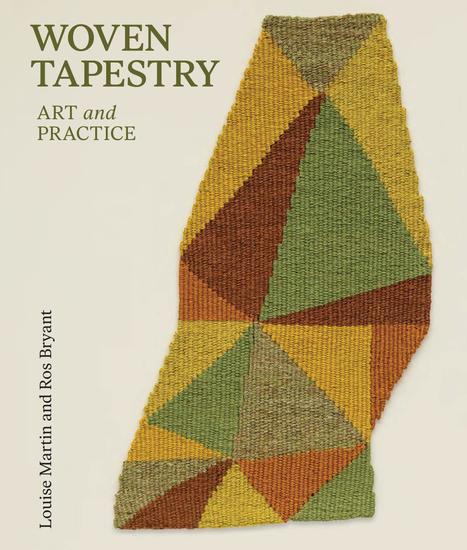
    Woven Tapestry is an in-depth practical guide to the technique of this unique art form, and to finding creative expression within it.
    Progressive exercises based on the authors' combined 50 years' experience are used to explain technique from making a first sample through to finished pieces. These are illustrated by over 400 specially woven samples and diagrams. The underlying principles are outlined and applied in a contemporary and creative way. Full-page images illustrate the qualities of line, colour, pattern and texture unique to woven tapestry, and the rich and exciting range of yarns available. Exercises in making and interpreting designs guide the developing weaver towards making individually creative work. Woven Tapestry offers the reader the technical skills and understanding needed to make expressive and beautiful work of their own. By working with several weft threads simultaneously, tapestry weaving becomes highly nuanced and is capable of complex imagery. Exercises in design show how to make use of the unique qualities that woven tapestry has to offer. The initial techniques are fundamentally simple and are clearly explained using only basic equipment and readily available yarns. The reader is encouraged to take time in learning, and to look closely whilst working. The continuous slow under over rhythm of weft passing through warp can promote a mental space in which to think and feel more deeply, and ultimately to create.
    Right from the first exercise there are creative choices to be made. By progressing to more advanced techniques, and working with many types and combinations of yarns, the expressive freedom available to the developing weaver soon becomes endless.
    Ver libro
  • Always the Music - How a lifelong passion framed a future for orchestras - cover

    Always the Music - How a...

    Thomas W. Morris

    • 0
    • 0
    • 0
    Always The Music is the fascinating story of Morris’ personal metamorphosis through the highest levels of the world of classical music, his learning and insights into how storied musical institutions function, great artists create, and audiences engage. Over the course of 34 years running the Boston Symphony and The Cleveland Orchestra, he had the growing realization that American orchestras had become ingrown on themselves, with rigid structures and cultures that conspired to perpetuate those structures rather than the music experiences they were built to create. Stepping back from orchestras and looking to experiment with his evolving insights, he became artistic director of the Ojai Music Festival. Its size, its setting, its unique structure and a long history with many of the world’s most innovative and influential musicians and composers provided an opportunity for Morris to reimagine musical experiences by challenging all aspects of making music and producing concerts. The first part of the book recounts Morris’s journey through close collaborations with key individuals and projects, while the final chapters synthesizes his career lessons into an unequivocal but thoughtful prescription for the future of the American orchestra. Mostly, though, this is the entertaining story of one man’s lifelong love affair with great music and the people who make it.
    Ver libro