Junte-se a nós em uma viagem ao mundo dos livros!
Adicionar este livro à prateleira
Grey
Deixe um novo comentário Default profile 50px
Grey
Assine para ler o livro completo ou leia as primeiras páginas de graça!
All characters reduced
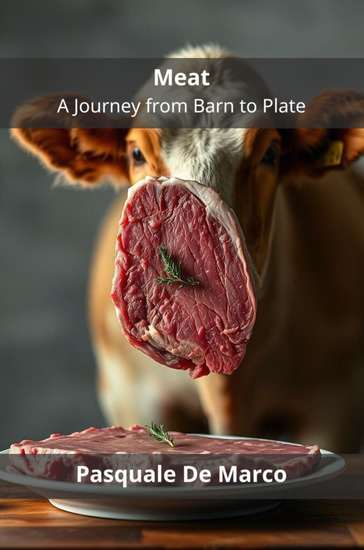
Meat - A Journey from Barn to Plate - cover
LER

Meat - A Journey from Barn to Plate

Pasquale De Marco

Editora: Publishdrive

  • 0
  • 0
  • 0

Sinopse

In Meat: A Journey from Barn to Plate, we take an in-depth look at the complex and controversial topic of meat consumption. We explore the history of meat production, the science behind meat consumption, and the cultural significance of meat. We also discuss the ethical and environmental implications of meat production, and we consider the future of meat consumption in a changing world.

This book is a must-read for anyone who wants to understand the complex issue of meat consumption. It is a comprehensive and thought-provoking exploration of the role that meat plays in our society and in our lives.

In this book, you will learn about:

* The history of meat production, from the early days of hunting and gathering to the modern industrial meat production system.
* The science of meat consumption, including the nutritional value of meat, the health risks associated with meat consumption, and the environmental impact of meat production.
* The cultural significance of meat, including the role that meat plays in different cultures around the world, the social significance of meat, and the psychology of meat eating.
* The ethical implications of meat production, including the treatment of animals, the environmental impact of meat production, and the role of personal choice in meat consumption.

This book is a valuable resource for anyone who wants to make informed choices about the food that they eat. It is a comprehensive and thought-provoking exploration of the complex issue of meat consumption.

Whether you are a meat-eater, a vegetarian, or a vegan, this book will challenge your assumptions about meat and inspire you to think critically about the role that meat plays in our society and in our lives.


If you like this book, write a review!
Disponível desde: 02/06/2025.
Comprimento de impressão: 159 páginas.


Outros livros que poderiam interessá-lo

  • Why We Love (and Hate) Twilight - The Highs and Lows of the Twilight Saga - cover

    Why We Love (and Hate) Twilight...

    Sarah Elizabeth Gallagher

    • 0
    • 0
    • 0
    The Polarizing Legacy of the Twilight Saga 


    Why does the Twilight saga continue to inspire both passionate fandom and heated critique? In Why We Love (and Hate) Twilight, Sarah Elizabeth Gallagher unpacks the cultural obsession with Bella Swan, Edward Cullen, and the supernatural love story that redefined YA literature and pop culture forever. 


    #1 New Release in Popular Culture in Social Sciences 


    Explore the Phenomenon That Sparked a Generation. Delve into the world of Stephanie Meyer's Twilight series—the books, movies, and cultural whirlwind that have captivated and divided fans for over a decade. Why We Love (and Hate) Twilight examines the global sensation through a fresh, thought-provoking lens, exploring why it continues to ignite adoration and debate alike. 


    From Edward and Bella to Taylor Lautner's Werewolf Charm. This book dives deep into the Twilight Saga book set, from New Moon to Breaking Dawn Part 2, unpacking the stories, characters, and themes. Whether you're fascinated by Bella Swan's journey, mesmerized by Edward Cullen's allure, or just curious about the frenzy behind the movies, Sarah Elizabeth Gallagher offers insights for every kind of listener.
    Ver livro
  • Secret Powers and Why We Shouldn't Use Them - cover

    Secret Powers and Why We...

    Manly P. Hall

    • 0
    • 0
    • 0
    Secret Powers and Why We Shouldn't Use Them by Manly P. Hall is a thought-provoking exploration of the hidden abilities within human consciousness and the moral, ethical, and spiritual implications of their misuse. Drawing from esoteric traditions, philosophy, and psychology, Hall delves into the nature of these powers, such as clairvoyance, telepathy, and other psychic phenomena, emphasizing their potential to disrupt personal and universal harmony if wielded irresponsibly. Through a balanced perspective, he advocates for self-discipline, ethical development, and a commitment to spiritual growth as prerequisites for engaging with these latent abilities. The work serves as both a cautionary tale and an invitation to introspection, encouraging readers to align with universal principles of integrity and wisdom before attempting to unlock their hidden potential.
    Ver livro
  • The Last Train - cover

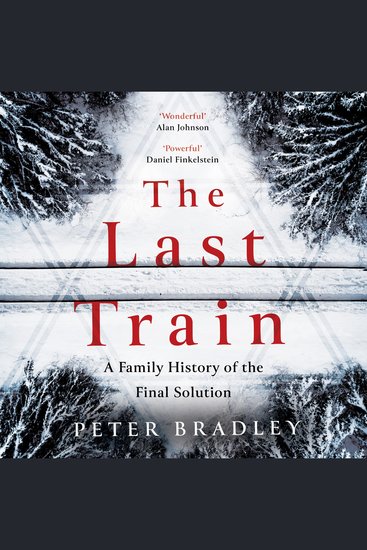
    The Last Train

    Peter Bradley

    • 0
    • 0
    • 0
    ‘Haunting.’ Jonathan Freedland‘Powerful.’ Daniel Finkelstein 
    The profoundly moving and deeply intimate story of one Jewish family’s fate in the Holocaust, following the thread from Germany to Latvia and to Britain. 
    In November 1941, Peter Bradley's grandparents, Sally and Bertha Brandes, were deported from their home in Bamberg to their deaths in Latvia. 
    The Last Train is a profound and moving homage to Peter’s lost family and to his father who rarely spoke of the traumas through which he lived. 
    It is also his attempt to understand, through the prism of his family’s story, how the Nazis came to conceive and implement the Final Solution. 
    Why did Sally and Bertha’s fellow citizens put them on the train that carried them to the killing fields? 
    Why did the democracies which so loudly condemned Hitler’s persecution of the Jews deny them sanctuary? 
    And why, when Peter's father finally reached Britain after five terrible months in a Nazi concentration camp, was he arrested as an 'enemy alien'? 
    The quest for answers led Peter to explore the origins and evolution of an ancient hatred and the struggles against it of each generation of his family, from the Reformation, through the Enlightenment and the Age of Reform, to the catastrophe of the Holocaust. 
    This is the powerful, poignant story of Peter’s journey through family papers and archives, through works of scholarship and the testimony of survivors, and from Bavaria and Buchenwald to the mass graves of the Baltic. 
    And, reflecting on what he learned, he asks: in the events of our own times, we are all perpetrators or bystanders or resisters; which of those roles do we choose for ourselves? 
    This best and top biography and autobiography of the 20th century is a testament to survival in modern Europe. It is a chilling reminder of the past and a call to action for the future. 
    For fans of Gwen Strauss (The Nine), Tova Friedman (The Daughter of Auschwitz), Wendy Holden (Tomorrow Will Be A Good Day), Limor Regev (The Boy From Block 66), and Never Again Press (Beneath the Winds of War). 
    HarperCollins 2022
    Ver livro
  • The Nature of the Beast - cover

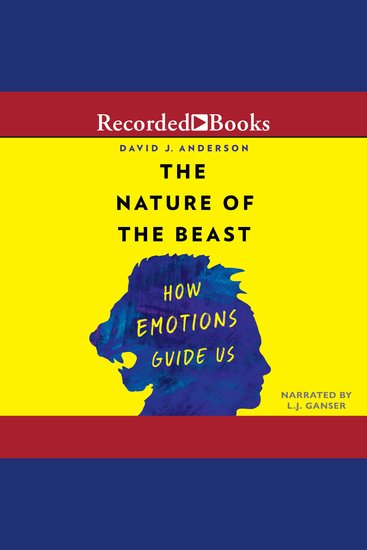
    The Nature of the Beast

    David J. Anderson

    • 0
    • 0
    • 0
    Does your dog get sad when you leave for the day? Does your cat purr because she loves you? Do bears attack when they’re angry? You can’t very well ask them.  
     
    In fact, scientists haven’t been able to reach a consensus on whether animals even have emotions like humans do, let alone how to study them. Yet studies of animal emotion are critical for understanding human emotion and mental illness. 
     
    In The Nature of the Beast, pioneering neuroscientist David J. Anderson describes a new approach to solving this problem. He and his colleagues have figured out how to study the brain activity of animals as they navigate real-life scenarios, like  
    fleeing a predator or competing for a mate. His research has revolutionized what we know about animal fear and aggression. Here, he explains what studying emotions and related internal brain states in animals can teach us about human  
    behavior, offering new insights into why isolation makes us more aggressive, how sex and violence connect, and whether there’s a link between aggression and mental illness. 
     
    Full of fascinating stories, The Nature of the Beast reconceptualizes how the brain regulates emotions—and explains why we have them at all.
    Ver livro
  • The Little Book of Anthropology - cover

    The Little Book of Anthropology

    Rasha Barrage

    • 0
    • 0
    • 0
    If you're intrigued by the question "What makes us human?", strap in for this whirlwind tour of the highlights of anthropology. 


    From the first steps of our prehistoric ancestors, to the development of complex languages, to the intricacies of religions and cultures across the world, diverse factors have shaped the human species as we know it. Anthropology strives to untangle this fascinating web of history to work out who we were in the past, what that means for human beings today, and who we might be tomorrow.
    Ver livro
  • Alternative History of Britain An - The Tudors - cover

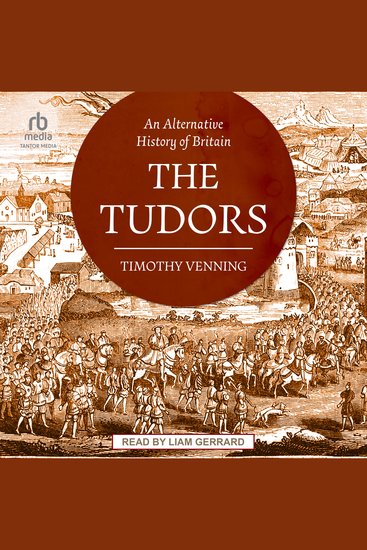
    Alternative History of Britain...

    Timothy Venning

    • 0
    • 0
    • 0
    Timothy Venning's series of alternative histories explores the pathways of British events from the Anglo-Saxon Age to the English Civil War. In this volume, he presents an in-depth analysis of the Tudor period. Venning discusses the fateful moments at which history could easily have taken a different turn. 


    In a fascinating series of "what if" scenarios, Venning presents a detailed look at the possible and likely results. While speculative, the scenarios are all plausible and rooted in a firm understanding of actually events and their context. In so doing, Venning gives listeners a clearer understanding of the factors at play and why things happened the way they did, as well as a tantalizing view of what might have been. 


    Key questions discussed include: 


    ● Did the pretenders Lambert Simnel and Perkin Warbeck ever have a realistic chance of a successful invasion/coup? 


    ● If Henry Fitzroy, Henry VIIIs illegitimate son, had not died young, might he have been a suitable King? 


    ● What if Edward VI had not died at fifteen but reigned into the 1560s and 70s? 


    ● How might the Spanish Armada have succeeded in landing an army in England, and with what likely outcome?
    Ver livro