Junte-se a nós em uma viagem ao mundo dos livros!
Adicionar este livro à prateleira
Grey
Deixe um novo comentário Default profile 50px
Grey
Assine para ler o livro completo ou leia as primeiras páginas de graça!
All characters reduced
Literary Influences in Modern Writing - cover
LER

Literary Influences in Modern Writing

Pasquale De Marco

Editora: Publishdrive

  • 0
  • 0
  • 0

Sinopse

In a rapidly evolving literary landscape, where technology and culture intersect in unprecedented ways, "Literary Influences in Modern Writing" offers a profound exploration of the forces that shape contemporary American literature. This comprehensive book delves into the intricate relationship between writing and its multifaceted influences, providing readers with a deeper understanding of the art of storytelling in the modern era.

With insightful analysis and engaging prose, the book navigates the complexities of the digital age, examining the impact of social media, self-publishing platforms, and the globalization of the book market on the writing process and the publishing industry. It sheds light on the enduring power of storytelling, exploring how writers continue to captivate audiences with compelling narratives that transcend time and space.

Through thought-provoking discussions, the book delves into the role of culture and language in shaping literary works. It examines how cultural values, beliefs, and traditions find expression in literature, and how language, with its nuances and complexities, serves as a powerful tool for conveying meaning and emotion. The book also explores the writer's journey, offering insights into the creative process, the challenges and rewards of writing, and the importance of perseverance.

Furthermore, the book underscores the significance of literary criticism, highlighting its role in analyzing, interpreting, and evaluating works of literature. It emphasizes the importance of context, multiple interpretations, and ethical considerations in literary criticism, providing readers with a framework for engaging critically with texts.

With its comprehensive approach and engaging writing style, "Literary Influences in Modern Writing" is an essential resource for students, scholars, writers, and anyone interested in understanding and appreciating the ever-changing landscape of American literature. It offers a fresh perspective on the art of writing, inspiring readers to explore the depths of creativity and the transformative power of the written word.


If you like this book, write a review!
Disponível desde: 02/06/2025.
Comprimento de impressão: 158 páginas.

Outros livros que poderiam interessá-lo

  • What We Owe the Future: Book Summary & Analysis - cover

    What We Owe the Future: Book...

    Briefly Summaries

    • 0
    • 0
    • 0
    This is a concise summary and analysis of What We Owe the Future, by William MacAskill.
     
    It is not the original book and is not affiliated with or endorsed by William MacAskill.
     
    Ideal those seeking a quick and insightful overview.
     
    What We Owe the Future is a profound exploration of humanity's moral responsibility to future generations. This thought-provoking work delves into the long-term impact of our choices on the world, urging readers to consider the ethical implications of progress, technology, and the preservation of civilization. With a focus on the principles of longtermism, the book challenges us to act today to ensure a flourishing tomorrow, blending rigorous philosophy with compelling insights into practical action. It’s a call to reshape our priorities and redefine what it means to leave a meaningful legacy.
    Ver livro
  • From Ritual to Romance - cover

    From Ritual to Romance

    Jessie Weston

    • 0
    • 0
    • 0
    In the introductory Chapter the reader will find the aim and object of these studies set forth at length. In view of the importance and complexity of the problems involved it seemed better to incorporate such a statement in the book itself, rather than relegate it to a Preface which all might not trouble to read. Yet I feel that such a general statement does not adequately express my full debt of obligation. Among the many whose labour has been laid under contribution in the following pages there are certain scholars whose published work, or personal advice, has been specially illuminating, and to whom specific acknowledgment is therefore due. Like many others I owe to Sir J. G. Frazer the initial inspiration which set me, as I may truly say, on the road to the Grail Castle. Without the guidance of The Golden Bough I should probably, as the late M. Gaston Paris happily expressed it, still be wandering in the forest of Broceliande!
    Ver livro
  • The Psychology of Mass Obedience — And How You're Part of It - cover

    The Psychology of Mass Obedience...

    Owen Blackwood

    • 0
    • 0
    • 0
    This audiobook is narrated by an AI Voice.  
    Understand why humans consistently obey authority, conform to groups, and participate in collective actions they would individually reject as wrong. This disturbing audiobook examines the psychological research on obedience from Milgram experiments to Stanford Prison studies, revealing uncomfortable truths about human nature that remain relevant today. Learn why ordinary people become capable of extraordinary cruelty when authority commands or group pressure permits, and why you are not as immune as you believe. The narrator explores the evolutionary origins of obedience tendencies, the social conditions that activate conformity, and the surprisingly small steps that lead from compliance to complicity. Discover how totalitarian regimes exploit obedience psychology and why democratic societies remain vulnerable to authoritarian manipulation through identical mechanisms. Understand the situational factors that predict obedience versus resistance and what distinguishes the rare individuals who maintain independence under pressure. This audiobook challenges comforting beliefs that modern education and awareness protect against mass manipulation while presenting evidence that obedience tendencies remain fully operational. Learn practical strategies for strengthening resistance to illegitimate authority and recognizing when you are being manipulated toward conformity. Essential listening for citizens concerned about authoritarianism, professionals in positions of authority, and anyone seeking honest understanding of how mass compliance with harmful directives actually occurs.
    Ver livro
  • Psychology of Stress - cover

    Psychology of Stress

    Introbooks Team

    • 0
    • 0
    • 0
    “An adult biting nail in front a crowd can be much more than just bad habit. It can be chronic stress…..” 
    Humans will think as long as they have a functioning brain. And that is good; adults need to think for better living, better performance and overall better quality of life. But what if over thinking starts to affect mental balance? What if individuals forget to have fun due to the constant fear of the future? What if life becomes a burden for a man or woman due to over analyzing every situation? This is stress. Thinking is acceptable and good, but stress is not. Stress makes life miserable. Stress kills the joy of life.  Stress is the main reason why some adults cannot deal it anymore and kill themselves.  
    Stress can happen due to many reasons. Stress can happen because of an incurable illness; stress can happen due to the weak financial situation, a broken relationship can also cause stress. Whatever the reason is living with stress is not good. Stress can cause depression. And depression may force a healthy person to attempt suicide.  
    No one can be happy all the time; there will be problems. But adults must learn to deal with problems without bringing stress to their lives.
    Ver livro
  • Wealth Supremacy - How the Extractive Economy and the Biased Rules of Capitalism Drive Today’s Crises - cover

    Wealth Supremacy - How the...

    Marjorie Kelly, Edgar Villanueva

    • 0
    • 0
    • 0
    This powerful analysis explains how the bias toward wealth that is woven into the very fabric of American capitalism is damaging people, the economy, and the planet and explores what the foundations of a new economy could be. 
     
    This bold manifesto exposes seven myths underlying wealth supremacy-the bias that institutionalizes infinite extraction of wealth by and for the wealthy and is the hidden force behind economic injustice, the climate crisis, and so many other problems of our day: 
     
    -	The Myth of Maximizing-No amount of wealth is ever enough. 
    -	The Myth of Fiduciary Duty-Corporate managers' most sacred duty is to expand capital. 
    -	The Myth of Corporate Governance-Corporate membership must be reserved for capital alone. 
    -	The Myth of the Income Statement-Income to capital must always be increased, while income to labor must always be decreased. 
    -	The Myth of Materiality-Profit-that is, material gain-alone is real, while social and environmental damages are not. 
    -	The Myth of Takings-The first duty of government must be the protection of private property. 
    -	The Myth of the Free Market-There should be no limits on the sphere of influence of corporations and capital. 
     
    Kelly argues instead for the democratization of ownership: public ownership of vital services, worker-owned businesses, and more. And she sketches the outlines of a nonextractive capitalism that would be subordinate to the public interest. This is an ambitious reimagining of the very foundations of our economy and society.
    Ver livro
  • Chindits The: The History of the Indian and British Special Operations Forces in Burma during World War II - cover

    Chindits The: The History of the...

    Editors Charles River

    • 0
    • 0
    • 0
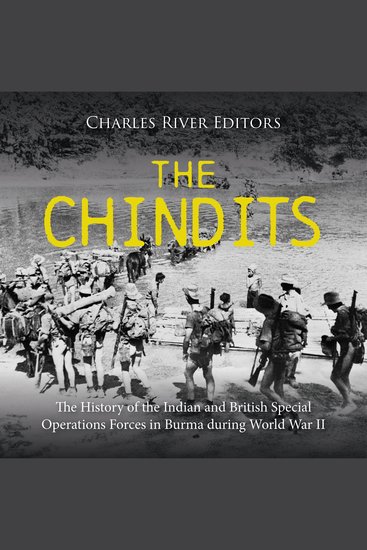
    While the fighting on the Asian mainland is often overlooked in favor of other theaters, at the beginning of 1942, Japanese soldiers in the 15th Army invaded Burma and drove out the British forces in a state of disorder. In fact, it was a headlong retreat, and with the fall of Burma, the Japanese posed a threat to India itself. As Britain scrambled to rebuild its forces and morale to hold back the Japanese, one British officer, Orde Wingate, with considerable experience with irregular operations in the Middle East, formed a radical plan to disrupt the Japanese forces now at the gates of India. He advocated taking the fight to the enemy by using a relatively small group of highly trained soldiers to attack the vulnerable Japanese supply lines that extended precariously through the Burmese jungle. 
    The “Chindits” came about as a result of Wingate’s idea. They were a British-trained force of British, Indian, and Gurkha soldiers designed to be employed on long-range offensive operations behind the lines of the Japanese. They were launched on two major campaigns, one in 1943 and one in 1944, and they fought in some of the most brutal and grueling terrain and climatic environments on the planet. In addition to facing enemy fire, soldiers in Burma had to deal with monsoons, tropical diseases, thick jungles, bad water, and poor nutrition, along with hidden booby traps and the potential of being ambushed by local villagers. On top of all that, the Chindits were up against an experienced, tenacious, and savage enemy who rarely took prisoners. 
    Training for the operations was intense, fighting was fierce, and the casualties were high, which has ensured their service is still a subject of heated debate.
    Ver livro