Junte-se a nós em uma viagem ao mundo dos livros!
Adicionar este livro à prateleira
Grey
Deixe um novo comentário Default profile 50px
Grey
Assine para ler o livro completo ou leia as primeiras páginas de graça!
All characters reduced
Literary Genres in Context - cover
LER

Literary Genres in Context

Pasquale De Marco

Editora: Publishdrive

  • 0
  • 0
  • 0

Sinopse

Embark on a literary odyssey with "Literary Genres in Context," an insightful exploration into the captivating world of genres in literature. This comprehensive guide delves into the depths of various genres, unveiling their significance, evolution, and impact on readers.

Discover the essence of genre in literature and its ability to shape narratives, providing both structure and meaning to stories. Explore the diverse landscape of genres, from the timeless allure of fiction and poetry to the captivating realms of drama and beyond. Understand the intricate interplay between genre conventions and their impact on reader expectations and interpretations.

Witness the dynamic evolution of genres throughout history, reflecting the ever-changing cultural, social, and intellectual landscape. Delve into the emergence of new genres, challenging conventions and pushing the boundaries of storytelling, while others fade into obscurity, becoming relics of a bygone era. Trace the evolution of genres as a window into the evolution of human thought and expression.

Discover the power of genres to offer a kaleidoscope of perspectives, allowing readers to experience a wide range of emotions and ideas. Genres transport readers to different worlds, introduce them to diverse characters, and challenge their beliefs and assumptions. Through genres, readers laugh, cry, ponder, and grow, igniting their imaginations, sparking their curiosity, and leaving an enduring mark on their souls.

Gain a deeper appreciation for the artistry and craftsmanship behind great literature by understanding genres. Explore how genres influence expectations, guide interpretations, and ultimately enhance the appreciation of the written word. Genres serve as a testament to the boundless creativity of the human mind, celebrating our diversity, shared experiences, and enduring fascination with stories.

"Literary Genres in Context" is an invaluable resource for students, scholars, writers, and avid readers seeking to unlock the secrets of literary genres. With its comprehensive insights and engaging exploration, this book invites readers on a journey of discovery, exploration, and enlightenment into the fascinating world of genres in literature.


If you like this book, write a review!
Disponível desde: 02/06/2025.
Comprimento de impressão: 159 páginas.

Outros livros que poderiam interessá-lo

  • Summary of Bradley Hope & Justin Scheck’s Blood and Oil - cover

    Summary of Bradley Hope & Justin...

    Falcon Press

    • 0
    • 0
    • 0
    Buy now to get the main key ideas from Bradley Hope & Justin Scheck’s Blood and Oil 
      
    Mohammed bin Salman Al Saud, Saudi Arabia’s crown prince and de facto ruler, is one of the most influential political figures in the world, yet much about him remains mysterious, even to those who are impressed by his groundbreaking economic and social decisions and unprecedented reforms.  
    In Blood and Oil (2020), journalists Bradley Hope and Justin Scheck immerse readers into the twisted world of the Saudi dynasty. They explore the political and foreign agenda of the 36-year-old ruler, who, despite claiming openness and modernity, uses coercion and deadly means to silence dissidents and impose fear. They tackle Saudi Arabia’s strategic relations with the US and its regional allies, as well as its moves against its arch-enemy Iran.
    Ver livro
  • First Bull Run: The History of the Civil War’s First Major Battle - cover

    First Bull Run: The History of...

    Jonathan Gianos-Steinberg

    • 0
    • 0
    • 0
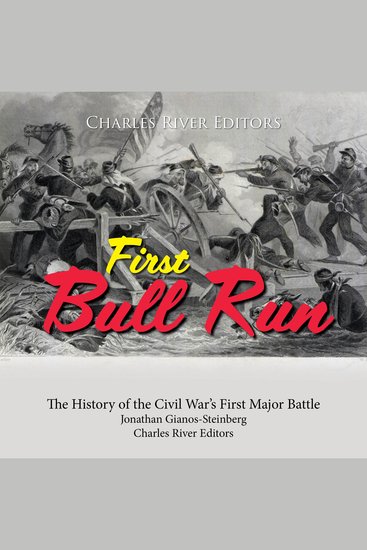
    After Fort Sumter, the Lincoln Administration pushed for a quick invasion of Virginia, with the intent of defeating Confederate forces and marching toward the Confederate capitol of Richmond. Lincoln pressed General Irvin McDowell to push forward. Despite the fact that McDowell knew his troops were inexperienced and unready, pressure from Washington politicians forced him to launch a premature offensive against Confederate forces in Northern Virginia.  
    	McDowell’s strategy during the First Battle of Bull Run was grand, and in many ways it was the forerunner of a tactic Robert E. Lee, Stonewall Jackson and James Longstreet executed brilliantly on nearly the same field during the Second Battle of Bull Run in August 1862. McDowell’s plan called for parts of his army to pin down General P.G.T. Beauregard’s Confederate soldiers in front while marching another wing of his army around the flank and into the enemy’s rear, rolling up the line. McDowell assumed the Confederates would be forced to abandon Manassas Junction and fall back to the next defensible line, the Rappahannock River. In July 1861, however, this proved far too difficult for his inexperienced troops to carry out effectively.  
    	As the first major land battle of the Civil War, the First Battle of Bull Run made history in several ways. The two sides fought near the railroad junction at Manassas on July 21, 1861, just 25 miles away from Washington, which was close enough for many civilians from the nation’s capital to come and watch what they expected to be a rout of Confederate forces, and for awhile it appeared as though that might be the case.  
    	McDowell’s strategy ultimately fell apart though, mostly thanks to the use of the railroad. Confederate reinforcements under General Joseph E. Johnston, including a brigade led by Thomas Jonathan Jackson, arrived by train in the middle of the day, a first in the history of American warfare.
    Ver livro
  • United States Presidential Inaugural Addresses 2001-2021 - cover

    United States Presidential...

    Various Authors

    • 0
    • 0
    • 0
    Experience the powerful words and enduring vision of American leadership through the voices of Presidents who have shaped the 21st century. This collection features the inaugural addresses of George W. Bush (2001, 2005), Barack Obama (2009, 2013), Donald Trump (2017), and Joe Biden (2021). Each speech offers a unique glimpse into the priorities, challenges, and aspirations of the nation during their respective administrations. 
    Narrated with clarity and respect, these historic speeches capture pivotal moments in modern American history—from the aftermath of September 11th to the dawn of a new era in the face of global and domestic challenges. Perfect for history enthusiasts, students, and anyone interested in the evolving story of American democracy, this compilation provides a front-row seat to the words that have guided the nation through times of change and uncertainty.
    Ver livro
  • Sovereign Individual The: Book Summary & Analysis - cover

    Sovereign Individual The: Book...

    Briefly Summaries

    • 0
    • 0
    • 0
    This is a concise summary and analysis of The Sovereign Individual, by James Dale Davidson & William Rees-Mogg.
     
    It is not the original book and is not affiliated with or endorsed by James Dale Davidson & William Rees-Mogg.
     
    Ideal those seeking a quick and insightful overview.
     
    The Sovereign Individual is a groundbreaking exploration of the economic and political transformations brought about by the digital revolution. Delving into the decline of the nation-state and the rise of individual autonomy, this thought-provoking book outlines how emerging technologies are reshaping power, wealth, and governance. From understanding the future of personal freedom to navigating the pitfalls of this transition, it provides a visionary roadmap for thriving in an era of unprecedented change. Perfect for anyone seeking to anticipate the challenges and opportunities of a rapidly evolving world.
    Ver livro
  • World War I on the Ground: The History and Legacy of Life in the Trenches - cover

    World War I on the Ground: The...

    Editors Charles River

    • 0
    • 0
    • 0
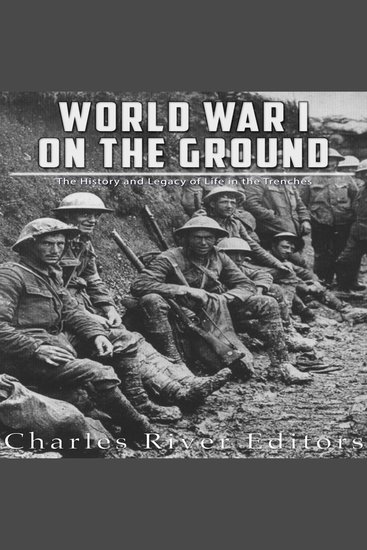
    World War I, also known in its time as the “Great War” or the “War to End all Wars”, was an unprecedented holocaust in terms of its sheer scale. Fought by men who hailed from all corners of the globe, it saw millions of soldiers do battle in brutal assaults of attrition which dragged on for months with little to no respite. Tens of millions of artillery shells and untold hundreds of millions of rifle and machine gun bullets were fired in a conflict that demonstrated man’s capacity to kill each other on a heretofore unprecedented scale, and as always, such a war brought about technological innovation at a rate that made the boom of the Industrial Revolution seem stagnant. 
    The enduring image of World War I is of men stuck in muddy trenches, and of vast armies deadlocked in a fight neither could win. It was a war of barbed wire, poison gas, and horrific losses as officers led their troops on mass charges across No Man’s Land and into a hail of bullets. While these impressions are all too true, they hide the fact that trench warfare was dynamic and constantly evolving throughout the war as all armies struggled to find a way to break through the opposing lines. 
    There was another war going on beneath the trenches, a war of tunnels and mines fought by men who didn’t see sunlight for days at a time and who lived in constant fear of cave-ins and enemy detection. These men, who had mostly been miners in civilian life, lived a twilight existence, working long hours in silence and near darkness while great battles raged overhead. They suffered from fatigue, stress, and the knowledge that they could be killed at any time by an unseen enemy. Despite this, they persevered, and the mines they laid under enemy trench systems turned the tide of at least one major battle.
    Ver livro
  • The Rise and Fall of the Egyptian Empire - A Historical Overview - cover

    The Rise and Fall of the...

    Omar Khalil

    • 0
    • 0
    • 0
    The origins of Ancient Egypt trace back to a time when the Nile River served as the lifeline for scattered communities that gradually developed into one of the world’s first great civilizations. The unification of Upper and Lower Egypt around 3100 BCE marked a turning point, traditionally credited to King Narmer (also known as Menes). This consolidation of power not only brought political unity but also forged a shared identity among the people along the Nile, creating the foundation for the dynastic rule that would follow for centuries. 
    Geography played a central role in shaping early Egyptian civilization. The Nile River, flowing from south to north, provided a reliable source of water and fertile soil through its annual inundation. These floods deposited nutrient-rich silt on the riverbanks, enabling agriculture to flourish in an otherwise arid environment. Settlements grew along the river, connected by the waterway, which also served as a route for trade and communication. Natural barriers such as deserts and the Mediterranean Sea offered protection from external invasions, allowing Egyptian culture to evolve with limited outside interference in its formative years. 
    The Early Dynastic Period (c. 3100–2686 BCE) saw the establishment of the first centralized state under pharaonic rule. Kings were not merely political leaders but were also regarded as divine beings, intermediaries between the gods and the people. This belief in divine kingship helped maintain stability and order in a society where religion permeated all aspects of life. Temples, tombs, and other ceremonial structures began to emerge during this era, laying the groundwork for the grand architectural achievements of later periods.
    Ver livro