¡Acompáñanos a viajar por el mundo de los libros!
Añadir este libro a la estantería
Grey
Escribe un nuevo comentario Default profile 50px
Grey
Suscríbete para leer el libro completo o lee las primeras páginas gratis.
All characters reduced
Graph Art Math - Multiplication and Division Fun for Kids - cover

Graph Art Math - Multiplication and Division Fun for Kids

Pasquale De Marco

Editorial: Publishdrive

  • 0
  • 0
  • 0

Sinopsis

In a world where math and art collide, Graph Art Math presents a captivating journey through the realm of multiplication and division. This extraordinary book transforms abstract numbers into vibrant works of art, making learning an exhilarating adventure.

With each solved math problem, children embark on a creative expedition, plotting points on a graph to reveal hidden pictures. The magic of graph art unfolds as lines connect, revealing playful animals, majestic landmarks, intricate patterns, and mind-boggling puzzles.

Graph Art Math is more than just a math book; it's an invitation to explore the intersection of art and mathematics. Children will discover the joy of solving math problems, witnessing the remarkable transformation of numerical equations into colorful masterpieces. This unique approach not only reinforces mathematical concepts but also sparks imagination and ignites a passion for learning.

Inside this treasure trove of mathematical wonders, young explorers will find:

* A diverse collection of graph art activities, each designed to challenge their mathematical skills and artistic abilities.
* Step-by-step instructions that guide children through the process of creating graph art, making it accessible to learners of all levels.
* Engaging and educational activities that cover a wide range of mathematical concepts, including multiplication, division, patterns, symmetry, and problem-solving.
* A vibrant and colorful presentation that captures children's attention and makes learning an enjoyable experience.

Graph Art Math is an exceptional resource for parents, educators, and anyone seeking to make math learning an enjoyable and enriching experience. With its captivating activities and easy-to-follow instructions, this book promises hours of entertainment and educational fun.

Unleash the power of imagination and mathematical creativity with Graph Art Math. Watch as children's eyes light up with excitement as they discover the joy of learning through art. Embark on this extraordinary adventure today and witness the transformation of math into a work of art!


If you like this book, write a review!
Disponible desde: 02/06/2025.
Longitud de impresión: 160 páginas.

Otros libros que te pueden interesar

  • Deep Learning for Beginners: 2 in 1 - cover

    Deep Learning for Beginners: 2 in 1

    Steven Cooper

    • 0
    • 0
    • 0
    2 books in 1! This is the bundle of two successful books in the market.Book 1: In "Deep Learning for Beginners: A comprehensive introduction of deep learning fundamentals for beginners to understanding frameworks, neural networks, large datasets, and creative applications with ease" you will learn:•	Deep learning utilizes frameworks which allow people to develop tools which are able to offer better abstraction, along with simplification of hard programming issues. •	The book illustrates TensorFlow and Caffe2 as the prime frameworks that are used for development by Google and Facebook. •	The book considers several components and tools of deep learning such as the neural networks; CNNs, RNNs, GANs, and auto-encoders. •	The book also considers several applications, including chatbots and virtual assistants, which have become the main focus for deep learning into the future, as they represent the next frontier in information gathering and connectivity.•	And much more...Book 2: In "Data Science from Scratch: The #1 Data Science Guide for Everything A Data Scientist Needs to Know: Python, Linear Algebra, Statistics, Coding, Applications, Neural Networks, and Decision Trees" you will learn:•	In depth information about what data science is and why it is important.•	The prerequisites you will need to get started in data science.•	What it means to be a data scientist.•	The roles that hacking and coding play in data science.•	The different coding languages that can be used in data science.•	Why python is so important.•	How to use linear algebra and statistics.•	The different applications for data science.•	How to work with the data through munging and cleaning•	And much more...Get your copy of these fantastic guides to master state-of-the-art, deep learning algorithms and their implementation!
    Ver libro
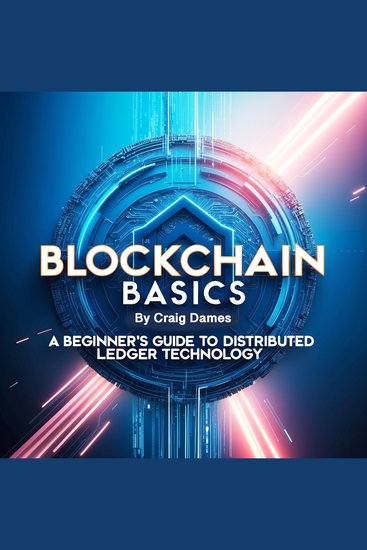
  • Blockchain Basics - A Beginner's Guide to Distributed Ledger Technology - cover

    Blockchain Basics - A Beginner's...

    Craig Dames

    • 0
    • 0
    • 0
    Blockchain technology has become one of the most revolutionary innovations of the 21st century, offering a new way to securely store and share data. At its core, a blockchain is a distributed ledger that records transactions across multiple computers in such a way that the registered transactions cannot be altered retroactively. This provides a level of security and transparency that is not possible with traditional, centralized databases. 
    The concept of blockchain was first introduced in 2008 by an individual or group under the pseudonym Satoshi Nakamoto. It was initially designed as the underlying technology behind Bitcoin, the first decentralized cryptocurrency. However, its potential goes far beyond just digital currencies. Blockchain can be applied to a wide range of industries, including healthcare, finance, supply chain management, and more, providing a secure, transparent, and efficient way to handle data. 
    A blockchain consists of a series of "blocks," which contain records of transactions. Each block is linked to the previous one, forming a chain. This chain of blocks is distributed across a network of computers, known as nodes, ensuring that all copies of the ledger are synchronized and identical. When a new transaction occurs, it is verified and added to the blockchain by the network participants. This decentralized nature eliminates the need for a central authority, making blockchain a powerful tool for fostering trust in a wide range of applications.
    Ver libro
  • Neural Networks for Beginners - An Easy-to-Follow Introduction to Artificial Intelligence and Deep Learning - cover

    Neural Networks for Beginners -...

    Brian Murray

    • 0
    • 0
    • 0
    "Neural Networks for Beginners: An Easy-to-Follow Introduction to Artificial Intelligence and Deep Learning" is an essential guide to understanding the basics of neural networks, the fundamental technology behind artificial intelligence and deep learning. This book provides an in-depth exploration of neural network architectures and how they can be used to solve complex real-world problems in a variety of fields, including image and speech recognition, natural language processing, and time series analysis. 
    Written for beginners, this book provides a clear and concise introduction to the concepts and techniques of neural networks, including the basics of machine learning and deep learning. It covers a range of topics, from the fundamentals of neural networks to building and training models using popular frameworks like TensorFlow and PyTorch, as well as advanced topics like transfer learning and reinforcement learning. 
    With practical examples and clear explanations, "Neural Networks for Beginners" is a valuable resource for anyone looking to learn about this exciting field. Whether you are a student, a professional, or simply interested in the technology behind artificial intelligence, this book will help you understand the basics of neural networks and how they are used to solve real-world problems.
    Ver libro
  • COVID-19 - A History - cover

    COVID-19 - A History

    Jacalyn Duffin

    • 0
    • 0
    • 0
    For two years the COVID-19 pandemic has upended the world. The physician and medical historian Jacalyn Duffin presents a global history of the virus, with a focus on Canada.  
    Duffin describes the frightening appearance of the virus and its identification by scientists in China; subsequent outbreaks on cruise ships; the relentless spread to Europe, the Americas, Africa, and elsewhere; and the immediate attempts to confront it. COVID-19 next explores the scientific history of infections generally, and the discovery of coronaviruses in particular. Taking a broad approach, the book explains the advent of tests, treatments, and vaccines, as well as the practical politics behind interventions, including quarantines, barrier technologies, lockdowns, and social and financial supports. In concluding chapters Duffin analyzes the outcome of successive waves of COVID-19 infection around the world: the toll of human suffering, the successes and failures of control measures, vaccine rollouts, and grassroots opposition to governments’ attempts to limit the spread and mitigate social and economic damages.  
    Closing with the fraught search for the origins of COVID-19, Duffin considers the implications of an “infodemic” and provides an cautionary outlook for the future.
    Ver libro
  • We Hold Our Breath - A Journey to Texas Between Storms - cover

    We Hold Our Breath - A Journey...

    Micah Fields

    • 0
    • 0
    • 0
    Developed as the commercial hub of the Texas cotton and sugarcane industries, Houston was designed for profit, not stability. Its first residents razed swamplands into submission to construct a maze of highways and suburbs, giving the city a sprawling, centerless energy as storms and floods rattled coastal Texas. 


    When Hurricane Harvey made landfall in 2017, Fields set off from his home in Iowa back to the battered city of his childhood to rescue his mother. Fields tracks the devastation of Hurricane Harvey, one storm in a long lineage that threatens the fourth largest city in America. 


    Fields depicts the history of Houston with reverence and lyrical certainty, investigating the conflicting facets of Texan identity that are steeped in racial subjugation, environmental collapse, and capitalist greed. He writes of the development of the modern city in the wake of the destruction of Galveston in 1900; of the oil booms and busts that shaped the city; of the unchecked lust for growth that makes Houston so expressive of the American dream. 


    We Hold Our Breath is a portrait of a city that exists despite it all, a city whose story has always been one of war waged relentlessly against water.
    Ver libro
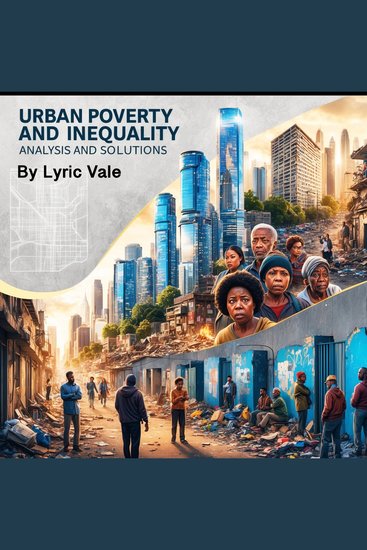
  • Urban Poverty and Inequality - Analysis and Solutions - cover

    Urban Poverty and Inequality -...

    Lyric Vale

    • 0
    • 0
    • 0
    Urban poverty is a pervasive issue that affects millions of people living in cities worldwide. As cities continue to grow at an unprecedented rate, the number of urban poor continues to rise, with large portions of the population living in conditions of extreme deprivation. The term "urban poverty" refers to the situation where individuals and families in urban areas experience a lack of access to basic resources, such as adequate housing, healthcare, education, and employment opportunities. Despite being situated in areas of economic activity and growth, urban poor populations face numerous challenges that contribute to their ongoing struggle for survival and upward mobility. 
    The growth of cities and urban centers has been accompanied by an increasing divide between the wealthy and the poor. While urban areas are often seen as hubs of opportunity, economic growth, and development, they also tend to highlight social and economic inequalities. Rapid urbanization, coupled with limited resources, leads to overcrowded slums, informal settlements, and a lack of infrastructure in many parts of cities. In such environments, the poor face challenges such as high unemployment rates, limited access to education, and poor healthcare services. These conditions create a cycle of poverty that is difficult to escape. 
    In addition, the urban poor are often excluded from key economic and social systems that would help alleviate their poverty. The concentration of wealth in urban centers disproportionately benefits the middle and upper classes, while marginalized communities remain on the periphery, unable to fully participate in the economic, political, and social life of the city. This growing inequality between different social classes exacerbates poverty and leaves the urban poor trapped in a cycle of disadvantage.
    Ver libro